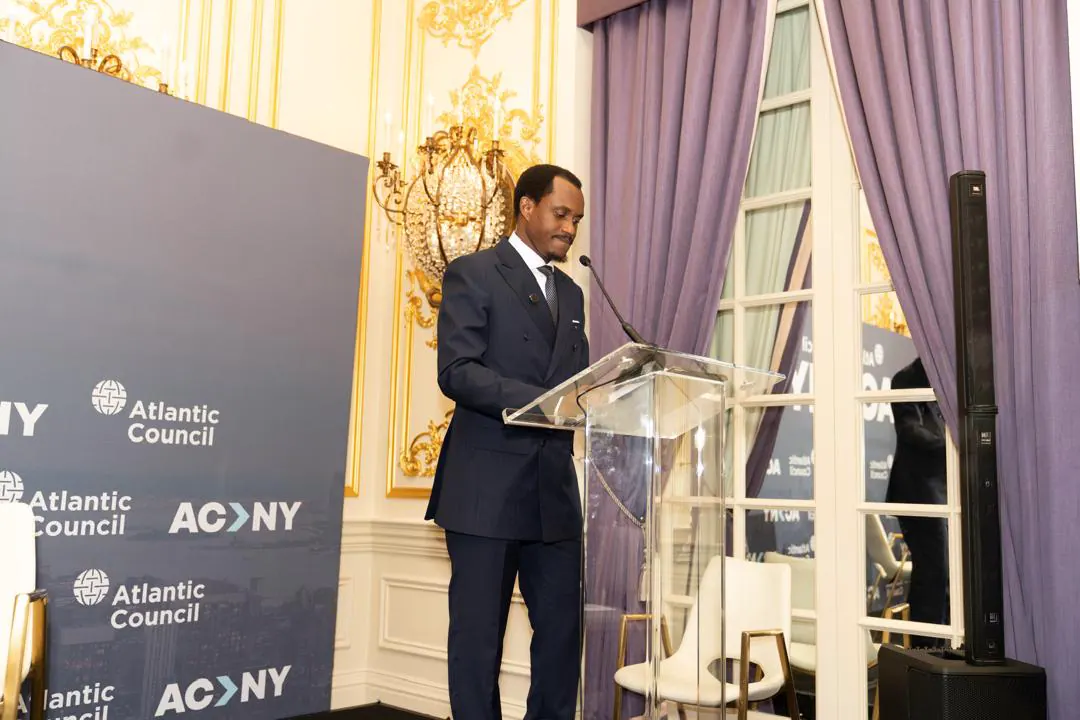
On the sidelines of the 81st United Nations General Assembly in New York, a high-level conference was held on the theme "Africa's Advantage: Creating National Value in a Global Mining Economy." The event, organized by the Atlantic Council, brought together prominent figures, including former Nigerian President Olusegun Obasanjo and US Assistant Secretary Frank Garcia. Expert Miguel Kashal Katemb participated in the conference, highlighting the challenges and opportunities related to local transformation of mining resources and African participation in value chains.
The conference aimed to shed light on the importance of creating value-added industries, jobs, and skills in Africa, rather than exporting raw materials. Miguel Kashal Katemb emphasized the need for Africa to move beyond extraction and exportation of natural resources, and instead become a hub for transformation, industrialization, and value creation. His presentation aligned with his book, "Le développement de l'Afrique au travers du contenu local : cas de la République démocratique du Congo," which advocates for local content as a means to achieve economic sovereignty.
In his speech, Miguel Kashal Katemb praised Congolese President Félix Antoine Tshisekedi Tshilombo for his efforts to promote economic sovereignty in the Democratic Republic of Congo. He stressed the importance of local content in creating jobs, fostering technology transfer, and emerging national enterprises that can become African economic champions. The expert's presentation resonated with the audience, comprising policymakers, business leaders, investors, researchers, and academics.
The book, co-authored with contributions from former African leaders, presents local content as a key driver of economic sovereignty. It proposes that Africa can accelerate industrialization, create jobs, and promote sustainable growth by transforming its natural resources. The conference provided a platform for Miguel Kashal Katemb to share his vision with an international audience, emphasizing the need for Africa to take control of its economic destiny.
Following the conference, a book presentation and signing ceremony were held, attended by participants from various backgrounds. The event provided an opportunity for networking and discussion on the importance of local content in Africa's economic development. The New York gathering served as another international platform to prioritize the debate on leveraging Africa's natural resources for economic sovereignty and industrialization.
The Atlantic Council, a US-based think tank, organized the conference to promote dialogue on international relations, security, economy, and transatlantic cooperation. The event demonstrated the growing interest in Africa's economic development and the role of local content in achieving sustainable growth. Miguel Kashal Katemb's participation highlighted the expertise and knowledge available to support Africa's economic transformation.
The conference and book presentation demonstrated the potential for collaboration and knowledge-sharing on local content policy in Africa. As the continent seeks to harness its natural resources for economic growth, experts like Miguel Kashal Katemb are playing a crucial role in shaping the debate and promoting African economic sovereignty. The emphasis on local content and industrialization is likely to continue influencing discussions on Africa's economic development.
Key points
- Miguel Kashal Katemb advocates for local content policy to promote African economic sovereignty and industrialization.
- The conference at the UN General Assembly highlighted the challenges and opportunities related to local transformation of mining resources and African participation in value chains.
- Miguel Kashal Katemb's book presents local content as a key driver of economic sovereignty, proposing that Africa can accelerate industrialization and create jobs by transforming its natural resources.