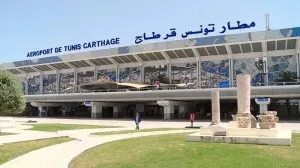
The University of Tunis Carthage recently organized a conference on designing large multi-modal transport hubs and their impact on the urban planning of Tunis. This event is part of the discussion on the modernization and expansion of Tunis Carthage International Airport, aiming to reach a capacity of 18.5 million passengers per year by 2031. The conference emphasized the importance of developing a transport system that connects airports with land transport means.
The conference featured Derek A.R. Moor, a senior architect from a prominent global engineering firm, who stressed the need to move beyond the traditional concept of airports as facilities solely for receiving planes and passengers. Instead, Moor advocated for airports to be viewed as comprehensive mobility centers, with their design integrated into organizing the movement of people, cars, and other transport means. This approach requires a different perspective on developing transport infrastructure.
According to Moor, the challenge in expanding Tunis Carthage Airport does not only lie in preparing roads and transport lines but also in designing buildings and facilities to ensure smooth movement. He noted that successful airports are those that have developed in conjunction with broader economic development strategies. The growth of airports is closely linked to their countries' ability to build integrated systems combining air transport, investment, tourism, and urban development.
Regarding the future role of Tunis Carthage Airport, Moor emphasized that defining its position is crucial, both in terms of air connectivity with Europe and other regions and its contribution to stimulating the economy and tourism. He pointed out that airports that have seen significant growth in recent years are those whose development has been coupled with broader economic development strategies.
The expansion of Tunis Carthage Airport poses a challenge that goes beyond developing its capacity to include rethinking the relationship between the airport and the capital city. It involves integrating air and land transport into a comprehensive system that responds to expected urban and economic transformations. This requires determining the roles that each airport in Tunisia can play to achieve integration and enhance their ability to meet passenger needs and support economic and tourism development.
Moor suggested that other Tunisian airports, such as those in Djerba and Nefounis, have the potential to play important roles in air transport related to tourism and coastal areas. He proposed that the Nefounis airport could serve areas such as Sousse and Hammamet, while the development of Tunis Carthage Airport should be based on the specifics of the capital and its economic position.
The success of Tunisia's airport system, according to Moor, requires defining the roles each airport can play to achieve integration and enhance their capacity to respond to passenger needs and support economic and tourism development. The expansion of Tunis Carthage Airport is a key part of this, with a focus on enhancing connectivity with the capital and surrounding regions.
Key points
- The expansion aims to increase the airport's capacity to 18.5 million passengers per year by 2031.
- The project involves rethinking the relationship between the airport and Tunis, integrating air and land transport.
- Other Tunisian airports are expected to play supporting roles in tourism and regional connectivity.