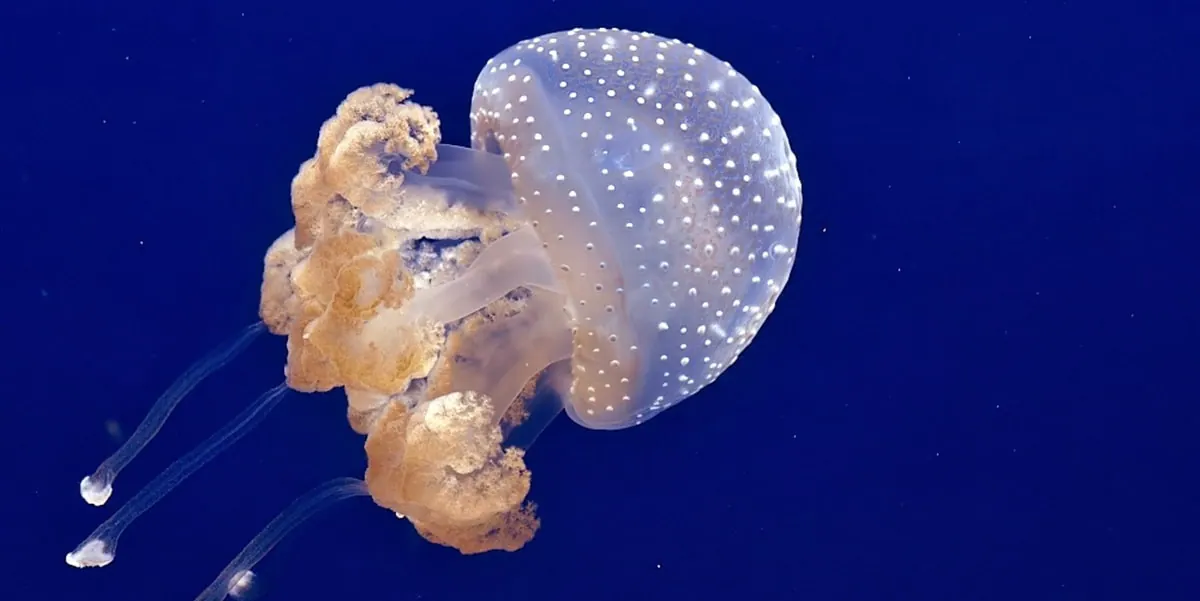
A species of exotic jellyfish, Phyllorhiza punctata, has been spotted in large numbers on several beaches in the Gulf of Tunis, Tunisia. The jellyfish, recognizable by its rounded and translucent shape with white spots, has been reported in areas such as La Marsa, Gammarth, and Hammam Chott. According to the TunSea Association for Participatory Science, this species is native to the western Pacific Ocean and can grow up to 50 centimeters in diameter.
Phyllorhiza punctata was first spotted in Tunisian waters in August 2012 in the Bizerte lagoon. Juvenile and adult specimens were observed in 2012 and 2013, leading scientists to conclude that a reproductive population existed in the lagoon. Since then, the species has also been spotted in the Gulf of Gabès, confirming its presence in different parts of the Tunisian coast.
The current wave of sightings should be considered a new phase of abundance of an already present species rather than a new introduction to Tunisia. The exact mode of arrival of Phyllorhiza punctata in Tunisia is not certain, but maritime traffic is considered a possible means of transport for introduced marine species.
From a health perspective, Phyllorhiza punctata is not considered particularly dangerous to humans. Its sting is generally mild, and TunSea recommends not touching the jellyfish, especially as a precaution for children. However, the species' impact on the ecosystem is a concern, as it feeds on zooplankton and can exert additional pressure on certain food resources in the marine environment.
In other regions, proliferations of this jellyfish have been associated with disruptions to certain fishing activities, particularly when the jellyfish accumulate in nets. Its diet can also include fish eggs, larvae, and different zooplankton organisms. However, none of these conclusions can be automatically applied to the current observations in the Gulf of Tunis.
The current abundance of Phyllorhiza punctata must be documented to determine its extent and potential consequences on the environment. TunSea and other scientific organizations are likely to monitor the situation closely to assess the impact of this exotic species on the Tunisian marine ecosystem.
The presence of Phyllorhiza punctata in Tunisian waters highlights the need for continued monitoring and research into the introduction and spread of non-native species in the Mediterranean. This will help scientists and policymakers to better understand and mitigate the potential impacts on the environment, fisheries, and human health.
Key points
- The exotic jellyfish species Phyllorhiza punctata has been spotted in large numbers on several beaches in the Gulf of Tunis, Tunisia.
- The species, native to the western Pacific Ocean, was first spotted in Tunisian waters in 2012 and has since been observed in different parts of the coast.
- While Phyllorhiza punctata is not considered particularly dangerous to humans, its impact on the ecosystem is a concern due to its feeding habits and potential to disrupt fishing activities.