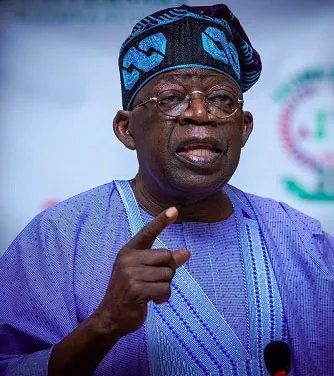
Nigeria is set to hold its general elections in less than four months, with President Bola Tinubu, the incumbent, among the candidates vying for the top job. As a multi-party democracy, Nigeria's electoral process allows various candidates to contest for the presidency. The campaigns have commenced, focusing on critical issues such as the economy and security. Nigerians have expressed satisfaction with the ongoing campaigns, which have brought to the forefront matters that affect the people.
The economy remains a significant concern in the forthcoming elections, particularly due to the social implications of President Tinubu's bold economic reforms. These reforms include the removal of petrol subsidy and the merger of exchange rates, which have had far-reaching effects on Nigerians. However, positive outcomes of these reforms are beginning to emerge. Macroeconomic indicators have shown an upward trend, recognized by international financial institutions such as the World Bank and the International Monetary Fund (IMF).
Nigeria's economic indicators have demonstrated significant improvement. The country's Foreign Direct Investment (FDI) surged to $4.01 billion in 2025, marking a 148% increase from $1.61 billion in 2024. The inflation rate declined from 34.80% in December 2024 to 15.43% in August 2026. Additionally, Nigeria's real Gross Domestic Product (GDP) grew by 4.43% year-on-year in the second quarter of 2026, up from 2.31% in May 2023.
The Nigerian Exchange Limited (NGX) has also experienced substantial growth, with the All-Share Index reaching 251,211.67 points and a total market capitalization of ₦163.10 trillion in September 2026. This represents a 135% increase from May 2023. Furthermore, Nigeria's foreign exchange reserves rose sharply to $54.91 billion in September 2026, up from $35.09 billion in May 2023.
Despite these positive macroeconomic indicators, many Nigerians continue to face a high cost of living. President Tinubu, in his 66th Independence Anniversary address, emphasized that his administration's focus is shifting from correcting Nigeria's economic course to achieving "shared and widespread prosperity." He stated that the emergency treatment of the economy is over, and the foundation has been repaired, with the next phase being to build on this foundation.
President Tinubu outlined his plans to reduce the cost of producing and transporting goods to bring down the cost of living. He emphasized the importance of Nigerian businesses producing goods for local consumption and export, which would help grow the naira. The President expressed his optimism about Nigeria's future, stating that the country has corrected its course and is now poised for growth and prosperity.
With the presidential election scheduled for January 16, 2027, President Tinubu's quest for continuity is clear. Having initiated the economic reforms, he is well-positioned to build on the progress made so far. Key projects such as the Lagos-Calabar Coastal Highway and the Sokoto-Badagry Superhighway are expected to be completed during his next term. The President's re-election bid is seen as a bid to complete his legacy projects and ensure the sustainability of the economic reforms.
Key points
- President Tinubu cites a 148% increase in Foreign Direct Investment (FDI) to $4.01 billion in 2025.
- Nigeria's inflation rate declined to 15.43% in August 2026 from 34.80% in December 2024.
- President Tinubu aims to achieve "shared and widespread prosperity" in his next term.