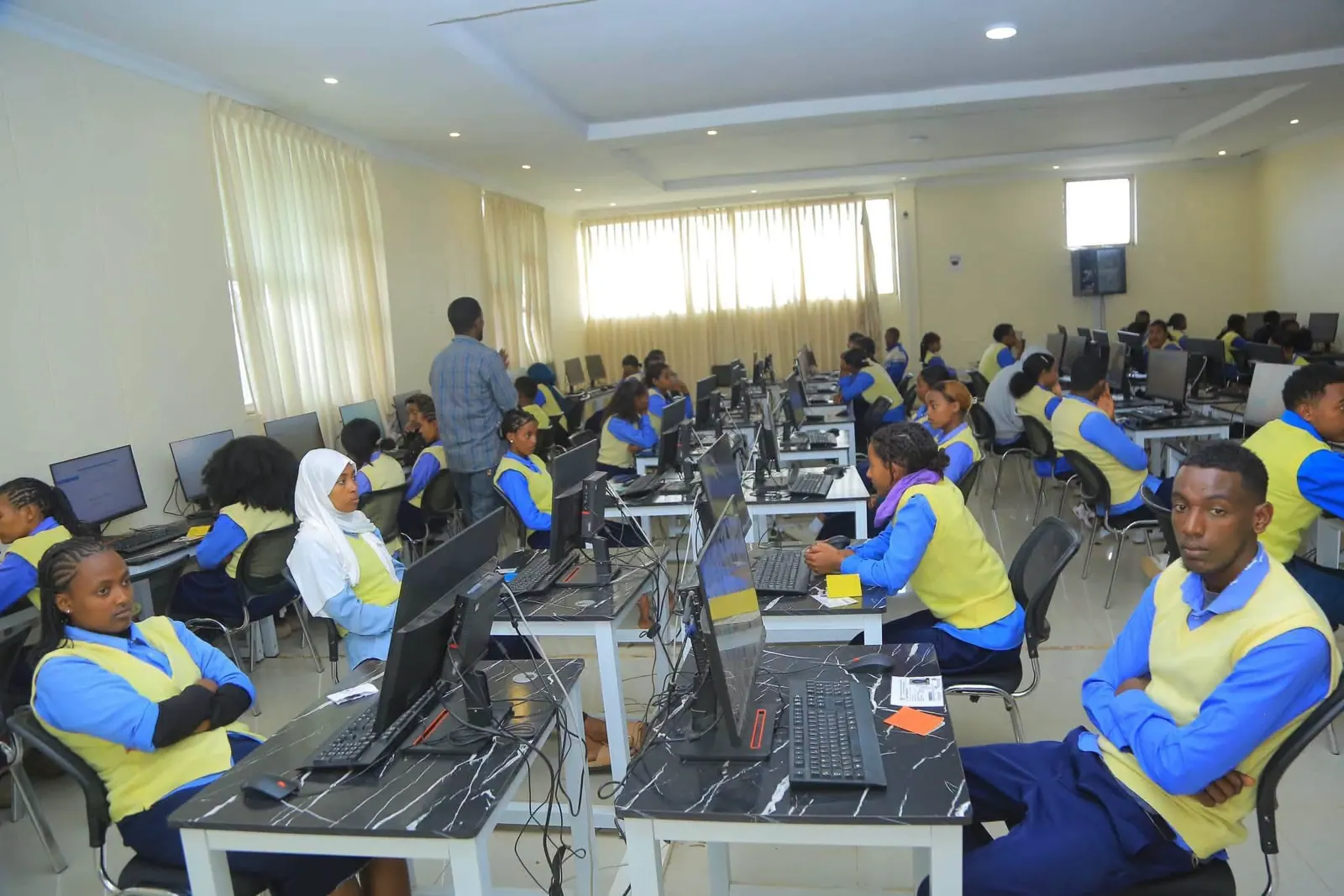
A recent viral clip from an Ethiopian game show highlighted a disturbing trend: a contestant openly cheating with his wife's help, without showing remorse. This incident raises questions about the values being instilled in Ethiopian institutions, particularly in schools. With over a decade of education, students learn not just academics, but also social skills and character. Researchers argue that the "hidden curriculum" in schools, where actions speak louder than words, plays a significant role in shaping students' values.
Over the past twenty years, Ethiopia has made significant progress in education, building schools and enrolling millions more children. However, this progress is marred by concerns about the quality of education and the values being taught. The "hidden curriculum" in schools prioritizes grades and competition over critical thinking, empathy, and honesty. Students learn that getting good scores matters more than how they achieve them, and that beating their peers is more important than helping them. This approach can have lasting effects on students' character and behavior.
In 2022, the Ministry of Education reformed the Grade 12 national exam, moving it to universities and reducing cheating. Reported cases of cheating dropped dramatically, from over 20,000 in 2021-22 to 859 the following year. However, this success was tempered by the revelation that over 96 percent of students failed to reach the 50 percent pass mark. Pass rates remained low, with 3.3 percent in 2022, 3.2 percent in 2023, and 8.4 percent in 2025. The real issue lies not in the scores, but in what the system rewards.
The problem extends beyond the classroom, with universities producing graduates with impressive GPAs but lacking technical skills and critical thinking. Employers often report that graduates are unprepared for the workforce, with research backing up these claims. The emphasis on grades and appearances over substance has created a culture where students prioritize looking good over actual achievement. This culture has far-reaching consequences, affecting not just education but also the broader society.
The values learned in school have significant implications for public trust and civic engagement. When students learn that public property is not their responsibility, and that exploiting it is acceptable, this behavior can translate to other areas of life. The inability to imagine alternative perspectives and handle disagreements peacefully can lead to violence and conflict. Schools can play a critical role in building empathy, critical thinking, and problem-solving skills, but the current system often falls short.
The challenges facing Ethiopia's education system are compounded by external factors, such as conflict and funding constraints. In Tigray, schools closed early due to fears of renewed fighting, leaving over 1.2 million school-age children without access to education. Amhara and Oromia face similar challenges, with over 4 million children out of school. Funding for education has also decreased, from 16-17 percent of the national budget to around 12 percent in 2024-25.
The consequences of inaction will be severe, with a generation of children potentially lost to education. When schools are shut, damaged, or repurposed for military use, the message to children is that their education is not valued. Even open schools struggle, with teachers going unpaid or underpaid, and resources dwindling. To address these challenges, the government must prioritize education and work to create a system that values critical thinking, empathy, and honesty.
Key points
- Despite improved exam security, Ethiopian classrooms still struggle with honesty and integrity.
- The "hidden curriculum" in schools prioritizes grades and competition over critical thinking, empathy, and honesty.
- Funding constraints and conflict have exacerbated the challenges facing Ethiopia's education system.