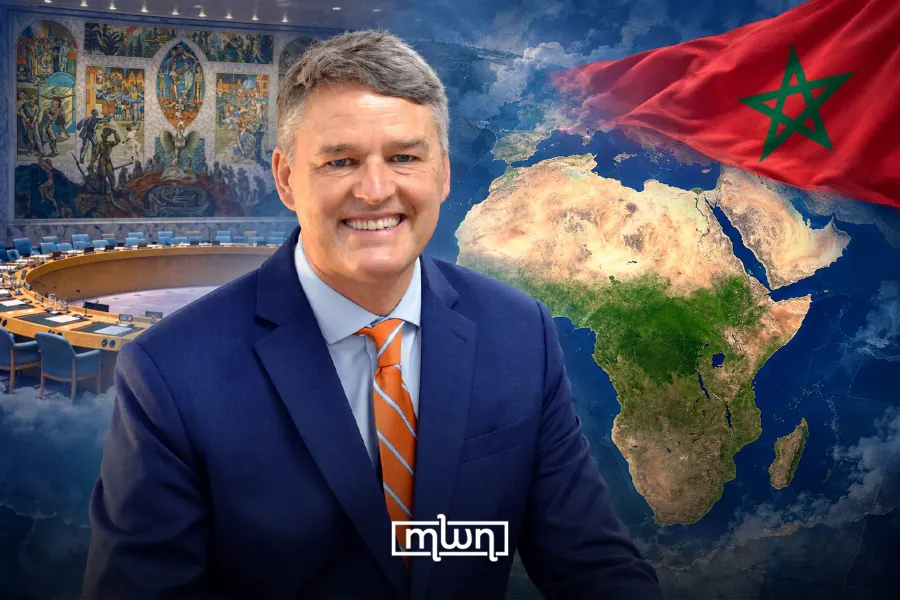
Morocco is preparing its bid for a 2028-2029 non-permanent seat on the UN Security Council, a move that has garnered attention from a former senior UN official. Hervé Verhoosel, who worked alongside Moroccan peacekeepers in the Central African Republic, believes the North African kingdom can contribute to the Council's discussions. Verhoosel, with nearly two decades of experience in the UN system, shared his insights with Morocco World News.
Verhoosel's career spans global health, peacekeeping, and humanitarian affairs. He served as Director of Communications for MINUSCA, the UN peacekeeping mission in the Central African Republic, where he worked daily with Moroccan Blue Helmets. He also worked as principal spokesperson for the World Food Programme during the Yemen and Syria crises. Verhoosel's remarks come as the 81st UN General Assembly closes its high-level debate.
On September 22, Foreign Minister Nasser Bourita announced Morocco's candidacy for the 2028-2029 term at the UN General Assembly. The elections will take place in June 2027. Morocco's bid is based on a realistic vision of international cooperation, respect for international law, and the principles of national sovereignty and territorial integrity. Bourita tied the bid to Morocco's diplomatic experience and King Mohammed VI's vision of the kingdom as a reliable actor for stability and sustainable development.
Secretary-General António Guterres addressed the Assembly on the same day, calling a 21st-century Security Council without permanent African representation "unjust and indefensible." He urged reform to ensure the body reflects today's world with the legitimacy and effectiveness current global challenges demand. Many African leaders echoed this sentiment, including Presidents William Ruto of Kenya, Duma Boko of Botswana, and Netumbo Nandi-Ndaitwah of Namibia.
Verhoosel identified a lack of political will as a primary challenge facing the UN. He believes the organization can achieve great things when countries want it to act, but it can become powerless when main powers fundamentally disagree. Verhoosel advocates for rebuilding the multilateral system rather than abandoning it. He suggests listening to ideas from Africa, Asia, Latin America, and the Arab world, rather than relying on traditional power centers.
Verhoosel is cautious about the impact of a non-permanent seat on the Security Council. He notes that one country cannot transform the Council but can bring issues to the table, build coalitions, and sustain dialogue. Morocco's unique profile, as an African, Arab, and Muslim country close to Europe, sets it apart. Verhoosel expects the African dimension to be central if Morocco is elected and hopes Rabat will engage in mediation, humanitarian affairs, food security, peacekeeping, and prevention.
Verhoosel's comments align with Bourita's framing of Morocco's bid as a reflection of its weight as an active and credible regional and international actor. The outcome of the 2028-2029 elections will be closely watched, particularly in light of the ongoing debate about UN Security Council reform and the need for greater African representation.
Key points
- Morocco is bidding for a non-permanent seat on the UN Security Council for the 2028-2029 term.
- Former UN official Hervé Verhoosel believes Morocco can play a key role in keeping the Security Council engaged, particularly on African issues.
- The UN Security Council currently lacks permanent African representation, a situation Secretary-General António Guterres has described as "unjust and indefensible."