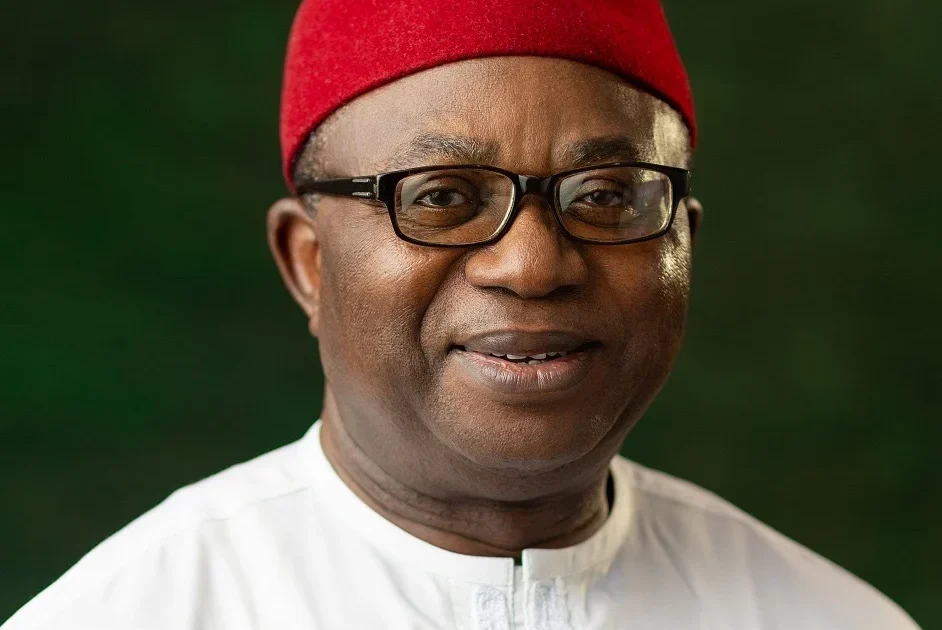
A former member of the House of Representatives, Sam Onuigbo, has called on Nigerians to hold state governors accountable for the increased Federation Account revenues following the removal of the petrol subsidy. Onuigbo, who is also the President of the Global Legislators Organisation for a Balanced Environment International, made this appeal in an interview with journalists. He accused some governors of denying local governments the funds needed for grassroots development.
Onuigbo stated that the increased allocations to states should translate into better rural infrastructure, agricultural development, and employment, rather than remaining concentrated at the state level. He cited statements by governors acknowledging the increase in allocations from the Federation Account Allocation Committee as evidence of the additional resources available to state governments. For instance, Nasarawa State Governor, Abdullahi Sule, noted that his state's monthly allocation had increased from between N3.8bn and N4.5bn to between N14bn and N16bn.
The former lawmaker also mentioned comments by Imo State Governor, Hope Uzodimma, and Bauchi State Governor, Bala Mohammed, who praised the Federal Government for increasing the resources available to states. However, Onuigbo questioned how much of the additional revenue was being deployed to strengthen local governments. He argued that the continued use of Joint Account Committees by state governments undermined the financial capacity of councils.
Onuigbo alleged that while the Federal Government received 52.68 per cent of Federation Account revenue and states received 26.72 per cent, local governments were not consistently allowed to access the 20.60 per cent allocated to them. He praised Borno State Governor, Babagana Zulum, and Lagos State Governor, Babajide Sanwo-Olu, for allowing local government councils in their states to receive the full value of their federal allocations.
The former lawmaker emphasized that local governments needed direct access to their funds to provide basic infrastructure and create economic opportunities in rural communities. He linked the financial weakness of local governments to the wider problems of unemployment and insecurity, arguing that councils with adequate resources would be better placed to identify local needs and support productive activities.
Onuigbo urged voters to make the management of increased public revenues a key issue in the 2027 elections, insisting that state governments should be judged by what their allocations deliver to residents. He also argued that returning President Tinubu to office would help prevent policy reversals that could undermine the gains from his administration's reforms.
Onuigbo, who sponsored Nigeria's Climate Change Act in 2021, pointed to the condition of some local government headquarters as evidence that the third tier of government had been neglected. He urged federal, state, and local governments to work together to support development beyond major urban centres, adding that this synergy would help reduce rural-urban migration and unemployment.
Key points
- Local governments need direct access to their funds to provide basic infrastructure and create economic opportunities in rural communities.
- State governors should be held accountable for the increased Federation Account revenues following the removal of the petrol subsidy.
- Returning President Tinubu to office would help prevent policy reversals that could undermine the gains from his administration's reforms.