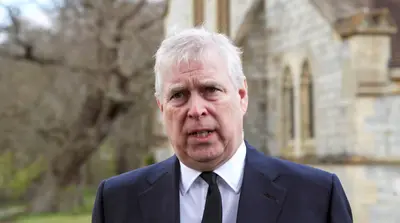
Disgraced ex-prince Andrew Mountbatten-Windsor has launched a legal challenge over search warrants for his royal homes issued before his February arrest. The judiciary confirmed the High Court will hold a private hearing on Thursday to review the challenge. Andrew's legal team wants to examine whether the search warrants granted by a judge at London's Old Bailey court were lawful. This move marks an unprecedented royal challenge in modern times.
Andrew was arrested on February 19, his 66th birthday, on suspicion of misconduct in public office related to his links to late US sex offender Jeffrey Epstein. He was released the same day after hours of police questioning but remained under investigation. Andrew has denied all wrongdoing in his associations with the American financier. His shock arrest prompted King Charles III to issue a statement insisting "the law must take its course".
The legal challenge is the first time a member of Britain's royal family has challenged the lawfulness of criminal proceedings against them since the trial of Charles I in 1649. Andrew's legal team did not immediately respond to a request for comment. The judiciary's press office said "the case concerns an application by Andrew Mountbatten-Windsor for a judicial review to quash search warrants issued by a judge at the Central Criminal Court on 18 February 2026".
Andrew's arrest and the police searches marked a new low for the ex-prince, who was stripped of his royal titles last year and ousted from his Windsor home over his Epstein connections. The government has even mulled passing a law to remove him from the line of succession. Scandal has engulfed the king's younger brother since one of Epstein's accusers, Virginia Giuffre, claimed in her posthumous memoirs that she had been trafficked three times to have sex with Andrew when she was a teenager.
The Thames Valley Police probe follows new revelations from documents relating to the American financier released by the United States earlier this year, including emails in which Andrew appeared to share potentially confidential information with him. In one November 2010 email, Andrew appeared to share with the US financier reports on his visit to several Asian countries. Epstein had been convicted in the United States in 2008 of procuring a child for prostitution.
At least nine British police forces confirmed they were looking into claims -- some related to Andrew -- stemming from the batch of some three million Epstein files released by the US authorities in January. However, the Thames Valley investigation appears to be the most advanced. Its officers, who swooped on the remote Sandringham royal estate in eastern England to detain Andrew, searched his home there and his former Royal Lodge residence in Windsor, west of London.
In response to Andrew's legal challenge, Thames Valley Police said in a statement that its "investigation into misconduct in public office continues". "We are engaged in legal proceedings in relation to warrants previously obtained," it added. "As these legal proceedings are currently ongoing, it would be inappropriate for us to comment further." The police force arrested Andrew and Peter Mandelson in February after Epstein documents were released.
Key points
- Ex-prince Andrew Mountbatten-Windsor challenges search warrants for royal homes issued before February arrest
- The challenge is the first time a member of Britain's royal family has challenged the lawfulness of criminal proceedings against them since the trial of Charles I in 1649
- Andrew's arrest and the police searches marked a new low for the ex-prince, who was stripped of his royal titles last year and ousted from his Windsor home over his Epstein connections