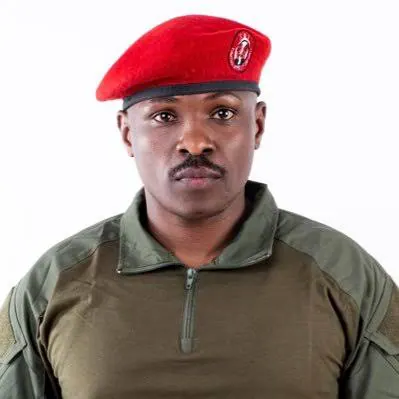
Kenyan presidential aspirant and former Kenya Defence Forces soldier Patrick Osoi has sparked controversy with his recent remarks about Nigerian billionaire Aliko Dangote's proposed oil refinery in Kenya. Osoi warned Dangote not to rush construction of the refinery, claiming that if elected president, he would send Dangote back to Nigeria. This is because Kenya has local businesspeople capable of building a refinery, making Dangote's project unnecessary.
Osoi's comments were made during a speech to supporters of his Lions Movement. He stated that Kenya has the capacity to build its own refinery and that local businesspeople can do the job. This has triggered a heated debate among Kenyans and Nigerians on social media, with critics questioning Osoi's stance on foreign investment. Some argue that constructing a facility of the proposed scale requires substantial financing, technical expertise, and infrastructure.
The proposed refinery, which was formally launched on September 30, 2026, is designed to process up to 700,000 barrels of crude oil per day. It is intended to serve markets beyond Kenya and has been presented as a major investment in East Africa's energy infrastructure. The project has also faced scrutiny over land rights and environmental concerns, with a Kenyan court issuing orders maintaining the status quo in a land dispute involving residents.
Osoi's remarks have sparked a wider debate about the role of foreign investment in Kenya and the balance between developing domestic businesses and attracting investment from elsewhere on the continent. Some argue that African countries should prioritize local investment and develop their own industrialists. Others counter that domestic businesses and foreign investors can coexist, and that investment from an African entrepreneur can still create employment and opportunities for local suppliers.
The online reactions to Osoi's comments have been mixed, with some users supporting the principle of building domestic capacity and others defending Dangote's right to pursue a project in Kenya. Some have questioned why Kenyan businesspeople have not already built a refinery if the country has sufficient local capacity and investment interest. Others have argued that an African investor should not automatically face a different standard simply because he comes from another African country.
The controversy comes at a time when the Lamu project is being presented by its proponents as a major investment in East Africa's energy infrastructure. Dangote has said the refinery would serve a broad regional market and that the project could involve participation from other African countries. However, the project has also faced challenges, including a land dispute that has resulted in a court order maintaining the status quo.
At the centre of the dispute is a question that extends beyond Dangote himself: how should African countries balance the development of domestic businesses with the need to attract investment, expertise, and capital from elsewhere on the continent? Osoi's comments have raised questions about whether rejecting an outside investor would necessarily result in a viable domestic alternative. His position puts emphasis on Kenyan business ownership, but his remarks have also sparked a wider debate about the role of foreign investment in Kenya.
Key points
- Kenyan presidential aspirant Patrick Osoi faces criticism for threatening to send Nigerian billionaire Aliko Dangote back to Nigeria if elected president.
- The proposed refinery has sparked controversy over land rights, environmental concerns, and the role of foreign investment in Kenya.
- The debate highlights the need for African countries to balance the development of domestic businesses with the need to attract investment, expertise, and capital from elsewhere on the continent.