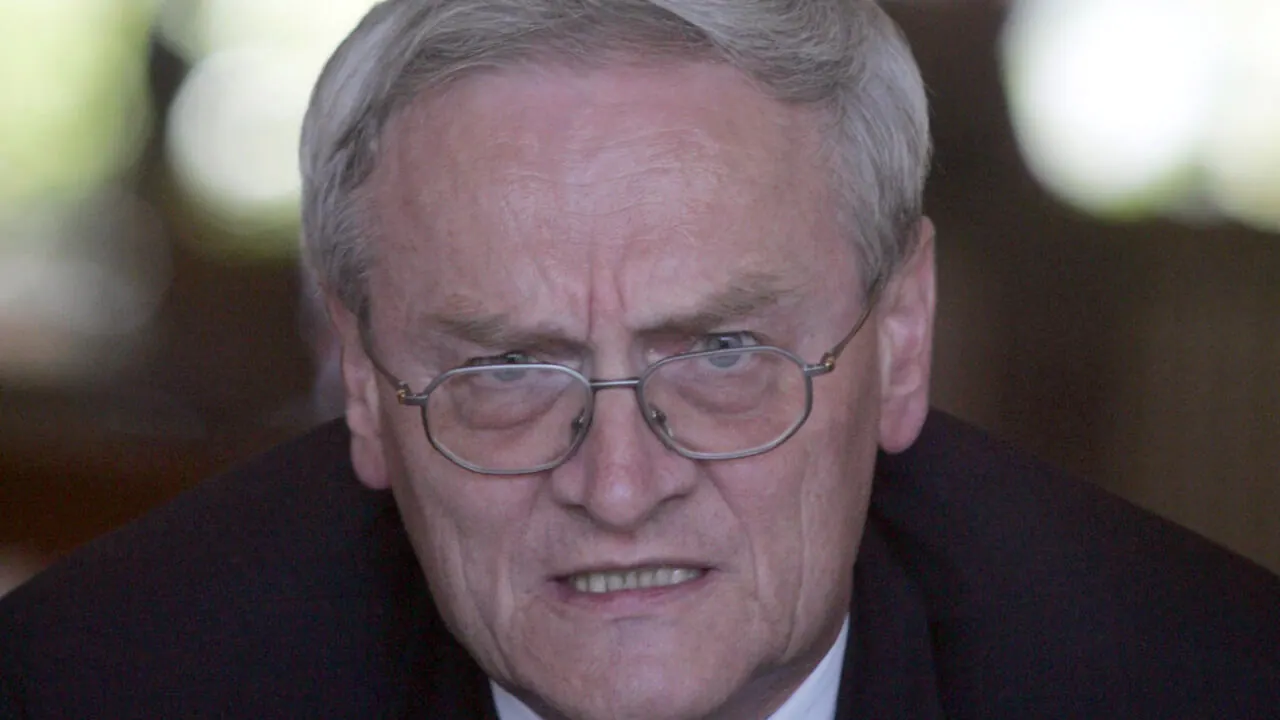
Former German intelligence chief August Hanning was arrested on Tuesday on suspicion of attempted treason. This marks one of Germany's most significant intelligence scandals since the Cold War. Prosecutors allege Hanning paid for classified documents and used them to conduct analyses for a foreign intelligence agency. The arrest has raised concerns about Germany's intelligence relations with its allies.
The prosecutor's office stated that Hanning is strongly suspected of treasonous espionage and obtaining state secrets. Investigators are exploring a potential link to Azerbaijan, with reports suggesting Hanning had communicated with an agent from the country. The federal prosecutor's office declined to comment further on the investigation. Hanning headed Germany's foreign intelligence service, the BND, from 1998 to 2005.
Hanning is accused of agreeing to receive confidential intelligence from a former office manager, identified as Manfred D., in exchange for payment. Manfred D. was also arrested on Tuesday, and both are set to appear before a judge at the Federal Court of Justice. Prosecutors suspect Manfred D. supplied about 2,000 documents over the years, including classified material and intelligence briefings meant for senior officials.
These documents reportedly covered sensitive topics such as the Iranian nuclear programme and Russian military activities, as well as secrets classified by allied intelligence agencies. Hanning allegedly used these classified materials to prepare analyses for a foreign intelligence officer and shared political information with a representative of that agency. The investigation does not involve Russia, according to reports.
Security expert Roderich Kiesewetter expressed concerns that this case could harm trust between Germany and its intelligence partners. The arrest has added to a troubling history of espionage scandals in Germany, including the resignation of Chancellor Willy Brandt in 1974 following revelations about an East German spy in his inner circle. More recent scandals have further tested public confidence in the intelligence community.
BND President Martin Jaeger stated that they have initiated thorough internal investigations, emphasising that there can be no compromises on internal security. The unprecedented arrest has raised questions about how Hanning was able to carry out his alleged activities without detection. The federal prosecutor's office is continuing to investigate the circumstances surrounding Hanning's arrest.
The case has sparked concerns about the potential consequences for Germany's intelligence relations with its allies. The investigation is ongoing, and Hanning's arrest is seen as a significant development in the country's efforts to address espionage and improve internal security.
Key points
- Former German spy chief August Hanning arrested on treasonous espionage charges
- Investigation explores potential link to Azerbaijan
- Arrest raises concerns about Germany's intelligence relations with allies