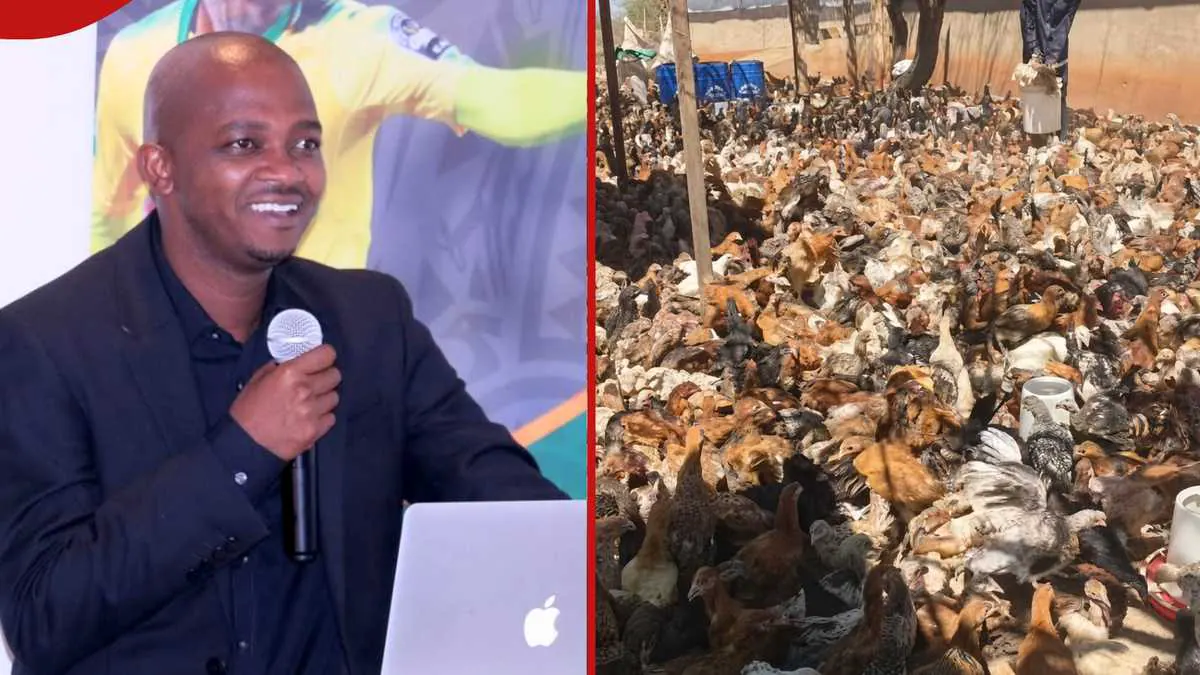
Former Football Kenya Federation president Nick Mwendwa has traded his football boardroom experience for a large-scale indigenous chicken operation in Makueni county. By September 2026, Mwendwa's farm had gained significant attention, with a viral video showing him feeding a flock of over 200,000 birds. The farm, located a few kilometers off the Nairobi-Mombasa Highway, is a sprawling operation with brooder houses, growing stock enclosures, and mature birds roaming freely.
Mwendwa's farm stands out due to its closed-loop breeding model, where every bird traces back to an original founding flock of just seven birds. This approach allows him to guarantee the genetic purity of his kienyeji chickens. Mwendwa has emphasized this point to high-profile visitors, including rapper King Kaka, arguing that external chick sourcing makes it impossible to ensure genuine kienyeji lineage. This purity guarantee is what buyers pay for, according to Mwendwa.
The business case for Mwendwa's farm relies on patience over speed. While commercial layers flood the egg market and drive prices down, kienyeji birds grow more slowly and lay fewer eggs, but their scarcity keeps both egg and meat prices higher. Mwendwa's operation demands daily hands-on attention, and he has warned that chicks die when farm workers treat the role as an ordinary office job. Videos often show him personally in the yards with feed buckets.
A viral video of Mwendwa feeding the flock has sparked both admiration and skepticism online. Kenyans have expressed mixed reactions, with some questioning the actual number of birds and others praising Mwendwa's dedication to farming. The public figure of 200,000 birds is the largest number circulating, although it reflects media visits rather than an independently verified count.
Mwendwa's transition from football to farming was unexpected, with many anticipating a pivot to sports consulting after his departure from FKF in late 2024. Instead, he has become one of Kenya's most talked-about poultry farmers, with a Citizen TV segment showcasing his farm. The farm's success has drawn attention from various quarters, including a recent visit by high-profile individuals.
The farm's operations are extensive, with multiple sections for day-old chicks, growing stock, and mature birds. The setup allows for efficient management and ensures the health and well-being of the birds. Mwendwa's commitment to the farm is evident in his daily involvement, which he believes is crucial to the operation's success.
In other news, President Emmerson Mnangagwa recently led a working tour of Precabe Farm in Kwekwe, highlighting large-scale agricultural production. The farm produces potatoes and wheat, with wheat yielding up to 10 tonnes per hectare and being processed into bread and biscuits. While Mwendwa's farm focuses on indigenous chickens, Precabe Farm showcases the diversity of agricultural endeavors in the region.
Key points
- Nick Mwendwa's farm maintains a closed-loop breeding model, tracing back to an original flock of seven birds.
- The farm's focus on genetic purity allows Mwendwa to guarantee genuine kienyeji lineage.
- Mwendwa's business case relies on patience, capitalizing on the scarcity of kienyeji birds to maintain higher egg and meat prices.