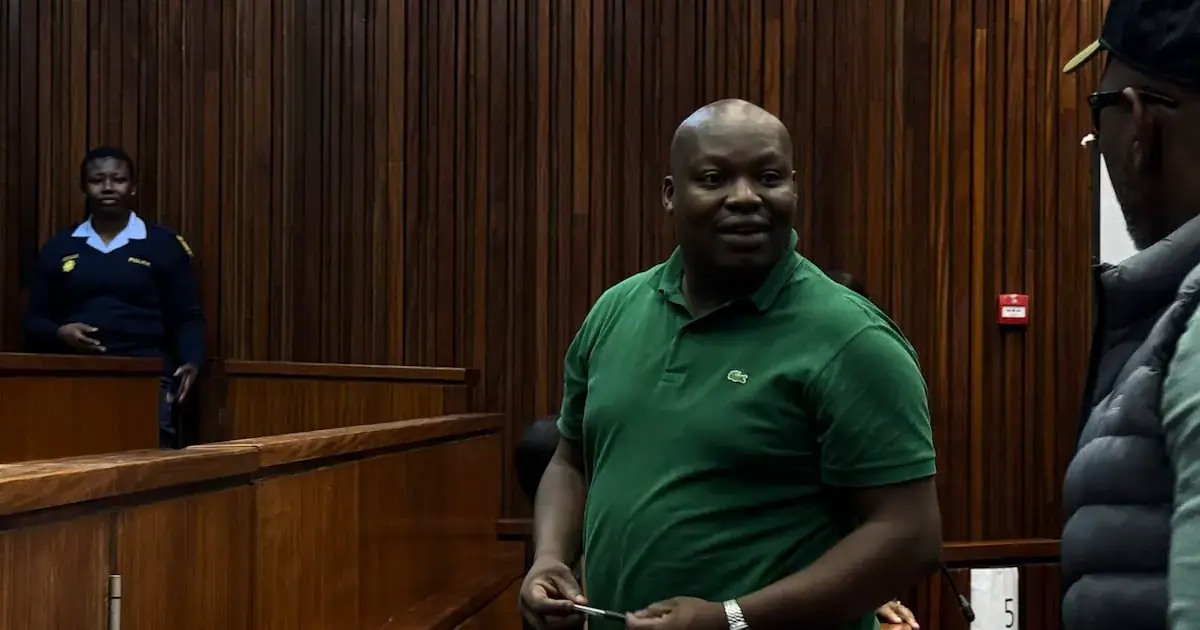
Advocate Riaan Gissing, representing Musa Kekana, argued in the Johannesburg high court that medical evidence and Kekana's reports to healthcare workers support his allegation of police assault and suffocation during an April 2024 operation. Gissing questioned whether the timing of Kekana coughing up blood during a police search could be dismissed as a coincidence, referring to it as corroboration of his version. This is part of a trial-within-a-trial to determine if evidence obtained during Kekana's arrest can be used in the main trial involving Vusimusi "Cat" Matlala and his co-accused.
Gissing described Kekana's alleged assault, stating he was initially beaten in a bedroom with his head covered by a duvet, and then made to lie on his stomach with his hands cuffed behind his back and feet tied together with a belt. A knee was allegedly pressed into Kekana's back, and a courier bag was pulled over his head, leading to loss of consciousness and uncontrollable coughing up of blood. Gissing argued that subsequent utterances resulted from the alleged assault and suffocation amounting to torture.
Medical expert Prof Gert Saayman from the University of Pretoria testified for Kekana, outlining potential medical reasons for coughing up blood after the alleged assault and providing expert evidence on the nature and timing of Kekana's medical treatment. Judge Cassim Moosa questioned whether Saayman's evidence conclusively established that Kekana had been suffocated. Gissing maintained that the expert did not have to reach a conclusive finding and that Kekana did not bear the burden of proving the assault.
Gissing argued that medical testimony supported Kekana's account, stating that a doctor conceded that suffocation could not be excluded. However, Moosa highlighted a discrepancy between a medical record stating Kekana reported suffocation at a police station and his account that it happened inside the house. Gissing responded that what was important was that there was a report of suffocation.
Moosa also pressed the defence on why no criminal case had been opened against the officers involved. Gissing confirmed that the legal team held instructions to open a case but had not done so. The judge asked what the court should make of this aspect, and Gissing argued that the mere fact Kekana had not opened a criminal case did not mean he had not been suffocated and assaulted.
The trial-within-a-trial is determining the admissibility of evidence seized during Kekana's arrest, which the state argues was discovered independently of any alleged assault. Prosecutor Elize Le Roux argued on Friday that the evidence was admissible. The matter was postponed to Monday due to electricity failures, with the court's backup generator having only 3% power.
The case involves Vusimusi "Cat" Matlala and his co-accused, with the defence arguing that evidence obtained during Kekana's arrest should not be used in the main trial. The court will consider the disputed allegations and legal submissions to make a ruling on the admissibility of the evidence.
Key points
- Medical evidence supports Musa Kekana's account of alleged torture during his arrest.
- The defence argues that evidence obtained during Kekana's arrest should not be used in the main trial.
- The court will consider disputed allegations and legal submissions to make a ruling on the admissibility of the evidence.