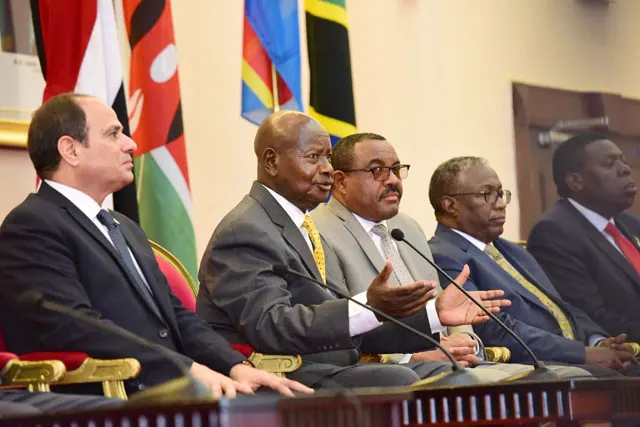
A recent incident involving a six-year-old schoolgirl has brought attention to President Museveni's influence and legacy. The girl had informed her classmates that Museveni was the President of Africa and that she would call him to play tag with them. This event recalled a video from State House where an elder petitioned Museveni to become President of Africa. These public expressions from cross-generational figures highlight the need to understand Museveni's role and impact on the continent.
To comprehend Museveni's legacy, it is essential to consider Africa's history and its chronic problem of political fragmentation. In the 19th century, European powers colonized the continent without African representation, taking advantage of its inability to organize politically, strategically, and economically. Africa, being the origin of man and civilization, was awed by European visitors with its technological advancements, architectural marvels, and large populations.
President Museveni has focused on correcting Africa's historical vulnerabilities through "historical missions" and intends to continue for the remaining 18 years of his life. He has been a vocal advocate for African unity and has taken several key steps to promote this goal. Museveni was among the first African leaders to denounce Western military intervention in Libya and call for an African response.
Museveni's commitment to Pan-Africanism is evident in his actions. He was the first to deploy troops to Somalia under AMISOM based on solidarity rather than shared borders. He resisted international pressure regarding Sudan's former President Omar al-Bashir, prioritizing African unity over external mandates. Additionally, he consistently advocates for shared ecological solutions for the Nile Basin.
Under Museveni's leadership, Uganda has maintained open borders for trade, rejecting economic embargoes against neighboring African states. The country remains one of Africa's largest hosts of refugees, offering asylum and integration without condition. These actions demonstrate Museveni's dedication to regional cooperation and African unity.
The author, Nelson Bwire, had to clarify Museveni's role to his daughter, explaining that he is not the President of Africa but a Pan-African leader who believes in the importance of African unity. Bwire emphasized that Museveni's legacy will be defined by a united Africa, and that his daughter's generation has a crucial role to play in achieving this goal.
As Museveni continues to advocate for African unity, his legacy is likely to be shaped by his efforts to promote regional cooperation and integration. His commitment to Pan-Africanism and his actions to correct historical vulnerabilities will have a lasting impact on the continent. The spirit of unity and cooperation that he embodies will be essential in shaping Africa's future.
Key points
- President Museveni's legacy as a Pan-African leader is centered around his commitment to African unity and regional cooperation.
- Museveni has taken significant steps to promote African unity, including denouncing Western military intervention in Libya and deploying troops to Somalia under AMISOM.
- Uganda, under Museveni's leadership, has maintained open borders for trade and has been a major host of refugees, demonstrating its commitment to regional cooperation and African unity.