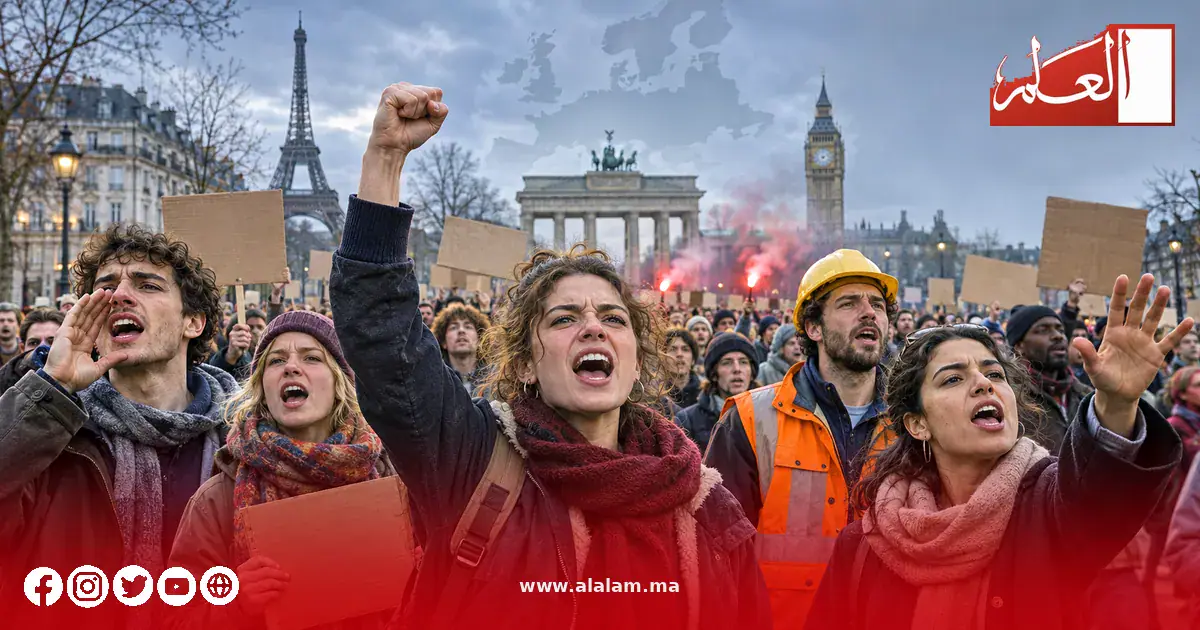
A wave of protests has swept across Europe, with demonstrations and strikes taking place in over 25 countries. The protests, which began in November 2026, are driven by a range of issues including the high cost of living, inadequate housing, and declining public services. In France, Italy, Germany, Spain, and Portugal, protesters have taken to the streets to demand better wages, improved working conditions, and increased investment in public services.
In France, the protests have been marked by clashes between police and demonstrators, as well as acts of vandalism. The protests are seen as a test of the government's ability to address the concerns of its citizens, with many feeling that their voices are not being heard. The protests have also highlighted the growing distrust between citizens and institutions, with many questioning the effectiveness of the current system.
In Italy, a general strike was held on November 20, 2026, with tens of thousands of workers and students taking to the streets to demand better wages and working conditions. The strike was organized by the Italian General Confederation of Labour, which claimed that over a million people participated in the protests. The strike was seen as a major show of force by the labor movement, and highlighted the growing tensions between workers and the government.
In Germany, protests have been held in cities including Berlin and Cologne, with thousands of students and young people demanding better funding for education and improved living standards. The protests have also highlighted the growing concerns about climate change and the potential return to conscription. The protests have been seen as a sign of a growing generational divide, with young people feeling that their voices are not being heard.
In Portugal and Spain, protests have focused on the issue of housing, with many young people struggling to afford homes and rents. The protests have highlighted the need for increased investment in affordable housing and the protection of tenants' rights. The issue of housing has become a major political issue, with many feeling that the current system is unfair and unsustainable.
The protests have not been limited to EU member states, with demonstrations also taking place in the UK, Switzerland, and Austria. The protests have highlighted the growing concerns about the cost of living, education, and healthcare, and have been seen as a sign of a growing discontent with the current system. The protests have also highlighted the need for a more nuanced understanding of the issues driving the protests.
The protests have also highlighted the complexity of the issues driving them, with many protesters raising concerns about international issues such as the Israeli-Palestinian conflict, climate change, and military spending. The protests have been seen as a sign of a growing desire for change, and have raised questions about the ability of governments to address the concerns of their citizens.
Key points
- The protests are driven by a range of issues including the high cost of living, inadequate housing, and declining public services.