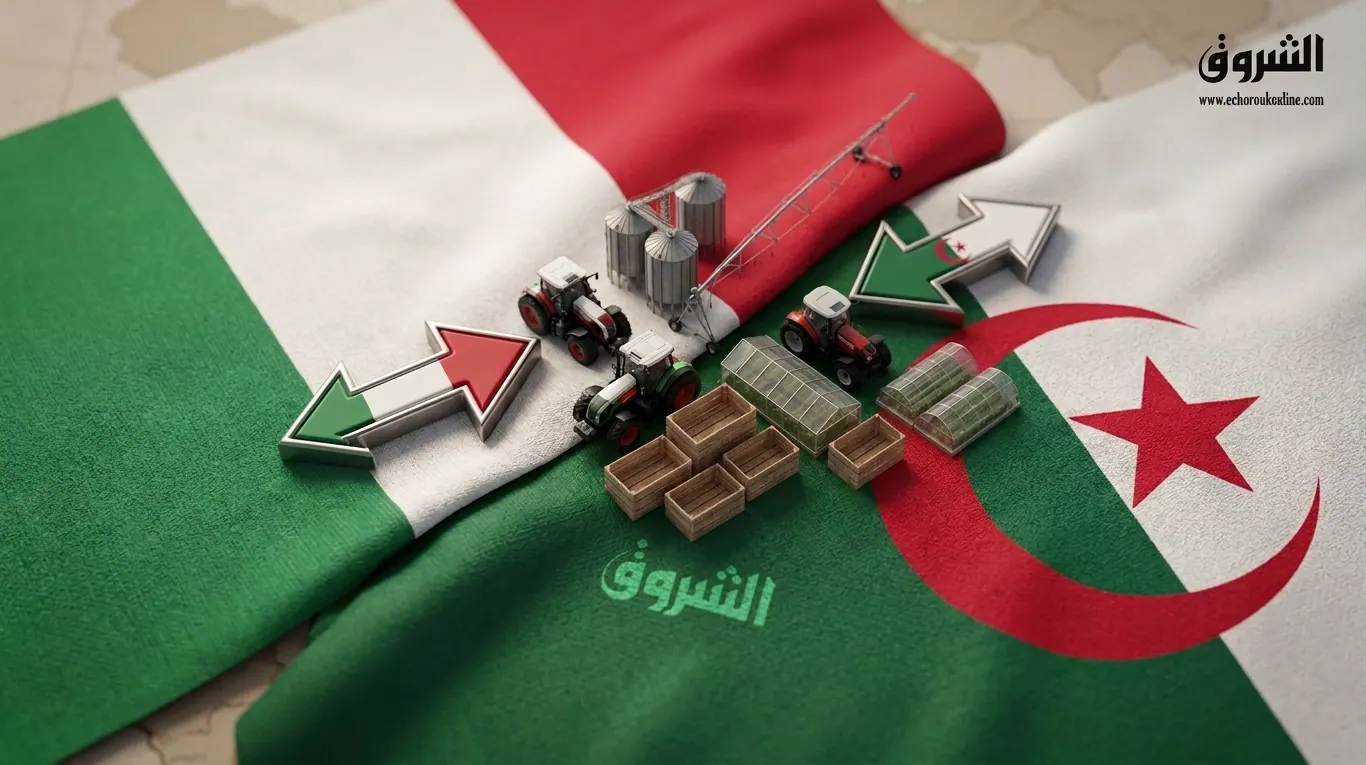
A new European Union-funded project worth €1 million has been launched to support Algeria in developing its national organic farming system. The initiative, led by Italy, aims to establish a regulatory framework aligned with European standards and international benchmarks. Algeria, Italy, and France are participating in the project, which will run for 24 months. The project is based on the institutional twinning mechanism, promoting the exchange of expertise and experience between European public administrations and their Algerian counterparts.
Italy's Ministry of Agriculture, Food Sovereignty and Forestry (MASAF) is the project's lead partner, while France's Ministry of Agriculture is participating as a partner. The Italian consulting and technical cooperation company Eutalia S.p.A is responsible for the administrative management of the initiative. Algeria's Ministry of Agriculture and Rural Development and Fisheries serves as the beneficiary administration. This collaboration aims to support Algerian authorities in drafting standards and implementing regulations for organic farming.
The project's first area of focus is the development of Algeria's national organic farming system. Experts will support Algerian authorities in defining the responsibilities of various bodies involved and establishing procedures for inspection and certification. The initiative will also include training programmes for officials responsible for operating the system. This will help ensure a smooth transition to organic farming practices in Algeria.
The second component of the project focuses on the Agricultural Quality Label (LAQ), an Algerian certification scheme designed to identify and promote high-quality agricultural products. Work will initially begin with five pilot supply chains. In cooperation with industry stakeholders, the project will identify the distinctive characteristics of the products concerned and the requirements they must meet.
These elements will then be incorporated into five sets of specifications defining the conditions for obtaining the quality label. The specifications will be submitted to the National Labelling Committee for approval. The cooperation will involve producers, processors, professional organisations, agricultural chambers, and technical bodies. This collaborative approach aims to ensure that the quality label is credible and effective.
Italian and French expertise will be adapted to the Algerian context through training programmes and the exchange of methodologies. This will enable Algerian officials to effectively implement and manage the organic farming system and quality label. The project's success will depend on the effective transfer of knowledge and expertise from European partners to Algerian authorities.
The project was launched on Wednesday, 25 September 2024, and will run for 24 months. Its success is expected to have a positive impact on Algeria's agricultural sector, promoting sustainable farming practices and high-quality products. The project's outcomes will be closely monitored, and its impact will be evaluated upon completion.
Key points
- The project aims to establish a regulatory framework aligned with European standards and international benchmarks for organic farming in Algeria.
- The initiative will develop five sets of specifications for pilot supply chains to obtain the Agricultural Quality Label.
- The project will run for 24 months and involves the exchange of expertise and experience between European public administrations and their Algerian counterparts.