A recent report by the Italian news agency "Nova" has highlighted a stark contrast in military and security developments along Libya's Mediterranean coast. The report noted that within days, two distinct images of power balance emerged, reflecting the country's deep strategic divisions. This contrast is evident in the western and eastern parts of the country, where different foreign military presences are being felt.
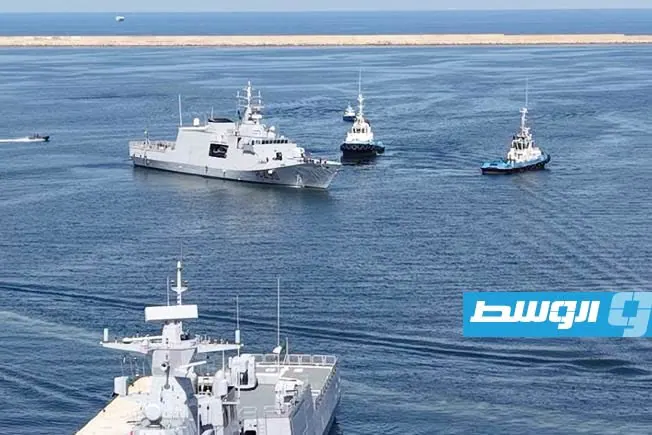
In western Libya, the "Sea Border 2026" naval exercise took place in Tripoli, concluding at the Abu Sitta naval base. The drill was part of the "5+5" defense initiative, bringing together European and North African countries. The exercise included nine countries: Algeria, France, Italy, Libya, Malta, Mauritania, Morocco, Spain, and Tunisia. The activities focused on enhancing coordination, exchanging expertise, and improving readiness for joint maritime tasks.
The "Sea Border 2026" exercise featured three military ships that arrived in Tripoli on September 18: the Algerian patrol vessel "Al-Mutassid", the French support ship "Loire - A602", and the Italian patrol vessel "Comandanti Bettica - P492". The exercise aimed to develop maritime security and safety capabilities in the Mediterranean. A closing ceremony was attended by representatives from the Libyan Ministry of Defense, the General Union, and the Spanish ambassador.
In contrast, a Russian naval convoy was spotted in the eastern Libyan port of Tobruk on September 13. The convoy included three Russian ships: the cargo ships "Anastasia" and "Yuri Arshenevsky", and the landing ship "Alexander Shabalin". Satellite images and open-source intelligence reports confirmed the presence of these vessels. The shipment was reportedly unloaded on September 14 and distributed to various bases in eastern Libya.
According to "Nova", the Russian shipment included military equipment, such as "Ural" trucks, armored vehicles, and mine-resistant personnel carriers. While there was no official statement from Russia on the contents of the shipment, the move is seen as a significant development in the region. This buildup in Tobruk has raised concerns about the growing Russian military presence in eastern Libya.
The simultaneous occurrence of these events highlights the divergent strategic paths being pursued in western and eastern Libya. While Tripoli is engaging in European-led maritime security cooperation, Tobruk is increasingly aligning with Russian military support. This contrast underscores the deep divisions within Libya and the competition for influence by external powers.
The Italian agency "Nova" concluded that the timing of these events is not coincidental and reflects the complex geopolitics at play in Libya. The country's instability has created an environment where multiple foreign powers are vying for influence, contributing to the divisions within Libya and the broader region.
Key points
- European naval drills took place in Tripoli as part of the "Sea Border 2026" exercise
- A Russian naval convoy was spotted in Tobruk, eastern Libya, with military equipment on board
- The contrasting military moves reflect the deep strategic divisions within Libya and the competition for influence by external powers