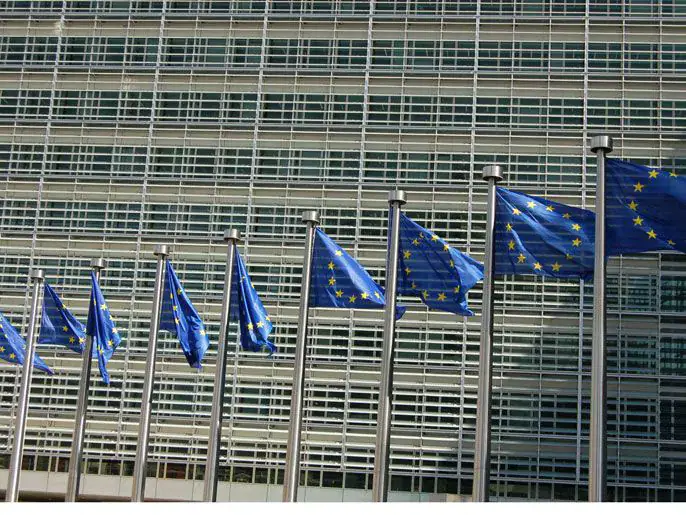
European Union leaders faced significant challenges in overcoming fundamental disagreements on the bloc's long-term budget and securing a new loan to aid Ukraine. The discussions took place during a summit in Brussels, where some leaders advocated for reduced spending and lower costs, while others defended traditional policies that account for substantial portions of the budget. Most leaders aim to provide additional funding for new priorities, including support for Ukraine as the war approaches its fifth year.
The proposed joint spending package reflects the EU's ambitions on the international stage. Although the budget is smaller compared to national budgets, it is primarily funded by contributions from the 27 member states, based on their economic size. The EU budget for 2028-2034 may range between 1% and 1.2% of the total national income. However, the likelihood of leaders failing to reach an agreement before the end of the year is increasing. Germany, along with other "net contributors" such as Austria, the Netherlands, and Sweden, plays a crucial role in these discussions.
German Chancellor Friedrich Merz emphasized the need for a solid financial foundation, stating that Europe cannot and should not take on more debt. He highlighted priorities such as a thriving economy, a strong internal market, and enhanced defense. In contrast, a large group of countries led by France and Italy, known as the "friends of cohesion," strongly defend financial allocations for farmers and infrastructure projects in less wealthy member states. These policies currently account for around a third of the budget.
The Czech Prime Minister, Andrej Babis, a billionaire, stressed that cohesion is about providing a comparable standard of living across regions. He cited the need for better infrastructure, such as highways and hospitals. European Council President Antonio Costa urged leaders to approach the discussion with an open mind, a constructive approach, and a spirit of compromise. He emphasized that an agreement is required by the end of the year and that unanimity is necessary.
Costa proposed introducing a digital service tax at the EU level, which could generate around €5 billion ($5.5 billion) annually. This tax would apply to online advertising revenue and the data-driven business models of companies. The issue of Ukraine is central to the budget discussions, with the proposed spending package including €100 billion ($110 billion) for the Ukrainian government over seven years. Leaders must also decide on a new loan and whether the budget should cover its servicing costs.
Earlier this month, Merz threatened to block the budget agreement unless all member states commit to supporting Ukraine collectively. However, some countries, including Bulgaria, the Czech Republic, Hungary, and Slovakia, oppose using funds for military assistance to Ukraine. The Russian government has criticized the EU's plans to allocate funds to Ukraine, suggesting that it would make Kyiv less inclined to engage in peace talks and more determined to continue the war.
The European Commission plans to raise loan funds from capital markets, allocating €20 billion ($22 billion) for the economy and €25 billion ($27 billion) for the armed forces. The ongoing conflict and its economic implications continue to pose significant challenges for Ukraine. As EU leaders continue their discussions, they must balance competing priorities and interests to reach a consensus on the long-term budget and support for Ukraine.
Key points
- EU leaders are divided over the bloc's long-term budget and a new loan to support Ukraine's economic and military needs.
- The proposed budget reflects the EU's ambitions on the international stage, with a focus on supporting farmers and infrastructure projects in less wealthy member states.
- The issue of Ukraine is central to the budget discussions, with the proposed spending package including significant allocations for the Ukrainian government.
Reporting sources
- الخلافات تقسم أوروبا حول "ميزانية اتحادها" · Assabah News