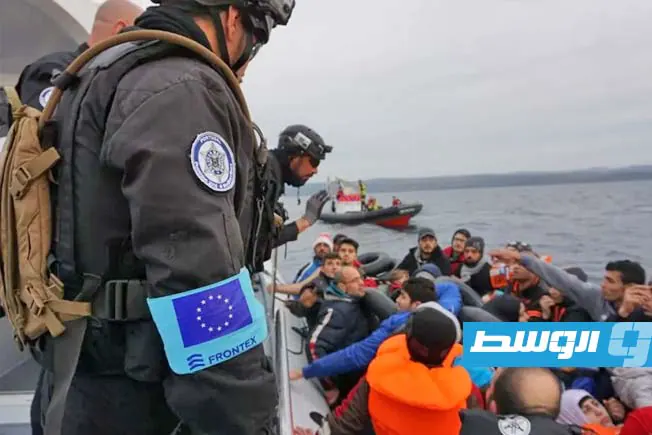
The European Court has revived a case against the European Border and Coast Guard Agency, Frontex, regarding its role in monitoring migrant boats and potentially facilitating their return to Libya. This development has sparked renewed debate in Brussels over the agency's activities and the European Union's migration policies. Frontex's operations have been scrutinized for their impact on migrants and refugees.
The case, filed in October 2024, claims that Frontex's aerial surveillance assists Libyan forces in intercepting migrant boats, leading to the detention and potential mistreatment of migrants and refugees in Libya. According to human rights organizations, this has resulted in numerous cases of arbitrary detention, torture, and exploitation. The plaintiff, a Sudanese asylum seeker, alleges that Frontex failed to suspend or terminate its activities despite potential human rights violations.
Frontex has denied allegations that it provides direct information to Libyan coast guards. Instead, the agency claims that it reports incidents to the relevant rescue coordination centers, which then coordinate with available vessels to provide assistance. The agency argues that its aerial surveillance enhances the ability of authorities to locate individuals at risk in the sea.
A 2026 United Nations report highlighted the dire situation faced by migrants, asylum seekers, and refugees in Libya, citing instances of arbitrary detention, human trafficking, forced labor, and sexual violence. The report also noted that Frontex had sent over 2,200 communications with detailed geographic information about migrant boats to Libyan authorities since January 2021.
European interior ministers have discussed strengthening migration monitoring and coordination in response to the situation. They are exploring ways to enhance Frontex's capabilities, flexibility, and resources. However, human rights organizations argue that expanding Frontex's role must be accompanied by clearer rules on surveillance, information sharing, and accountability.
The European Court's review of Frontex's activities has significant implications for the agency's future operations and the EU's migration policies. The court's decision could potentially impact the way Frontex conducts its surveillance and cooperation with Libyan authorities. This, in turn, may affect the lives of migrants and refugees attempting to cross the Mediterranean.
The case has sparked a broader debate about the balance between migration control and human rights. EU authorities face a delicate task in distinguishing between coordinating rescue efforts and supporting external border control measures. The outcome of the case will likely have far-reaching consequences for Frontex, the EU's migration policies, and the protection of human rights in the Mediterranean region.
Key points
- The European Court is reviewing Frontex's role in monitoring migrant boats and potentially facilitating their return to Libya.
- Human rights organizations argue that Frontex's activities have resulted in the detention and potential mistreatment of migrants and refugees in Libya.
- The court's decision could impact Frontex's future operations and the EU's migration policies.