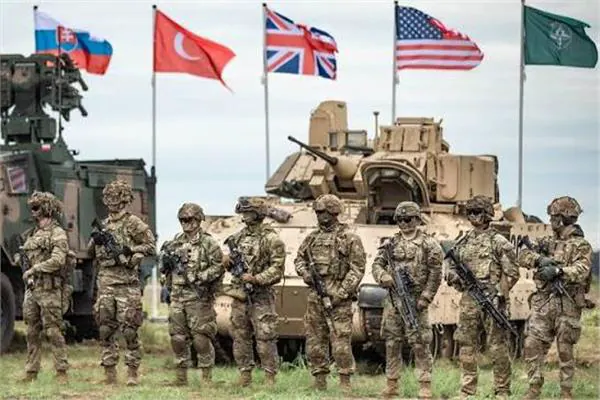
European and American leaders are taking simultaneous steps to counter the growing threat of Russian aggression beyond Ukraine's borders. According to a CNN analysis, several European capitals have begun preparing for potential scenarios, including attacks on critical infrastructure, sabotage, and cyberattacks. The moves come as Russia and its ally Belarus have increased military drills near the "Suvalki corridor," a narrow strip of land that connects the Baltic states to the rest of NATO.
The Suvalki corridor has become a focal point of concern for NATO, as it represents a vulnerable stretch of land that could be targeted by Russian aggression. In response, French President Emmanuel Macron has convened a secret intelligence meeting with party leaders to discuss measures to protect critical infrastructure from Russian hybrid attacks. Polish Prime Minister Donald Tusk has warned that Russia may launch drone or missile attacks on NATO member states, attempting to present them as accidental incidents.
European countries are taking various measures to prepare for potential Russian aggression. Britain has advised its citizens to prepare for the possibility of war by stockpiling food and water, with the Chief of the Defence Staff describing the current situation as the most perilous in decades. Germany has begun preparing its hospitals for potential attacks, while Chancellor Friedrich Merz has warned of a "crucial moment" in defending European freedom and peace.
Switzerland, traditionally a neutral country, has adopted a new national security strategy that focuses on increasing its resilience in the face of potential armed attacks. The strategy aims to enhance the country's ability to respond to emerging threats. Meanwhile, US President Trump has announced progress toward establishing a permanent US military base in Poland, a move seen as a significant step in strengthening NATO's eastern flank.
The US has also taken steps to bolster its presence in the region, with CIA Director William Burns undertaking a secret mission to warn against the dangers of attacking NATO territory. The move comes as Russia has increased its military presence along the Polish border, fueling concerns about a potential conflict. European leaders have emphasized the need for vigilance and cooperation in the face of growing Russian aggression.
The situation has sparked concerns about the potential for a wider conflict, with some European leaders warning that Russia may seek to exploit vulnerabilities in NATO's defenses. In response, NATO has emphasized its commitment to collective defense and has taken steps to enhance its military presence in the region. The alliance has also sought to improve its readiness and responsiveness to emerging threats.
As tensions continue to rise, European and US leaders are working closely to coordinate their responses to the growing threat of Russian aggression. The situation remains fluid, with many observers warning that the risk of conflict is higher than at any point in recent years. KEY_POINT: European leaders are taking steps to prepare for potential Russian aggression, including attacks on critical infrastructure and cyberattacks.
Key points
- The US has announced progress toward establishing a permanent military base in Poland, a move seen as a significant step in strengthening NATO's eastern flank.
- Russia's increased military presence along the Polish border has fueled concerns about a potential conflict.