An unprecedented wave of bomb threats has swept across Europe, leaving the bloc scrambling to respond. The threats, mainly sent via email, have impacted multiple media broadcasters, over 50 flights, thousands of schools and at least one cruise ship. While the threats have proven false, they pose an increasingly urgent security challenge for European authorities. Analysts say the hoaxes have exposed the vulnerability of Europe's public infrastructure to anonymous messages.
The bomb threats targeting European flights were taken seriously by authorities, eliciting strong action that varied between countries. Some authorities diverted flights to other airports, while others, such as Hungary and France, scrambled fighter jets to escort affected passenger planes. The chief executive of Hungarian airline Wizz Air, József Váradi, has called for more harmonized security procedures and possibly a central body to manage such hoaxes. He recently met with European Commission officials to push for a coordinated response.
Analysts say a more coordinated response is needed to tackle the threats. Grégoire Roos, director of the Europe, Russia and Eurasia programs at the London-based Chatham House think tank, said that while initial security responses have been strong, coordination between European countries remains insufficient. He believes establishing a Europe-wide threat assessment standard would be a first step towards improvement. This would involve corroborating intelligence and considering the circumstances of each incident at a continental level.
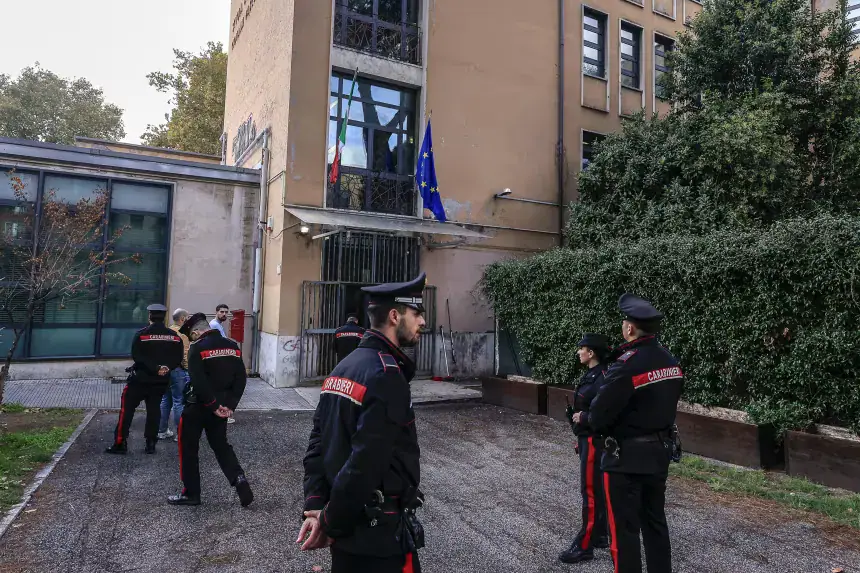
The threats also expose the economic burden of countering such hoaxes. A single email can force a mass security deployment, divert flights or prompt the evacuation of public buildings, weighing heavily on public resources and causing disruption to daily life. In Italy, thousands of schools received bomb threats, with Prime Minister Giorgia Meloni urging parents to remain calm and minimize disruption. Many schools chose to remain open, while hundreds were evacuated.
European officials have increasingly warned about the threat posed by hybrid warfare tactics, with Russia frequently accused of using cyberattacks, sabotage and disinformation to undermine Western countries. However, French President Emmanuel Macron cautioned against jumping to conclusions, saying there is not yet enough evidence to attribute the threats to foreign powers. Moscow has repeatedly denied involvement in such activities.
The digital nature of the alerts makes it difficult for investigators to track down their origin. Cybersecurity firms have found that many threats were sent from legitimate webmail accounts that had been hijacked, making it difficult for law enforcement to track down those responsible. Some threats were signed off by certain entities, such as the "Male State," a Russian ultra-nationalist group, but authorities suspect these could be false attributions.
As Europe continues to grapple with the threats, there are concerns about the long-term impact on public confidence and stability. Analysts warn against automatically pointing the finger at Moscow without concrete evidence, as this could embolden other potential actors. The European bloc's ability to respond effectively to the threats will depend on its ability to coordinate a response and establish a unified security framework.
Key points
- Europe's public infrastructure has been exposed as vulnerable to anonymous and hard-to-trace messages.
- A coordinated response to the threats is hindered by the "sovereign nation state concept," with countries reluctant to concede control.
- The economic burden of countering the hoaxes is significant, with a single email able to force a mass security deployment and disrupt daily life.