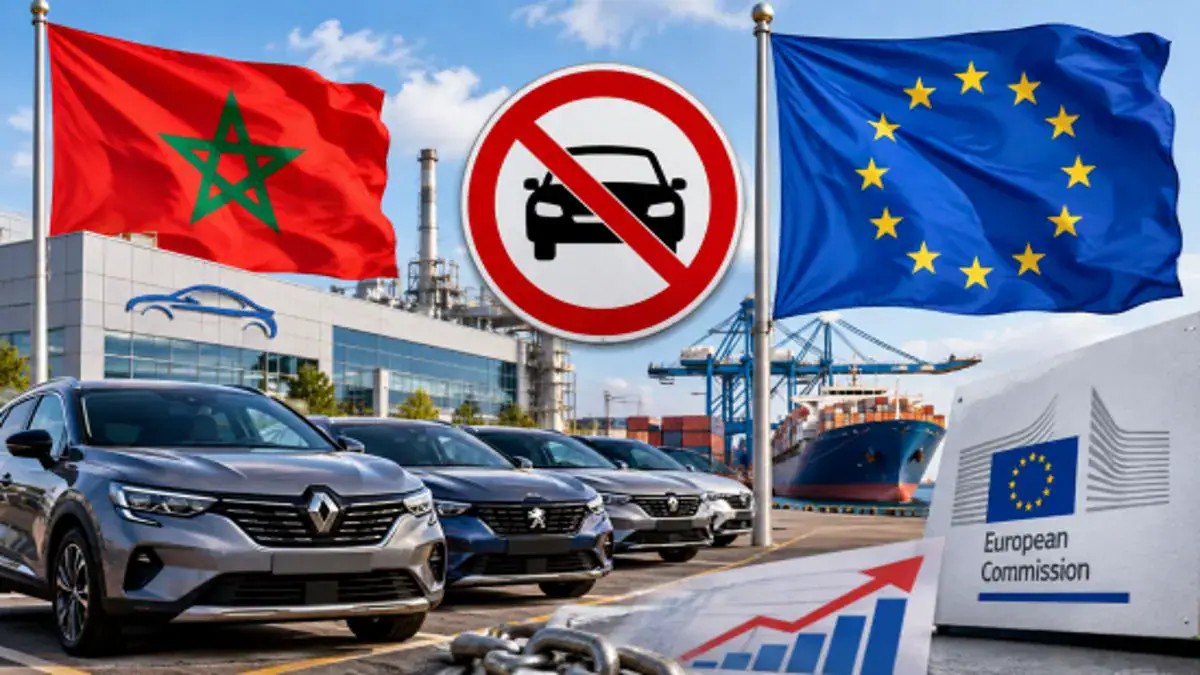
The European Commission's plan to restrict imports of hybrid cars assembled in Morocco has raised concerns about the future of the country's automotive industry. The move is part of a broader review of European industrial and trade policies, driven by increasing international competition in the electric and hybrid vehicle sector. Morocco's automotive sector, which has become a significant export earner, may face challenges due to these new restrictions.
The proposed quotas, set to take effect from December 1, 2026, would limit Moroccan hybrid car imports to 23,000 units over a 200-day period. This development coincides with the European Commission's "Made in Europe" project, which aims to prioritize locally produced vehicles and provide incentives for European manufacturers. Moroccan officials worry that these measures could undermine the country's competitive edge and threaten its industrial partnerships with European companies.
Morocco has invested heavily in its automotive industry over the past two decades, attracting significant investments from global companies like Renault and Stellantis. The country's strategic location, competitive production costs, and favorable trade agreements have made it an attractive hub for European automotive production. However, the new European policies may force Morocco to reassess its industrial strategy and explore alternative markets.
China's plans to invest $10 billion in Morocco's automotive sector have been put on hold due to the changing European landscape. Beijing may need to reevaluate its investment strategy in light of the new quotas and European incentives for local production. Meanwhile, European countries, including France, are actively courting Chinese investments, with President Emmanuel Macron announcing that Chinese company BYD is considering setting up a factory in northeastern France.
The European Commission's moves have sparked concerns about the potential impact on Morocco's economy, which has become increasingly reliant on its automotive sector. The industry accounts for a significant share of Morocco's exports and has created thousands of jobs. Any disruption to the sector could have far-reaching consequences for the country's economic growth and development.
The tensions between Morocco and Europe are not solely driven by economic factors. The migration crisis and recent developments in the disputed territory of Ceuta have added a layer of complexity to the relationship. While it is unclear whether the European Commission's decisions are motivated by a desire to exert pressure on Morocco, the country's leaders will need to navigate these challenges carefully to protect its economic interests.
As Morocco navigates this critical juncture, it will need to consider diversifying its export markets, increasing the local content of its automotive production, and developing new partnerships outside the European Union. The country's success in attracting foreign investment and building a competitive automotive industry has been remarkable, but the changing European landscape presents new challenges that will require careful planning and strategic decision-making.
Key points
- European Commission to impose quotas on Moroccan hybrid car imports
- Morocco's automotive sector faces challenges due to new European policies
- China's investments in Morocco's automotive sector put on hold due to changing European landscape