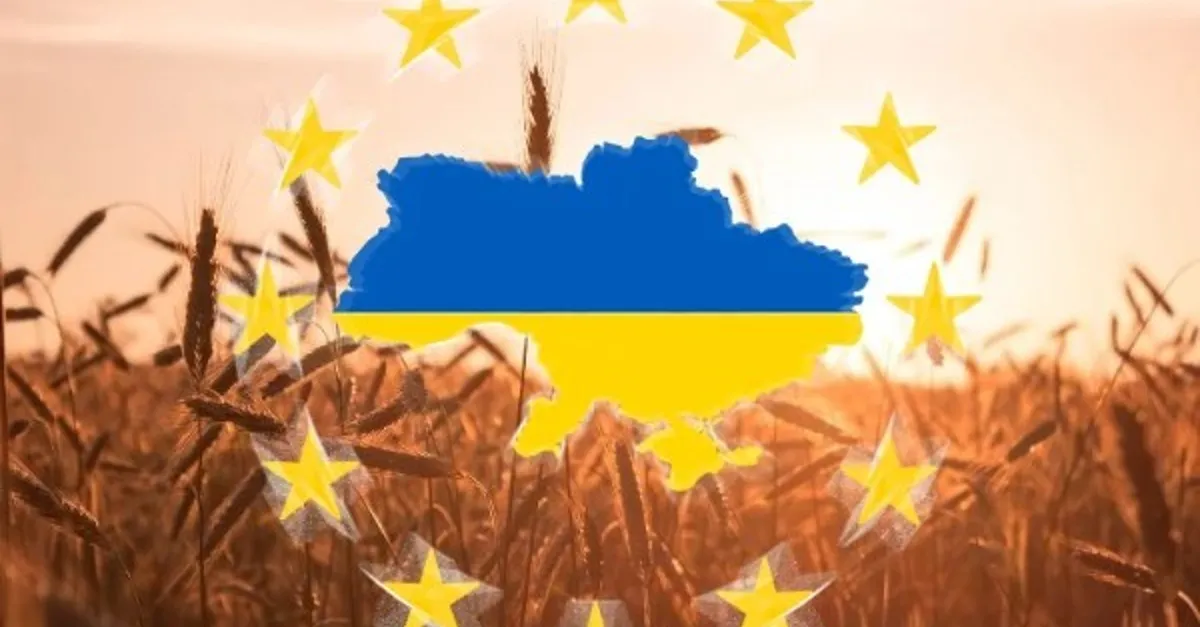
The European Commission has outlined strict conditions for Ukraine's accession to the European Union, according to a confidential document obtained by the Financial Times. The document reveals that Ukraine's significant agricultural sector and high production levels require special arrangements, including restrictions on financial support and market access for products such as wheat, grains, and oilseeds. This move is seen as a concession to EU member states like France, Poland, and Italy, which have expressed concerns about the potential flood of Ukrainian agricultural products into their markets.
The European Commission has pledged to support Ukraine in restoring its historical export markets, which have been severely impacted by the ongoing Russian war. This commitment is seen as an attempt to balance the interests of existing EU members with the need to support Ukraine, which is fighting a existential war. The Commission has identified four countries, including Ukraine, Moldova, Montenegro, and Albania, as being most advanced in their EU accession talks. Each of these countries will receive a customized "roadmap" outlining the steps they need to take to join the EU.
The EU's expansion process has been complicated by concerns about Ukraine's readiness to join the bloc, particularly in terms of its record on the rule of law and corruption. A series of corruption scandals in Ukraine has weakened the confidence of some EU partners in Kyiv's ability to meet the bloc's standards. The European Commission has proposed developing a new mechanism to suspend voting rights for member states that violate EU values, and has emphasized the need for Ukraine to implement reforms in areas such as the rule of law and corruption.
The EU has proposed a new approach to funding for Ukraine, which would tie financial support to progress on reforms. This approach, known as "target-based financing," would allow the EU to freeze funding if Ukraine fails to implement necessary reforms. The Commission has also emphasized the need for Ukraine to strengthen its institutions and ensure the independence of its judiciary.
Ukraine's agricultural sector is a significant concern for the EU, with the country's high production levels and large sector size requiring special arrangements. The EU has proposed a range of measures to support Ukraine's agricultural sector, including restrictions on market access and financial support. These measures are seen as necessary to protect the interests of EU member states, which have expressed concerns about the potential impact of Ukrainian agricultural products on their markets.
The EU's expansion process has been driven by a desire to support Ukraine and other countries in the region, which are seeking to join the bloc. The Commission has emphasized the need for these countries to implement reforms and meet EU standards, and has proposed a range of measures to support their accession talks. These measures include the development of customized "roadmaps" outlining the steps each country needs to take to join the EU.
The EU's approach to Ukraine's accession talks has been shaped by a range of factors, including concerns about the country's readiness to join the bloc and the need to balance the interests of existing member states. The Commission has emphasized the need for Ukraine to implement reforms and meet EU standards, and has proposed a range of measures to support its accession talks. These measures include the development of new mechanisms to suspend voting rights for member states that violate EU values.
Key points
- The EU has imposed strict conditions on Ukraine's accession, including limits on agricultural market access and financial support.
- The EU has proposed a range of measures to support Ukraine's agricultural sector, including restrictions on market access and financial support.
- The EU's expansion process has been complicated by concerns about Ukraine's readiness to join the bloc, particularly in terms of its record on the rule of law and corruption.