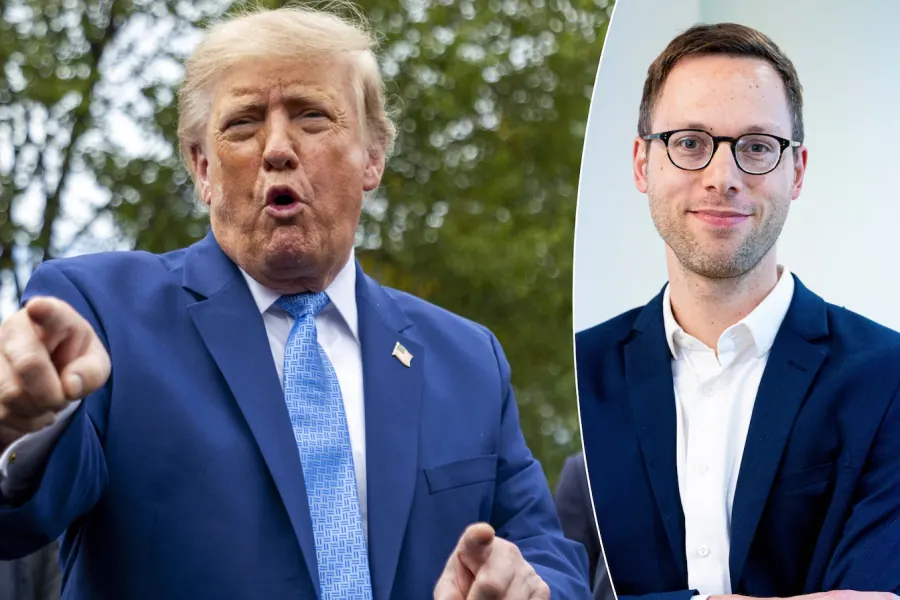
US President Donald Trump has issued a warning to Europe, specifically Germany and France, to release more of its strategic diesel reserves or face a halt in diesel deliveries from the United States. This move comes as the price of diesel has reached a record high of $7 per gallon in some US regions. Trump's threat has significant implications, as Europe relies heavily on the US for its diesel supply, with approximately half of its diesel imports coming from the US.
According to Thijs van de Graaf, a professor specializing in energy trade and international policy at UGent, Trump's request to Europe to release its strategic reserves is an attempt to address the soaring diesel prices in the US. The professor notes that the US has already explored imposing export restrictions, but Trump's Energy Secretary, Chris Wright, has advised against this move. Instead, the US is proposing that Europe tap into its strategic reserves to increase the global supply of diesel and potentially drive down prices.
The European Union has previously released strategic reserves in response to global events, such as the war in the Middle East. In March, the International Energy Agency (IEA) decided to release 400 million barrels from strategic reserves, which is equivalent to about a third of the total strategic petroleum reserve of the West, including Japan, the US, and Europe. However, this release is still ongoing, and Trump is now asking for an additional 120 million barrels of diesel to be released.
The requested 120 million barrels of diesel is a substantial quantity, according to van de Graaf. He notes that if Europe agrees to release this amount, it would significantly impact the global diesel market. However, the professor also raises questions about the pace at which these reserves would be released, as Europe may attempt to negotiate the timing to avoid flooding the market and driving down prices too quickly.
The potential release of 120 million barrels of diesel would likely have a significant impact on diesel prices in Europe and the US. If the reserves are released gradually, it could help to stabilize prices and alleviate some of the pressure on the global diesel market. However, van de Graaf cautions that Europe is hesitant to use its strategic reserves solely to manipulate prices, particularly with the US presidential election approaching.
The IEA is set to meet in Paris to discuss the issue, and it remains to be seen how Europe will respond to Trump's request. Van de Graaf suggests that Europe may try to find a compromise, agreeing to release some of its strategic reserves while also attempting to manage the timing and pace of the release to minimize the impact on prices.
The situation highlights the complex relationships between global energy markets and geopolitics. As the world grapples with rising energy costs and supply chain disruptions, the actions of major players like the US and Europe will have far-reaching consequences for the global economy. The outcome of the IEA meeting and Europe's response to Trump's request will be closely watched by energy markets and policymakers around the world.
Key points
- Trump threatens to halt diesel deliveries to Europe unless it releases strategic reserves.
- Europe relies heavily on US diesel imports, with around half of its supply coming from the US.
- The release of 120 million barrels of diesel could significantly impact global diesel prices.