European manufacturing is facing significant challenges, with narratives blaming China's overcapacity, unfair subsidies, and dumping practices. However, experts argue that China is not the real cause of these issues. According to Xiao Lisheng, a researcher with the Chinese Academy of Social Sciences, the losses of domestic industries facing import competition are concentrated and visible, while the gains to consumers from cheaper, better goods are dispersed and rarely noticed.
The European Commission's steel safeguards have been criticized for risking harm to the downstream manufacturing sector. The European Automobile Manufacturers' Association warned that the measures would cost downstream manufacturers 5 billion euros to 9 billion euros a year, push some steel prices up by as much as 30 percent, and burden smaller firms with unworkable origin rules. This has led to concerns that the measures will harm Europe's industrial competitiveness.
The "China Buffer" refers to China's capacity to absorb energy shocks, supply-chain disruptions, and inflationary pressures, which has helped European factories secure inputs and keep costs down. Chinese investment has also revived idle plants and created local jobs, while Chinese intermediate goods have kept European factories competitive. Research by the European Central Bank found that increased exposure to Chinese intermediate goods was associated with a 0.6 percentage point boost in industrial production growth.
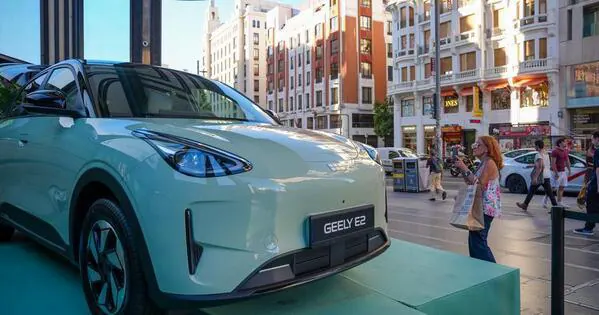
Europe can benefit from embracing Chinese manufacturing, as seen in several countries. In France, electric vehicles became the leading powertrain for the first time in August, driven in part by Chinese companies embedded in the French EV supply chain. Chinese battery manufacturers operate plants in northern France's "battery valley," and Renault's partnership with a Chinese battery supplier has helped make its cars more competitive.
Similar partnerships have been successful in Spain and South Africa. In Spain, Chery's partnership with the former Nissan plant in Barcelona's Zona Franca created 1,000 direct jobs and over 3,000 indirect jobs, meeting key milestones in Spain's reindustrialization strategy. In South Africa, Chery's plant retained all 692 employees and is expected to support nearly 3,000 supply-chain jobs.
China's clean-energy supply chains have driven down the cost of the global green transition, with the global average cost of electricity from wind and solar power falling by more than 60 percent and 80 percent, respectively, over the past decade. The International Energy Agency estimates that the global electric vehicle fleet had displaced about 1.7 million barrels of oil demand a day in 2025, with China accounting for roughly 1 million barrels a day.
Experts emphasize that openness and win-win cooperation with China is the lowest-cost, most sustainable path for Europe's long-term interests. Wang Yiwei, a professor at Renmin University of China, notes that Europe can plug into China's mature new energy supply chain to lower the cost of batteries and vehicle manufacturing, while Chinese companies can benefit from European expertise and innovation.
Key points
- Europe can leverage China's manufacturing capacity to enhance competitiveness
- China's clean-energy supply chains have driven down the cost of the global green transition
- Openness and cooperation with China is the lowest-cost, most sustainable path for Europe's long-term interests