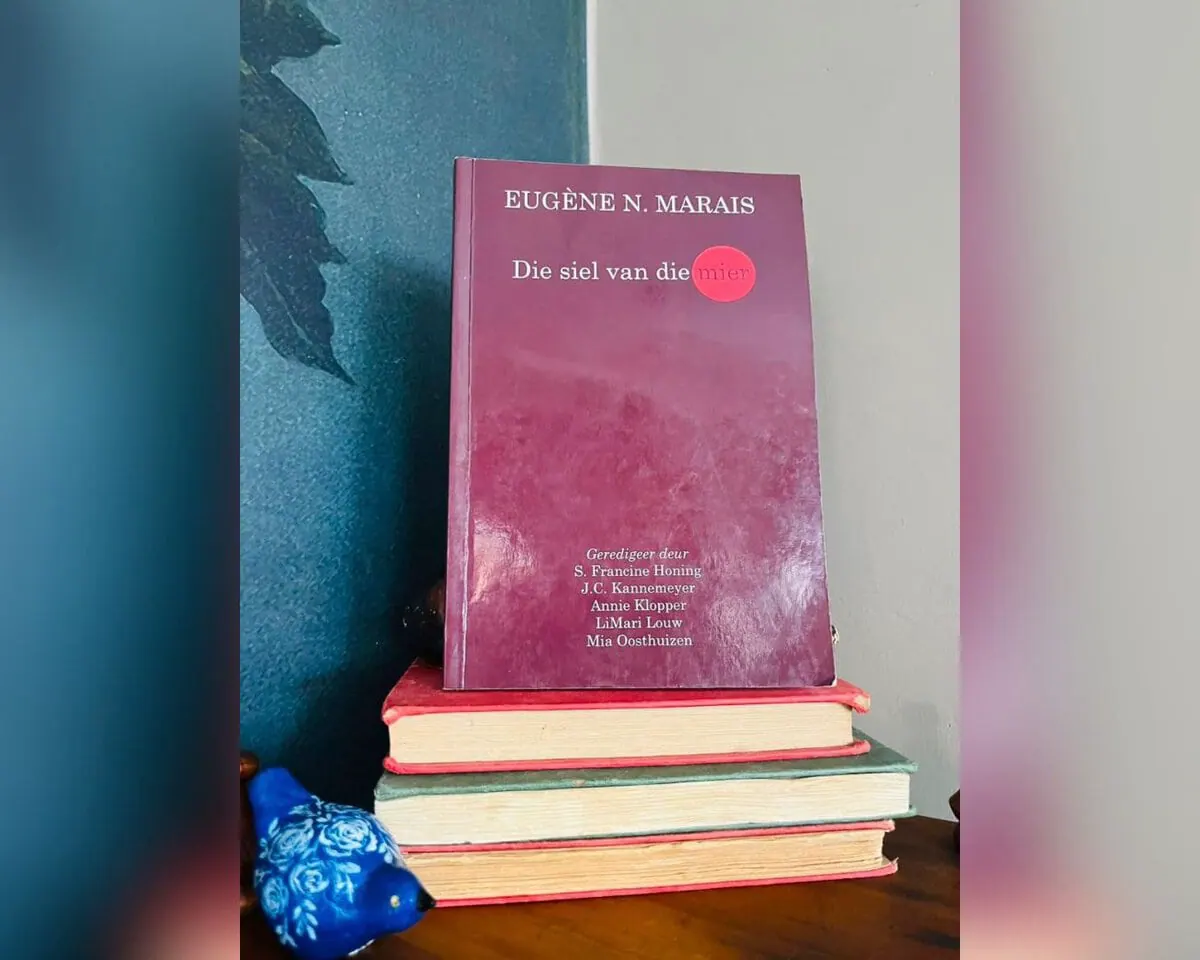
A recent reader of Eugène Marais' book, The Soul of the Termite, has reflected on the enduring relevance of the 1934 publication. The book, which was initially published as an article series in Die Huisgenoot between 1925 and 1926, has been praised for its insightful observations on the social structure of termites. The reader, who chose the book for their book club, was struck by Marais' writing style and the way he presented his findings on the termites' behavior.
The book is not a novel, but rather a collection of scientific observations on termites that Marais recorded over an 11-year period. Marais' aim was not to convince readers of a particular subtext, but rather to present his findings in a neutral and factual manner. The reader noted that the book's relevance extends beyond its scientific value, as it offers insights into the workings of a community and the importance of cooperation and teamwork.
One of the key aspects of the termites' behavior that struck the reader was their absolute commitment to their roles and their lack of concern for the future. The termites do not compete with each other for dominance, and their social structure is relatively flat, with the queen termite being the only individual with a specific role. The reader noted that this approach to life is in stark contrast to human society, where individuals often strive for power and status.
The reader was also impressed by the termites' consistency and work ethic. They noted that the termites do not have "lazy days" or days where they search for inspiration, but rather work tirelessly to build and maintain their colonies. The termites use a special type of "glue" to construct their mounds, which are made up of sand grains that they collect and arrange using their mouths.
The reader's reflections on the book were not limited to its scientific value, but also extended to its philosophical and spiritual implications. They noted that the termites' approach to life is one of acceptance and contentment, and that they do not strive for greatness or try to change their circumstances. This approach, the reader suggested, is one that humans could learn from.
The reader's appreciation for Marais' work was also influenced by their knowledge of his background and motivations. Marais spent over a decade studying termites, and his dedication and passion for his work are evident in the book. The reader noted that Marais' humility and love for nature are qualities that are inspiring and admirable.
The book's enduring relevance, 92 years after its publication, is a testament to Marais' insightful observations and the timeless value of his work. The reader's reflections on the book offer a thought-provoking commentary on human society and our approach to life, and serve as a reminder of the importance of cooperation, teamwork, and a commitment to one's role.
Key points
- Eugène Marais' book, The Soul of the Termite, remains relevant 92 years after its publication due to its insightful observations on the social structure of termites and its philosophical and spiritual implications.