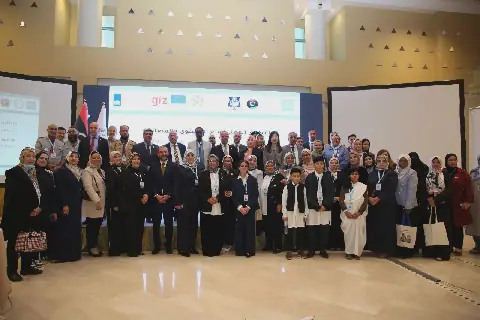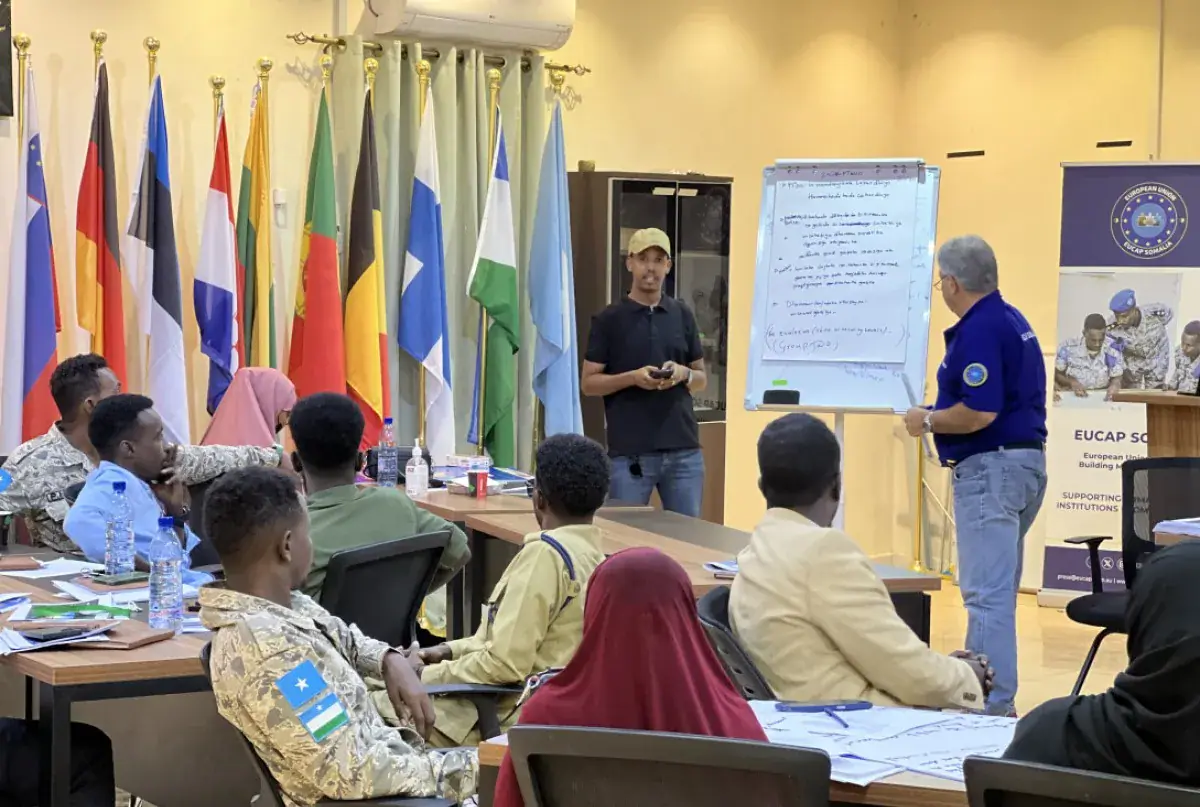
The European Union Capacity Building Mission in Somalia (EUCAP Somalia) recently conducted a five-day training programme on the International Ship and Port Facility Security (ISPS) Code in Puntland. The training, held from 15 to 19 November 2026, aimed to strengthen maritime security capacity and improve port safety in the region. Participants from key maritime, port security, and government institutions gathered to enhance their understanding of international port security standards and their practical application.
The programme covered critical aspects of the ISPS Code, including government responsibilities, Port Facility Security Assessments (PFSA), Port Facility Security Plans (PFSP), security levels, and operational security measures. A key objective was to strengthen the implementation of international port security standards at Bossaso Port while promoting closer cooperation and coordination among relevant government agencies and maritime stakeholders. This initiative is part of broader efforts to enhance port security systems and promote safer, more secure, and resilient port operations across Puntland.
Throughout the training, participants exchanged experiences and explored practical approaches to identifying security threats, assessing vulnerabilities, and improving coordination in responding to potential risks affecting port facilities. The programme also included a one-day tabletop exercise (TTX), during which participants applied their knowledge to simulated port security scenarios. This exercise provided an opportunity to assess response procedures, strengthen decision-making, and improve inter-agency coordination in addressing maritime security challenges.
The five-day programme concluded with a certificate presentation ceremony recognising the participants’ successful completion of the training. Mohamed, representing BP-MPU, highlighted the importance of the training in strengthening professional knowledge and practical skills in port security. He noted that the training has strengthened his understanding of international port security standards, particularly the importance of identifying security threats and vulnerabilities.
EUCAP Somalia continues to support the development of Somalia’s maritime security capabilities through specialised training, technical assistance, and institutional cooperation. The latest initiative forms part of these efforts to strengthen port security systems and enhance coordination among maritime institutions. By promoting closer cooperation and coordination among relevant government agencies and maritime stakeholders, EUCAP Somalia aims to contribute to safer, more secure, and resilient port operations across Puntland.
The training programme was delivered through EUCAP Somalia's Puntland Field Office, which plays a crucial role in supporting the development of Somalia's maritime security capabilities. By providing specialised training and technical assistance, EUCAP Somalia is helping to build the capacity of key maritime, port security, and government institutions in Puntland. This, in turn, will contribute to the overall security and stability of the region.
The success of the ISPS Code training programme highlights the importance of international cooperation and capacity building in addressing maritime security challenges. EUCAP Somalia's efforts to strengthen port security capacity in Puntland demonstrate the mission's commitment to supporting the development of Somalia's maritime security capabilities. As the programme continues to yield positive results, it is likely that similar initiatives will be implemented in the future to further enhance port security and promote regional stability.
Key points
- EUCAP Somalia delivers ISPS Code training to enhance port security capacity in Puntland
- The training programme aims to strengthen the implementation of international port security standards at Bossaso Port
- EUCAP Somalia continues to support the development of Somalia’s maritime security capabilities through specialised training and technical assistance