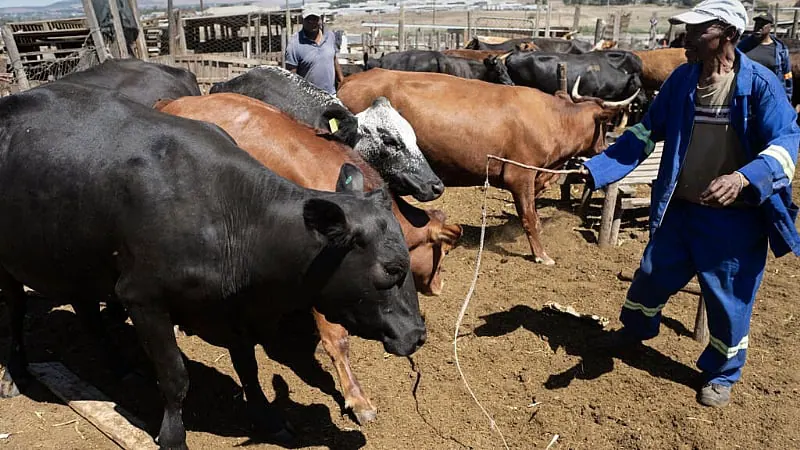
The European Union has suspended beef exports from Namibia following an outbreak of foot and mouth disease in the country. The disease was first detected in September 2026 in Namibia's primary commercial livestock zone, prompting a nationwide ban on livestock movement and meat exports. This is the first outbreak of foot and mouth disease in Namibia in 60 years. The EU's decision to suspend exports was announced on October 6, 2026.
The foot and mouth disease outbreak has affected 11 farms in southern Namibia since it was declared on September 22, 2026. The disease causes fever and blisters near the hoof and in the mouth, preventing animals from feeding and sometimes leading to death. Namibia's agriculture ministry has implemented various disease-control measures, including intensified surveillance, tracing and testing, movement controls, veterinary roadblocks, and biosecurity measures.
The EU's suspension of beef exports from Namibia will have a significant impact on the country's economy, particularly on the 40,000 direct jobs involved in exports to Europe. According to EU ambassador Ana Beatriz Martins, around 10 million kilograms of Namibian beef are exported to Europe annually, accounting for more than 80 percent of Namibia's beef exports. A quarter of these jobs are expected to be affected by the suspension.
Foot and mouth disease has also been detected in other southern African countries, including Botswana, Eswatini, Lesotho, Mozambique, South Africa, Zambia, and Zimbabwe. The disease is affecting cattle and other hooved animals, and the EU has taken measures to prevent its spread to its territory. The EU's suspension includes fresh meat of cattle, sheep, and goats, as well as certain processed meat products.
However, processed meat that has undergone "the most severe risk-mitigating treatment" remains eligible for entry into the EU. The EU took a similar measure during the last major foot and mouth disease outbreak in 2001, when more than six million animals had to be culled. The EU's decision to suspend exports from Namibia is aimed at protecting its livestock industry from the disease.
The Namibian government has taken swift action to control the outbreak, including imposing a nationwide ban on livestock movement and meat exports. The country's agriculture ministry is working to contain the disease and prevent its spread to other parts of the country. The ministry's spokesman, Romeo Muyunda, said that the government is doing everything possible to mitigate the impact of the outbreak.
The suspension of beef exports from Namibia is a significant blow to the country's economy, but it is also a necessary measure to prevent the spread of foot and mouth disease to other countries. The EU's decision to suspend exports is a precautionary measure aimed at protecting its livestock industry. The Namibian government is working to control the outbreak and restore exports to the EU as soon as possible.
Key points
- The EU has suspended beef exports from Namibia due to an outbreak of foot and mouth disease in the country.
- The disease has affected 11 farms in southern Namibia and has also been detected in other southern African countries.
- The suspension of beef exports from Namibia will affect around a quarter of the 40,000 direct jobs involved in exports to Europe.