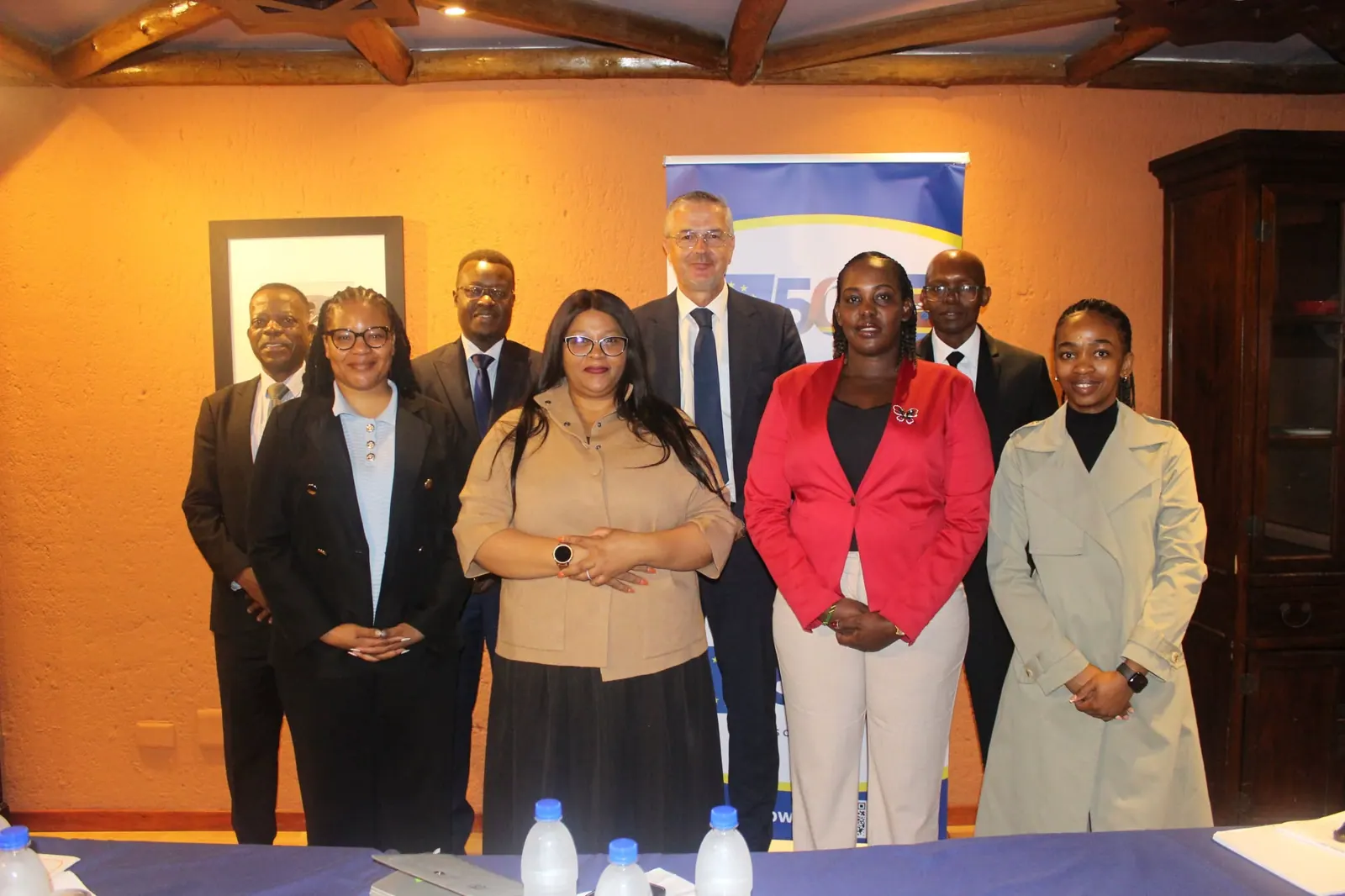
The European Union has reaffirmed its commitment to supporting Eswatini's efforts in combating money laundering and terrorism financing. As the country prepares for its upcoming mutual evaluation, the EU, through the SecFin Africa Project, is facilitating a Financial Action Task Force (FATF) Standards Training Course. This initiative aims to enhance the understanding of FATF Recommendations among key stakeholders in Eswatini's financial sector.
The training course, which is being conducted by the Secretariat of the Eastern and Southern Africa Anti-Money Laundering Group (ESAAMLG), brings together crucial stakeholders from across Eswatini's financial sector. The goal is to equip them with the necessary skills to apply FATF standards effectively in practice. Eswatini's national Anti-Money Laundering and Countering the Financing of Terrorism (AML/CFT) Task Force, through the Ministry of Finance, requested this training to ensure the country's readiness for the mutual evaluation.
EU Ambassador to Eswatini, Karsten Mecklenburg, recently held a courtesy meeting with the ESAAMLG Secretariat. Discussions during the meeting focused on the objectives of the training and various aspects of Eswatini's regulatory framework. Particular attention was given to rules governing non-profit organizations, emphasizing the need for effective measures to prevent terrorism financing while allowing legitimate civil society organizations to operate within a suitable regulatory environment.
The upcoming mutual evaluation of Eswatini will assess the country's measures and systems for addressing money laundering and terrorist financing risks. This evaluation highlights the importance of the current training, as it aims to identify areas for improvement and ensure that Eswatini's regulatory framework aligns with international standards. The EU's support through the SecFin Africa Project is crucial in this regard, as it seeks to strengthen AML/CFT frameworks across Sub-Saharan Africa.
The SecFin Africa Project is part of the EU's broader efforts to enhance financial stability and security in the region. By supporting Eswatini and other countries in strengthening their AML/CFT frameworks, the EU aims to contribute to a safer and more stable financial environment. This, in turn, will help prevent the misuse of the financial system for illicit purposes and promote sustainable economic growth.
The training course is also significant, given the importance of balancing regulatory measures with the need to facilitate legitimate financial activities. Effective AML/CFT frameworks must prevent illicit financial flows without imposing undue burdens on legitimate businesses and civil society organizations. The EU's support for Eswatini in this area reflects its commitment to promoting a balanced approach to financial regulation.
As Eswatini prepares for its mutual evaluation, the country's authorities will need to demonstrate their commitment to implementing effective AML/CFT measures. The EU's support through the SecFin Africa Project and the current training course will be instrumental in helping Eswatini meet international standards in this area. The outcome of the mutual evaluation will provide valuable insights into Eswatini's progress and identify areas for further improvement.
Key points
- The European Union supports Eswatini's anti-money laundering efforts through the SecFin Africa Project.
- Eswatini prepares for its upcoming mutual evaluation to assess its measures against money laundering and terrorist financing risks.
- The training course aims to enhance the understanding of FATF Recommendations among key stakeholders in Eswatini's financial sector.