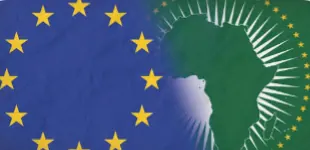
The European Union is pressing to strengthen its ties with West Africa, a region that remains central to its Global Gateway strategy. West Africa is the EU's largest trading partner in Sub-Saharan Africa, with trade between the two regions valued at €64 billion in 2024. The EU is West Africa's biggest trading partner, and West African countries, led by Côte d'Ivoire, Nigeria, and Ghana, supply more than 70% of EU imports of cocoa and cocoa products.
The EU has initialled an Economic Partnership Agreement with 16 West African states, ECOWAS, and the WAEMU bloc. Until this regional deal is adopted, "stepping stone" agreements with Côte d'Ivoire and Ghana have been in provisional application since 2016. In 2023, the EU signed financing agreements worth more than €210 million with ECOWAS, covering trade, migration, energy, and agriculture. These agreements demonstrate the EU's commitment to strengthening its economic ties with West Africa.
At the 10th Nigeria-EU Business Forum in June 2026, EU and ECOWAS representatives jointly pitched Nigeria as a gateway to West Africa's more than 400 million consumers and the 1.4 billion-strong AfCFTA market. EU foreign policy chief Kaja Kallas welcomed EU support for infrastructure such as the Abidjan-Lagos Corridor, a project aimed at boosting economic integration and trade in the region.
The EU's Global Gateway strategy includes an Africa-Europe Investment Package that earmarks about €150 billion to strengthen partnerships with Africa. In West Africa, the EU held a business forum on transport and strategic corridors in Abidjan from March 30 to April 1, 2026, aiming to boost investment along the Abidjan-Lagos and Abidjan-Ouagadougou corridors. A subsea cable extension to West Africa, with a first landing in Dakar, Senegal, is also envisaged.
The EU has a strong bilateral relationship with Côte d'Ivoire, its biggest trading partner, accounting for a third of its foreign trade, and its biggest investor. The Commission has also launched negotiations for a Sustainable Investment Facilitation Agreement with Abidjan. In Ghana, Spanish military personnel have trained Ghanaian forces in Accra under the EU Security and Defence Initiative for the Gulf of Guinea.
Despite these efforts, analysts urge caution, noting that the flagship projects are mostly concentrated in a few corridors. An academic study of the EPA projected small overall effects, positive for Burkina Faso and Côte d'Ivoire but negative for Benin, Ghana, Nigeria, Senegal, and Togo. The EU also faces a political challenge in the Sahel, where it has lined up with ECOWAS on transition governments.
The EU's engagement with West Africa is part of a broader effort to strengthen its partnerships with the region. As the EU continues to deepen its ties with West Africa, it will be important to monitor the impact of these agreements and investments on the region. The EU's commitment to supporting regional integration and economic development in West Africa is clear, but the effectiveness of these efforts remains to be seen.
Key points
- The EU has initialled an Economic Partnership Agreement with 16 West African states, ECOWAS, and the WAEMU bloc.
- The EU's Global Gateway strategy includes an Africa-Europe Investment Package that earmarks about €150 billion to strengthen partnerships with Africa.
- The EU has a strong bilateral relationship with Côte d'Ivoire, its biggest trading partner, accounting for a third of its foreign trade.