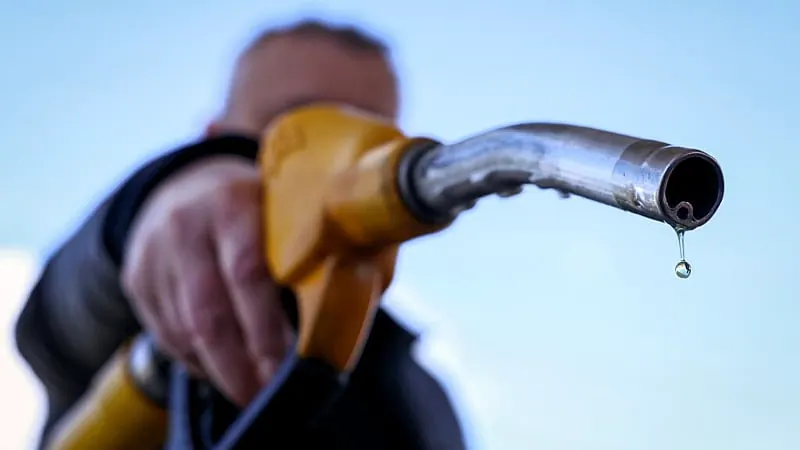
The European Union is grappling with record-high fuel prices, driven by surging oil futures due to the Middle East conflict and Ukrainian strikes on Russian refineries. Crude oil prices have risen sharply since the start of the conflict, climbing from around $70 per barrel to about $100 currently. This increase has been further exacerbated by a surge in maritime freight costs in the Middle East, making exporting refined products from the Gulf financially unviable.
The scale of fuel price increases has differed significantly from country to country in Europe, and governments have taken different measures to address the spikes. According to Julien Mathonniere, an economist at Energy Intelligence, Europe taxes fuel heavily, with a minimum tax per litre of 33 euro cents for diesel and 35.9 cents for unleaded petrol. This is before Value Added Tax of at least 15 percent in Europe, with French VAT at 20 percent. Each EU country can add its own taxes to the minimum rates, causing significant differences at the pump.
On September 14, according to European Union data, a litre of diesel cost around 2.50 euros in Denmark and Finland, 2.29 euros in France, and 1.83 euros in Spain. Taxes often make up more than two-thirds of the price, as noted by Mathonniere. Arne Lohmann Rasmussen of Global Risk Management explained that this is why diesel prices are actually higher in Europe than in Asia, despite Asia being more directly affected by the conflict involving Iran.
EU nations Portugal and Romania have implemented measures to directly cut fuel taxes to limit price hikes at the pump. Others have favoured targeted aid, such as Bulgaria, which announced that nearly 550,000 vulnerable citizens would receive a one-off payment of 50 euros to offset rising fuel costs. At the European Union level, the priority appears to be protecting the sectors hardest hit by price increases.
The European Commission has authorized state aid for the most affected industries -- agriculture, fisheries, and transport. French President Emmanuel Macron has written to EU chief Ursula von der Leyen in an effort to sway certain European regulations. He is calling for a relaxation of European fuel quality standards. Repeated Ukrainian drone attacks on Russian refineries are also significantly reducing the global supply of engine fuels, particularly diesel.
As a result, prices are soaring, boosting operating margins for refiners, while countries are scrambling to avoid shortages. The situation is further complicated by the fact that tankers designed for refined products carry far fewer barrels than those used for crude oil, leading to additional transport costs. TotalEnergies chief executive Patrick Pouyanne explained that the additional transport cost rises to around $50 per barrel for companies.
Meanwhile, prices risk rising further as the wars continue. European governments will likely face increased pressure to implement more measures to mitigate the impact of high fuel prices on their economies. The European Union will need to balance the need to support affected industries with the need to maintain economic stability.
Key points
- European Union fuel prices vary significantly due to different government taxes and subsidies.
- EU nations implement measures to cut fuel taxes and provide targeted aid to mitigate price hikes.
- The European Commission authorizes state aid for affected industries, including agriculture, fisheries, and transport.