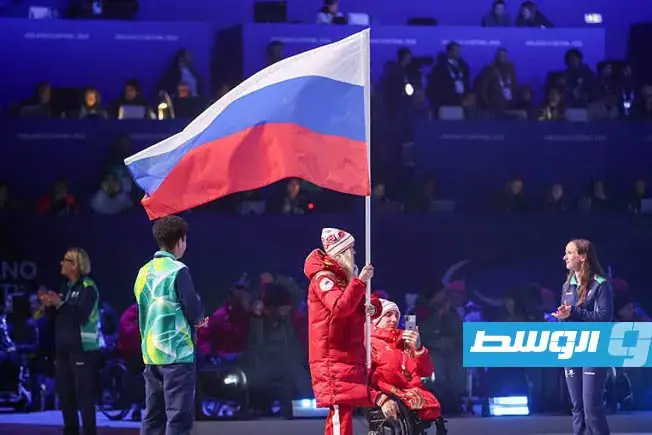
The European Union has proposed a ban on Russian athletes competing in sports events within its territory. This move is part of a new package of sanctions related to the ongoing conflict between Russia and Ukraine. EU Commission President Ursula von der Leyen stated that sports events should not be used as a platform for propaganda. The proposal includes a ban on Russian teams and athletes competing under the Russian flag.
The International Olympic Committee (IOC) had previously banned Russia from participating in the Olympics and international competitions following the start of the Russia-Ukraine war in February 2022. However, in July this year, the IOC lifted the ban, allowing Russian athletes to compete under certain conditions. Several sports federations currently permit Russian athletes to participate in competitions. The EU's proposed ban has raised concerns about the participation of Russian athletes in the qualifying events for the 2028 Los Angeles Olympics.
The qualifying events for the 2028 Los Angeles Olympics are set to begin next year, and the IOC's recommendation to allow Russian athletes to return to international competitions is being put to the test. Some European countries are imposing restrictions on Russian athletes' participation. The European Games, scheduled for June 2027 in Istanbul, will provide qualification spots for the Olympics in several sports and may pose a significant challenge to Europe's response.
The issue has been taken up by the Court of Arbitration for Sport, the highest arbitration body in sports. The Russian Olympic Committee has appealed against the European Olympic Committees regarding the conditions for Russian athletes' participation in the European Youth Winter Olympic Festival in Romania. Russian athletes have been asked to compete under the Olympic flag instead of their national flag.
The relations between Romania and Russia are tense, and this has affected the participation of Russian athletes. The proposed EU ban on Russian athletes has sparked debate about the role of politics in sports. EU Commission President Ursula von der Leyen emphasized that the ban is part of a broader package of sanctions against Russia.
The ban on Russian athletes has significant implications for the sports world. The IOC's decision to lift the ban on Russian athletes has been met with resistance from some European countries. The European Olympic Committees have expressed concerns about the impact of the conflict on sports.
The issue highlights the challenges of separating politics and sports. The EU's proposed ban on Russian athletes is a significant development in the ongoing conflict between Russia and Ukraine. The sports world will be watching closely as the situation unfolds.
Key points
- The European Union has proposed a ban on Russian athletes competing in sports events within its territory as part of new sanctions related to the Ukraine conflict.