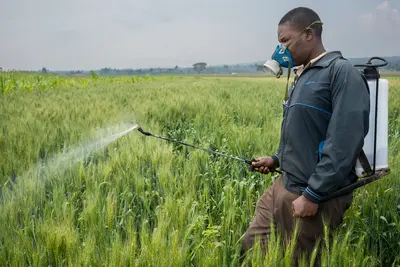
Proposed changes to Europe's pesticide regulations have raised concerns among scientists, warning that regulatory decisions in the EU can have far-reaching consequences beyond its borders. An open letter signed by 30 epidemiologists, medical doctors, and public health scientists from Europe and around the world has expressed concerns about the proposed EU Food and Feed Safety Simplification Omnibus, also known as the "Pesticide Omnibus". The signatories argue that the proposal could give many pesticides "unlimited, permanent approval" without periodic toxicity reassessment.
The scientists pointed to 31 pesticides whose approval had been withdrawn through the EU renewal process since 2011, including chlorpyrifos and several neonicotinoids and pyrethroids. They also cited research linking pesticide exposure during pregnancy and childhood with neurodevelopmental effects and adult exposure with endocrine-disrupting and neurological effects. The signatories are calling for negotiations on the Omnibus to be paused until an independent comprehensive impact assessment is conducted. They also want pesticide risks to be regularly reassessed as new scientific evidence emerges.
University of Cape Town public health researcher Paola Gabriela Viglietti, one of the signatories, stated that the International Society for Environmental Epidemiology (ISEE) had formally endorsed the scientific statement on the EU's proposed Pesticide Omnibus. She noted that the statement was "not an isolated response from the scientific community", citing a June Science policy forum by scientists from 27 European research institutions and a letter to the European parliament signed by over 500 European scientists and doctors.
Viglietti emphasized that pesticide regulation does not stop at national borders, and that substances considered too hazardous for use in Europe could be manufactured by European companies and exported to countries in the Global South. She expressed concern that if the EU's "Pesticide Omnibus" results in substances receiving approvals that no longer expire, it could have implications for what substances remain available for export. Viglietti's own PhD research added a local dimension to the debate, highlighting the need for more research on pesticide exposure in South Africa.
Viglietti's PhD research involved a systematic review of 66 international epidemiological studies, which produced 118 unique exposure-outcome findings. Over half of the findings showed statistically significant adverse associations between chronic postnatal pesticide exposure and neurocognitive, neurobehavioural, or neurological outcomes in children and adolescents. However, only one of the 66 studies was conducted in sub-Saharan Africa, highlighting a significant gap in the evidence base used to assess children's pesticide risks in the region.
Viglietti's empirical studies found that urinary biomarkers of two organophosphate pesticides were significantly associated with poorer executive functioning in children. Neither of the organophosphate pesticides was approved for use in the EU, yet both remained in use in South Africa. She emphasized that children were a particular concern due to their developing nervous systems being more vulnerable to neurotoxic exposures. Women farmworkers also faced an "under-studied burden", with research documenting exposure through agricultural work and domestic proximity to pesticides.
The issue is particularly relevant for South Africa, which is at a "key point of pesticide-policy reform". The country's core pesticide legislation, the Fertilisers, Farm Feeds, Agricultural Remedies and Stock Remedies Act of 1947, is almost 80 years old. A national implementation plan to phase out highly hazardous pesticides is under discussion, and Viglietti's research argues that South Africa's pesticide-exposure problem is "not simply a matter of individual exposure, but also a broader social and structural issue".
Key points
- Scientists warn that proposed EU pesticide regulations could have far-reaching consequences beyond Europe.
- Proposed changes could give many pesticides "unlimited, permanent approval" without periodic toxicity reassessment.
- South Africa's pesticide-exposure problem is not simply a matter of individual exposure, but also a broader social and structural issue.