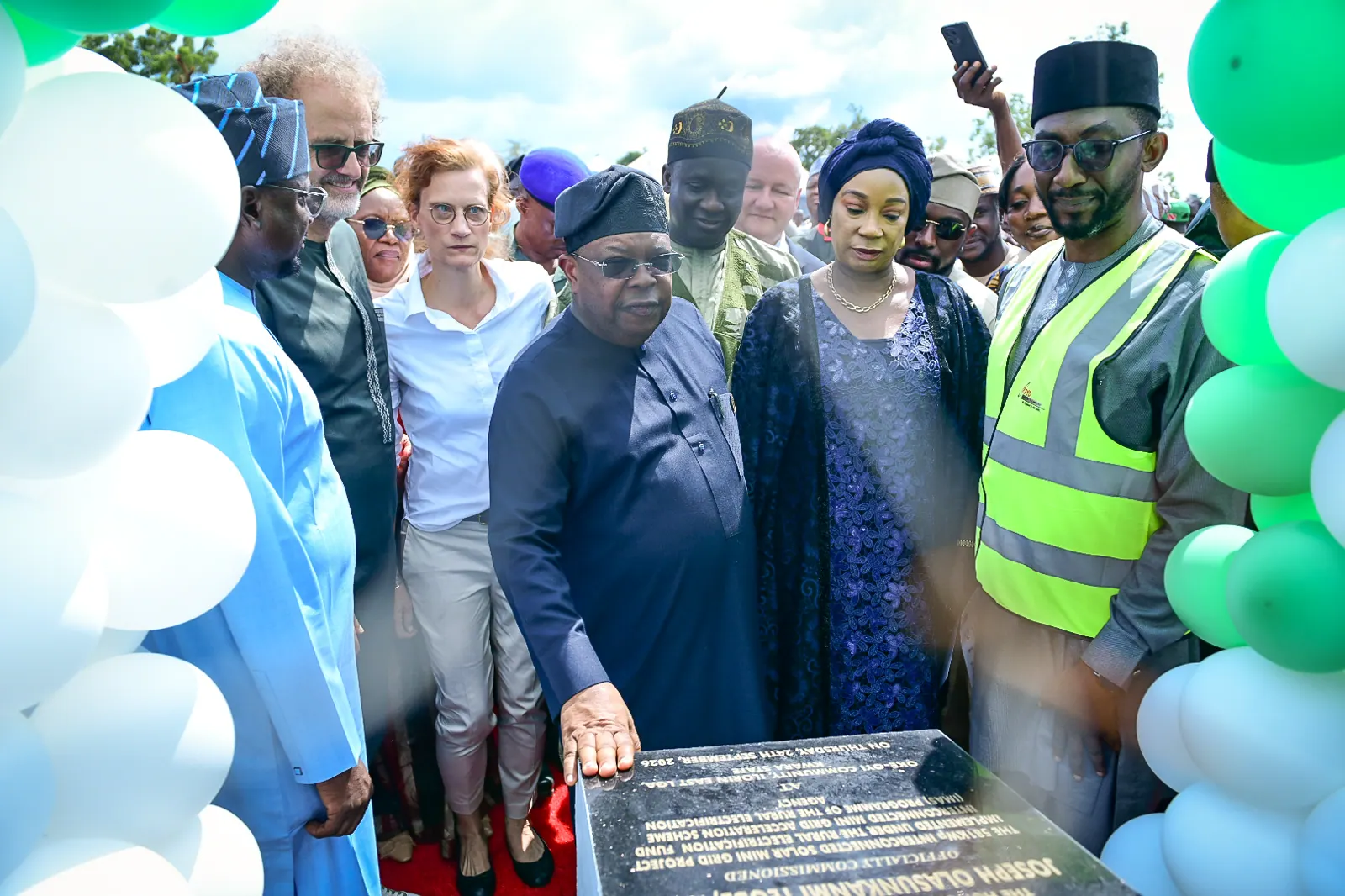
The European Union, Germany, and the Federal government of Nigeria have jointly commissioned a 581kW interconnected solar mini-grid in Kwara State. This project aims to provide reliable electricity access to more than 10,000 people, including households, businesses, health facilities, and schools. The mini-grid, located within the Ibadan Electricity Distribution Company’s franchise area, will provide a 24/7 electricity supply using a combination of renewable energy generation and grid electricity.
The project is a collaborative effort between the government institutions, development partners, the private sector, and the community. Massimo De Luca, Head of Partnerships at the European Union Delegation to Nigeria and ECOWAS, emphasized that the project reflects the EU’s Global Gateway strategy of investing in sustainable infrastructure that delivers tangible benefits for communities. He highlighted the importance of engagement with residents, which showed how reliable electricity could support healthcare, education, agriculture, and other productive activities.
Karin Jansen, Head of Cooperation at the German Embassy, noted that the project demonstrates how renewable energy can be integrated with existing electricity infrastructure to strengthen local power supply. The interconnected mini-grid model is unique and can serve as a model for similar projects across Nigeria. Jansen emphasized that lessons learned from this project can inform the development of other distributed energy solutions.
The Minister of Power, Joseph Tegbe, who commissioned the facility on behalf of President Bola Ahmed Tinubu, stressed the importance of extending electricity access to underserved communities. He stated that the project demonstrates how public funding and development partnerships can attract private investment and create commercially sustainable electricity projects. The Interconnected Mini-Grid Acceleration Scheme is a significant initiative in this regard.
The project is expected to have a positive impact on the local economy, creating new opportunities for productive use of energy across the community. Improved electricity access can help businesses operate for longer hours, reduce dependence on expensive alternative power sources, strengthen education and healthcare, and create opportunities for young people and entrepreneurs. The Speaker of the Kwara State House of Assembly, Yakubu Danladi-Salihu, representing the Kwara State Governor, urged residents to protect the facility and take ownership of the infrastructure.
The commissioning of the solar mini-grid is a significant milestone in the efforts to improve electricity supply in Nigeria. The project demonstrates the potential for renewable energy to enhance energy access and promote sustainable development. The European Union, Germany, and the Federal government have shown their commitment to investing in sustainable infrastructure that benefits local communities.
The solar mini-grid project is a notable example of a successful partnership between government institutions, development partners, and the private sector. The project’s success will depend on the community’s ability to maintain and protect the facility. With proper maintenance, the solar mini-grid can provide reliable electricity to the community for years to come, promoting economic growth and improving living standards.
Key points
- The project aims to provide reliable electricity access to over 10,000 people in Kwara State.
- The interconnected mini-grid model demonstrates how renewable energy can be integrated with existing electricity infrastructure.
- The project is a collaborative effort between government institutions, development partners, the private sector, and the community.