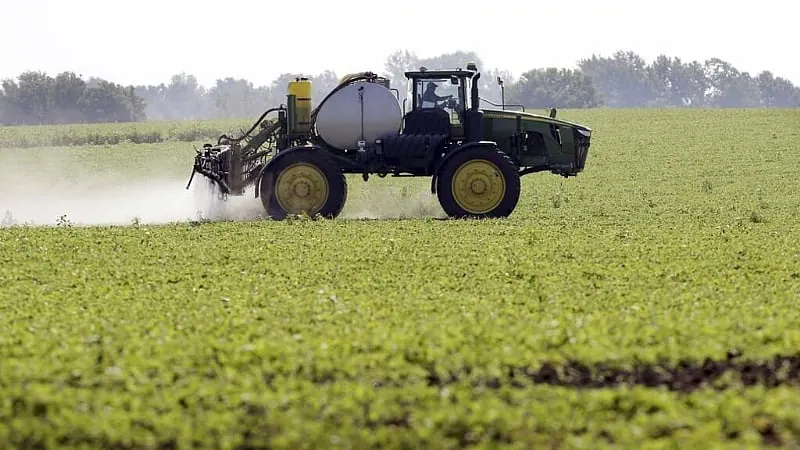
The European Union is set to vote on a set of legal amendments that could make it harder to ban harmful pesticides. The proposed changes, known as Omnibus X, aim to overhaul the current system by amending ten existing EU laws that cover pesticides, biocides, food residues, animal feed, and official controls. Critics argue that the changes could compromise food safety and environmental protection. The EU's current hazard-based model focuses on the inherent toxicological properties of a chemical before it's approved, unlike the US, which uses a risk-based model.
Pesticide exposure has been linked to various health issues, including cancer, respiratory diseases, and neurodegenerative illnesses. A 2023 study found that pesticides were present in 100% of air, indoor dust, and water samples across 10 European countries. José Nadan, a 69-year-old former beekeeper from France, was diagnosed with prostate cancer six years ago, which was officially recognized as an occupational hazard caused by pesticides. Nadan spent years treating his orchard with a pesticide that contained glyphosate, a substance now known to be harmful to human health.
France, one of Europe's largest agricultural producers, is also one of its largest consumers of pesticides. The number of requests by agricultural workers, like Nadan, who are in close contact with toxic substances, has increased significantly. In 2024, there were 318 requests, which rose to 975 in 2025. Edmond Leduc, a retired doctor from northern France, was diagnosed with lymphoma and prostate cancer, both conditions linked to pesticides. Leduc lived next to crop fields treated with pesticides for 44 years and admits to not being careful about the products he inhaled.
Ecotoxicologist Martina Vijver has expressed concerns about the proposed changes, stating that new scientific findings need to be taken into account regularly. Vijver argues that a periodic review of pesticides is crucial as a safety lock, as it's impossible to foresee every consequence. The European Food Safety Authority (EFSA) decided in 2019 that chlorpyrifos, a commonly used insecticide, didn't meet the EU's health requirements due to its neurotoxic effects.
Chlorpyrifos was linked to neurodevelopmental disorders in children, including autism. Despite being approved for use in the EU in 2006, the substance was eventually banned in 2020 after the EFSA review. Denis Benoit, a former farmer from western France, was diagnosed with prostate cancer in 2019 and recalls experiencing intense symptoms after working with insecticides.
Benoit, like Nadan and Leduc, regrets working with pesticides, but notes that it was hard to find work at the time, and they were told the substances were only toxic in large doses. Scientists and pesticide exposure victims are concerned that the proposed changes could make it harder to ban harmful pesticides. The EU's proposed changes have sparked criticism, with many calling for stricter regulations to protect human health and the environment.
The European Commission has ensured that the move would have "no compromise on food safety or environmental protection," but critics disagree. As the EU prepares to vote on the proposed changes, concerns about the impact on human health and the environment continue to grow. The issue has sparked a debate about the need for stricter regulations and the importance of prioritizing food safety and environmental protection.
Key points
- The European Union's proposed changes to pesticide regulations have sparked concerns among scientists and pesticide exposure victims.
- Pesticide exposure has been linked to various health issues, including cancer, respiratory diseases, and neurodegenerative illnesses.
- The proposed changes could make it harder to ban harmful pesticides, compromising food safety and environmental protection.