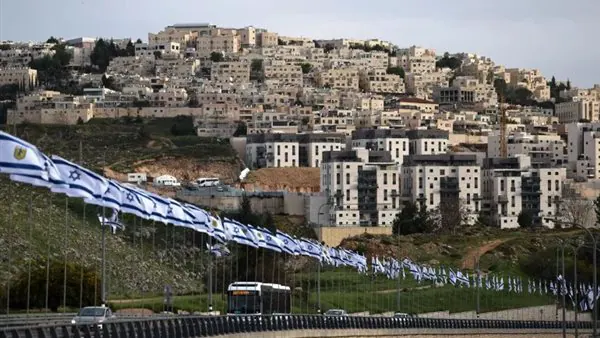
The European Union has faced criticism for its inaction on Israeli settlement plans, despite growing concerns over the country's practices. Over 500 European diplomats, ministers, and former officials have called on the EU to take action against Israel's plans to build over 1,200 housing units near occupied Jerusalem. The plans, part of the "E1" project, have sparked significant criticism in the occupied West Bank.
The Israeli government, led by Prime Minister Benjamin Netanyahu, is pushing forward with the settlement plans, which are being driven by Finance Minister Bezalel Smotrich. Smotrich has been accused of seeking to escalate tensions in the occupied West Bank and prepare for a large-scale conflict. Netanyahu has previously vowed to promote "large-scale Jewish immigration" to the area.
The E1 project has been widely criticized for its potential to further isolate occupied Jerusalem and undermine prospects for a future Palestinian state. The EU has been accused of failing to take adequate action to prevent the project's implementation, despite its significant implications for the region. Critics argue that the EU's inaction is inconsistent with its stated commitment to a two-state solution.
The Israeli government's settlement plans are not limited to the E1 project. According to a report by the Israeli magazine +972, settlement expansion is proceeding in multiple directions, including the growth of rural settlements within the "Green Line". The report noted that 152 new settlement outposts have been established in the occupied West Bank since October 7, 2023.
The Israeli authorities have also been accused of seizing large tracts of Palestinian land. A report by the Palestinian Authority's Wall and Settlement Resistance Commission found that Israeli authorities had carried out 1,814 demolition operations, affecting 5,059 structures, including 1,894 homes. The commission also reported that 15,864 dunams of Palestinian land had been confiscated under military orders.
The commission's report described the rate of land confiscation as the highest in three decades. The Palestinian Authority has called for international action to halt the expansion of illegal settlements and hold those responsible accountable. The issue has sparked significant debate, with many urging the EU and other international actors to take a stronger stance on the issue.
The controversy over Israeli settlement plans is set to continue, with the country's legislative elections scheduled for October 27. The elections are likely to have significant implications for the country's settlement policies and its relations with the EU and other international actors. The international community remains divided on the issue, with many countries struggling to balance their relations with Israel and their commitment to Palestinian rights.
Key points
- The EU has faced criticism for its inaction on Israeli settlement plans.
- The Israeli government's settlement plans have sparked significant criticism in the occupied West Bank.
- The E1 project has been widely criticized for its potential to further isolate occupied Jerusalem.