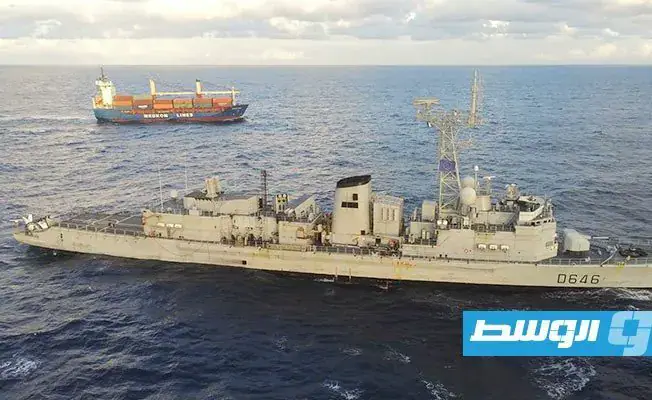
The European Union has extended the mandate of its maritime and aerial operation 'Irini' until March 31, 2029. The operation, which began in March 2020, aims to enforce the UN arms embargo on Libya. The EU Council's decision, made on October 9, 2026, also expands the operation's scope to include monitoring the activities of the Russian 'shadow fleet' and enhancing maritime security in the Mediterranean.
According to the Italian news agency 'Nova', the operation has monitored 83 suspicious flights in October 2026, a decrease from 91 in September. Since its inception, 'Irini' has tracked over 3100 flights that may be linked to arms smuggling into Libya. The operation also conducts maritime surveillance, with 26,268 radio communications with commercial vessels in October, and 824 voluntary visits on board ships.
The 'Irini' operation has also contributed to the enforcement of the arms embargo by conducting inspections on suspicious vessels. Since its launch, the operation has carried out 39 inspections, with three resulting in the diversion of ships to EU ports. The operation's mandate now includes monitoring the Russian 'shadow fleet', which uses complex networks of companies and frequent changes in vessel flags and registration.
The expanded mandate of 'Irini' aims to enhance maritime security and protect critical infrastructure in the Mediterranean. The operation will also contribute to the EU's efforts to monitor the movements of vessels suspected of involvement in arms smuggling. The Italian Admiral Marco Casapieri leads the operation, which is based in Rome and involves 23 EU member states.
Despite the expanded mandate, 'Irini' faces limitations in its inspection capabilities. Since May 24, 2026, the operation no longer has the explicit authorization to inspect vessels in international waters without the consent of the flag state. As a result, the operation must rely on Article 110 of the UN Convention on the Law of the Sea, which allows for the inspection of vessels when there are reasonable grounds for suspicion.
The 'Irini' operation plays a crucial role in enforcing the UN arms embargo on Libya and enhancing regional maritime security. The operation's success relies on the cooperation of EU member states and the effective use of its resources. The expansion of its mandate reflects the evolving security landscape in the Mediterranean and the need for the EU to adapt to emerging challenges.
The EU's decision to extend and expand the 'Irini' operation demonstrates its commitment to regional security and stability. The operation's impact will depend on its ability to effectively monitor and disrupt arms smuggling networks, while also addressing the complex issues surrounding the Russian 'shadow fleet'.
Key points
- The EU has extended the 'Irini' operation until 2029, expanding its mandate to monitor the Russian 'shadow fleet' and enhance maritime security in the Mediterranean.
Reporting sources
- Wasat TV · Wasat TV