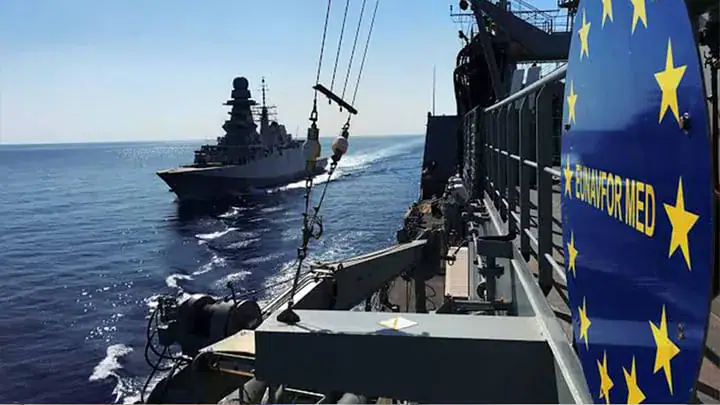
The European Union has extended the mandate of its military operation 'Irini' until March 31, 2029. This decision, made by the EU Council, includes structural changes and an expansion of its operational tasks in the Mediterranean Sea. The primary goal of 'Irini' is to monitor and enforce the arms embargo imposed on Libya. The operation involves both air and naval components.
According to the monthly report of the 'Irini' operation, a total of 83 suspicious air flights were detected in October, potentially linked to arms smuggling into Libya. This brings the total number of such flights monitored since March 2020 to 3100. In addition to air surveillance, the operation conducted 26268 radio checks with passing commercial ships and analyzed 5374 satellite images provided by the European Satellite Centre (SatCen). These images were used to continuously monitor 25 airports, 16 ports, and oil terminals in Libya.
The 'Irini' operation has been tasked with monitoring what is known as the Russian 'shadow fleet'. This fleet consists of oil tankers used to circumvent international sanctions by using misleading registrations and flag changes. The expansion of 'Irini's' mandate into this area reflects the EU's efforts to enforce international sanctions more broadly.
The European Union's decision to extend and expand 'Irini' demonstrates its commitment to maintaining stability in the region and enforcing international law. The operation's focus on both arms smuggling into Libya and the activities of the Russian 'shadow fleet' highlights the complex security challenges in the Mediterranean.
Libya has been embroiled in conflict since the ousting of Muammar Gaddafi in 2011. The country has struggled with political instability and violence, making international efforts to enforce an arms embargo crucial. The 'Irini' operation is part of these efforts, working to prevent the escalation of conflict through the illegal supply of weapons.
The extension and adjustments to the 'Irini' operation come at a critical time. The situation in Libya remains fragile, with ongoing challenges to peace and stability. By adapting its mandate, the EU aims to address emerging threats and continue supporting the UN-led peace process in Libya.
The 'Irini' operation is a key component of the EU's strategy to promote security and stability in the Mediterranean region. Its continued presence and enhanced capabilities will be closely watched by international partners and those with interests in the region.
Key points
- The EU has extended the 'Irini' military operation until March 31, 2029, to continue monitoring the arms embargo on Libya.