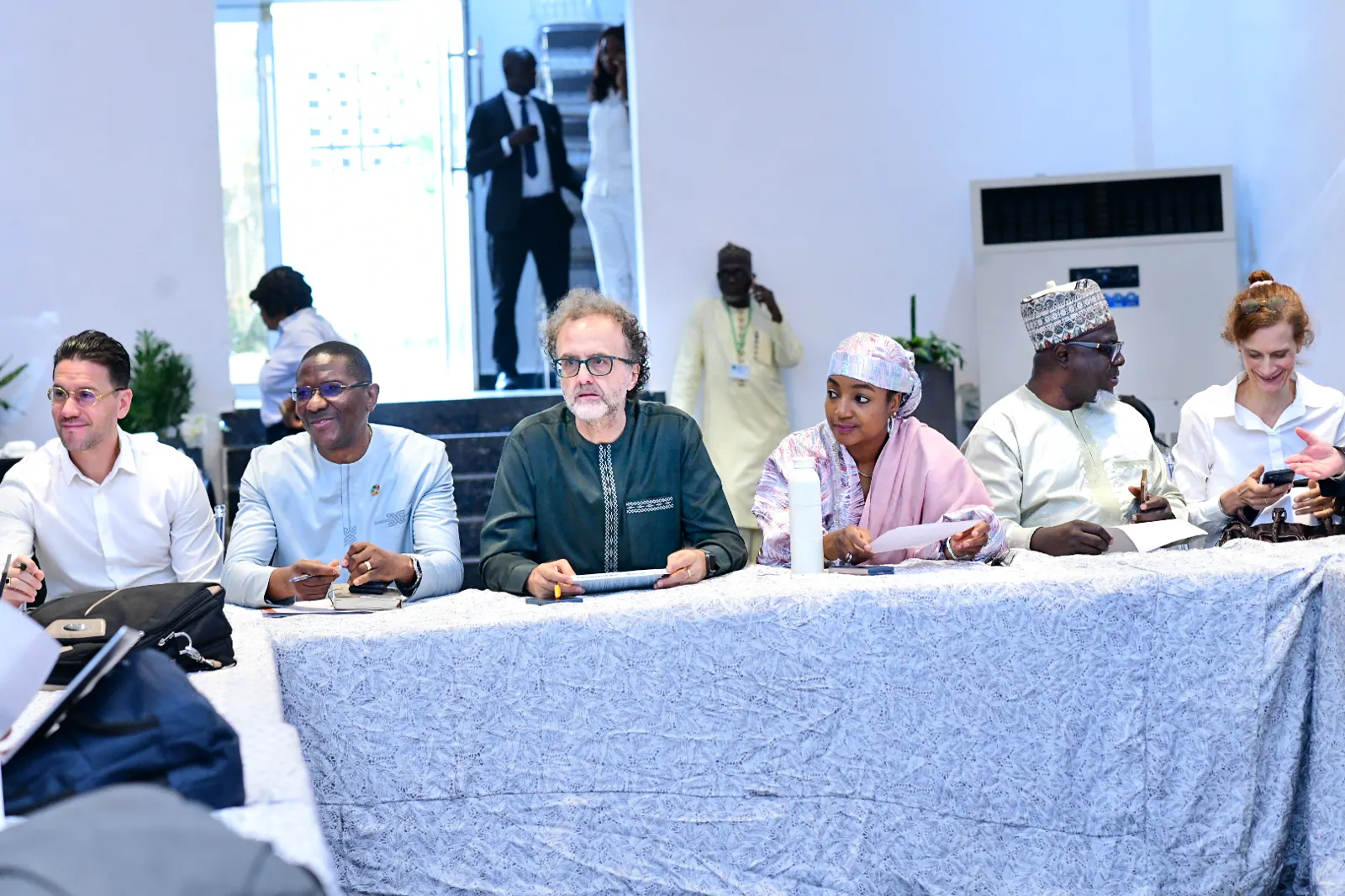
The European Union has reported significant progress in strengthening health systems in Kwara State, Nigeria. The EU's interventions have reached 35,796 people, generating 12,264 referrals and enabling about 10,000 individuals to access healthcare services free of charge. These results were presented during a review of the EU-SARAH partnership in Kwara, focusing on sustaining progress through stronger state ownership, financing, and coordination.
The EU's engagement in Kwara extends beyond health to areas including energy, skills, agriculture, civil society, peace, and security. Massimo De Luca, Head of Partnerships at the EU Delegation to Nigeria and ECOWAS, emphasized the importance of understanding how the EU's wider cooperation with Kwara could respond to the state's priorities. The visit provided an opportunity to assess progress and explore future collaborations.
A key focus of the discussion was sustainability, including the level of state financing for health and the release of budgeted funds. Kwara State Commissioner for Health, Amina Ahmed El-Imam, announced that the state's budget allocation to health had risen from about 4% to 15% in 2026. This increase demonstrates the state's commitment to prioritizing healthcare.
Commissioner El-Imam acknowledged that budget releases were not always 100% but noted that releases had increased year-on-year over the past seven years. The state is working towards partnerships based on mutual contribution rather than long-term dependence on external support. This approach is encouraging, according to De Luca.
Oluwatosin Fakayode, Director of Public Health at the Kwara State Ministry of Health, reported that Kwara is increasingly using health data to guide decision-making. The state has identified Ilorin and Moro local government areas for particular attention based on their contribution to maternal mortality. A roadmap for transitioning from paper-based to digital health systems has also been developed.
Fauziyyah Alaaya, representative of adolescents in Kwara and Speaker of the State's Children's Parliament, welcomed the inclusion of adolescents and young people in health interventions. This inclusive approach is crucial for addressing the unique health needs of this demographic.
The EU and Kwara State officials have expressed optimism about sustaining development gains through strong systems, accountability, and local ownership. The state's increased investment in healthcare and commitment to partnerships based on mutual contribution are seen as positive steps towards achieving long-term health goals.
Key points
- The EU's interventions in Kwara State have reached 35,796 people and generated 12,264 referrals.
- Kwara State has increased its health allocation to 15% of its 2026 budget.
- The state is working towards partnerships based on mutual contribution rather than long-term dependence on external support.