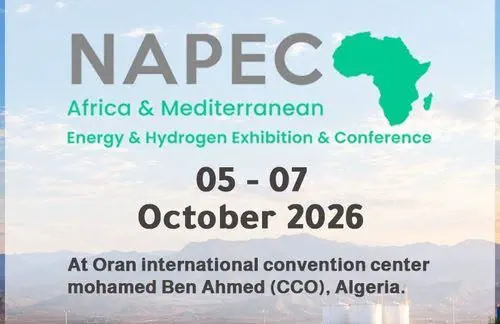
The 14th edition of the Salon and Conference on Energy and Hydrogen in Africa and the Mediterranean, or NAPEC, kicked off in Oran on a Sunday, with the European Union participating officially for the first time. This development signifies a major turning point in the relationship between the EU and Algeria, as Brussels aims to establish a deeper cooperation with the North African country. The partnership encompasses industry, ecological transition, and energy security on a Euro-Mediterranean scale.
The EU's presence at NAPEC is a diplomatic milestone, reflecting its commitment to a gradual, socially inclusive, and value-creating energy transition. The focus areas of the EU's participation include renewable energies, energy efficiency, the development of clean hydrogen, and technologies to reduce industrial emissions. According to the EU's ambassador to Algeria, Diego Mellado Pascua, Algeria holds a central role as a reliable energy partner, and this participation demonstrates the shared ambition to build sustainable bridges toward a future of innovation.
The EU delegation's program at NAPEC involves several strategic axes, combining business diplomacy, institutional consultation, and technical expertise sharing. High-level meetings and in-depth thematic sessions are scheduled throughout the conference, accompanied by an institutional exhibition stand. This stand showcases flagship programs supported by Brussels and EU member states, such as the TaqatHy+ program, which aims to structure the renewable hydrogen sector.
The EU's participation in NAPEC also features a conference dedicated to accelerating green investments, designed to bring together financial institutions, public decision-makers, and industry stakeholders. By catalyzing these transcontinental synergies, the EU and Algeria reaffirm their determination to establish their partnership as a pillar of energy security, low-carbon growth, and sustainable stability in the Mediterranean.
This cooperation between the EU and Algeria is built on co-construction, permanent dialogue, technological innovation, and mutually beneficial investment. The two parties aim to address climate challenges while ensuring economic prosperity for citizens on both sides of the Mediterranean. Their partnership focuses on creating a common vision for a sustainable energy future.
The NAPEC conference provides a platform for the EU and Algeria to discuss and implement their shared vision for the energy sector. With a focus on innovation and sustainability, the partnership is expected to drive growth and stability in the region. The EU's commitment to supporting Algeria's energy transition is a key aspect of this cooperation.
The historic energy partnership between the EU and Algeria marks a significant step toward a more sustainable and secure energy future in the Mediterranean region. As the two parties continue to work together, their cooperation is likely to have far-reaching implications for the global energy landscape. The partnership's success will depend on the effective implementation of their shared vision and goals.
Key points
- The EU and Algeria have established a historic energy partnership at NAPEC, focusing on renewable energies, energy efficiency, and clean hydrogen.