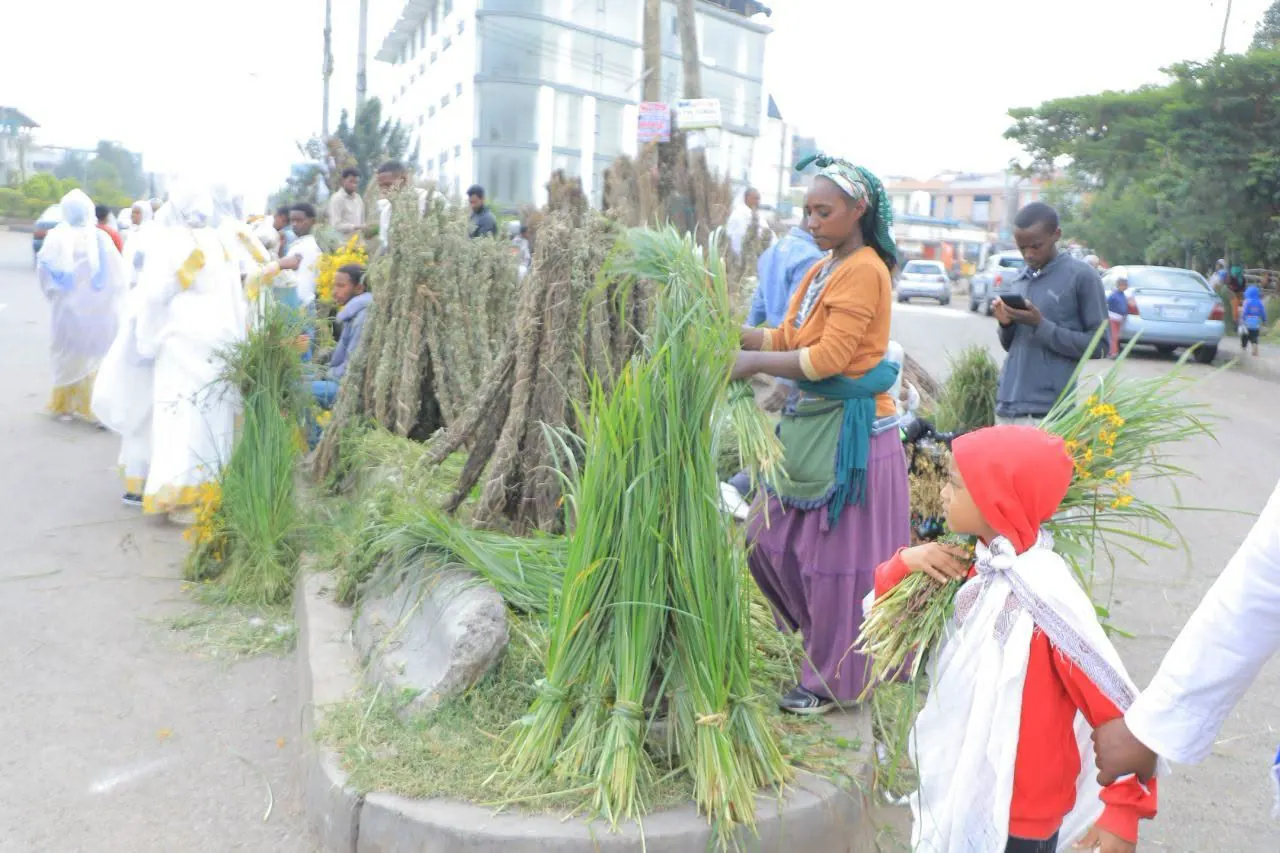
Ethiopians are celebrating the Meskel festival, a UNESCO-recognized intangible cultural heritage, with great fervor and spiritual enthusiasm. As the summer fog clears and autumn sets in, the country's landscape transforms with vibrant yellow daisy flowers, filling the air with a sweet, nostalgic scent. This festive season brings people together, fostering a sense of community and social bonding. The celebrations are marked by traditional rituals, music, and dance, showcasing Ethiopia's rich cultural heritage.
The Meskel festival, which translates to "cross" in Amharic, commemorates the discovery of the True Cross by Queen Helena in the 4th century. The festival is a significant event in the Ethiopian Orthodox Church calendar, symbolizing the triumph of good over evil. As part of the celebrations, people gather in churches and public spaces to sing hymns, recite prayers, and light bonfires, known as "demera," which are believed to drive away evil spirits.
In the lead-up to the festival, people decorate their homes and public spaces with yellow daisy flowers, known as "arietina" or "qeteqma," which are believed to have medicinal properties. The flowers are also used to make traditional perfumes and incense, filling the air with a sweet, floral scent. The festive atmosphere is palpable, with people of all ages participating in the celebrations, dressed in their finest traditional attire.
The Meskel festival is not only a significant cultural event but also an important economic driver for the country. The festival attracts tourists from around the world, who come to experience Ethiopia's rich cultural heritage and vibrant traditions. Local businesses, including hotels, restaurants, and souvenir shops, benefit from the influx of tourists, boosting the local economy.
As part of the celebrations, people gather around bonfires, singing traditional songs and sharing stories. The festival is also an opportunity for people to reconnect with their heritage and cultural roots. In urban areas, people gather in public spaces, such as parks and squares, to celebrate the festival, while in rural areas, people gather in traditional village settings.
The Meskel festival is a testament to Ethiopia's rich cultural diversity and its ability to bring people together. The festival is a celebration of the country's history, traditions, and values, showcasing its unique cultural identity. As the festival comes to a close, Ethiopians look forward to the next year's celebrations, which will once again bring people together in a spirit of joy, unity, and cultural heritage.
As the sun sets on the Meskel festival, Ethiopians reflect on the significance of the celebrations, which go beyond the traditional rituals and festivities. The festival is a reminder of the country's resilience, its ability to preserve its cultural heritage, and its commitment to community and social bonding. The Meskel festival is a truly unique experience, one that showcases Ethiopia's vibrant culture and its people's warm hospitality.
Key points
- The Meskel festival is a UNESCO-recognized intangible cultural heritage, symbolizing Ethiopia's rich cultural diversity and its ability to bring people together.