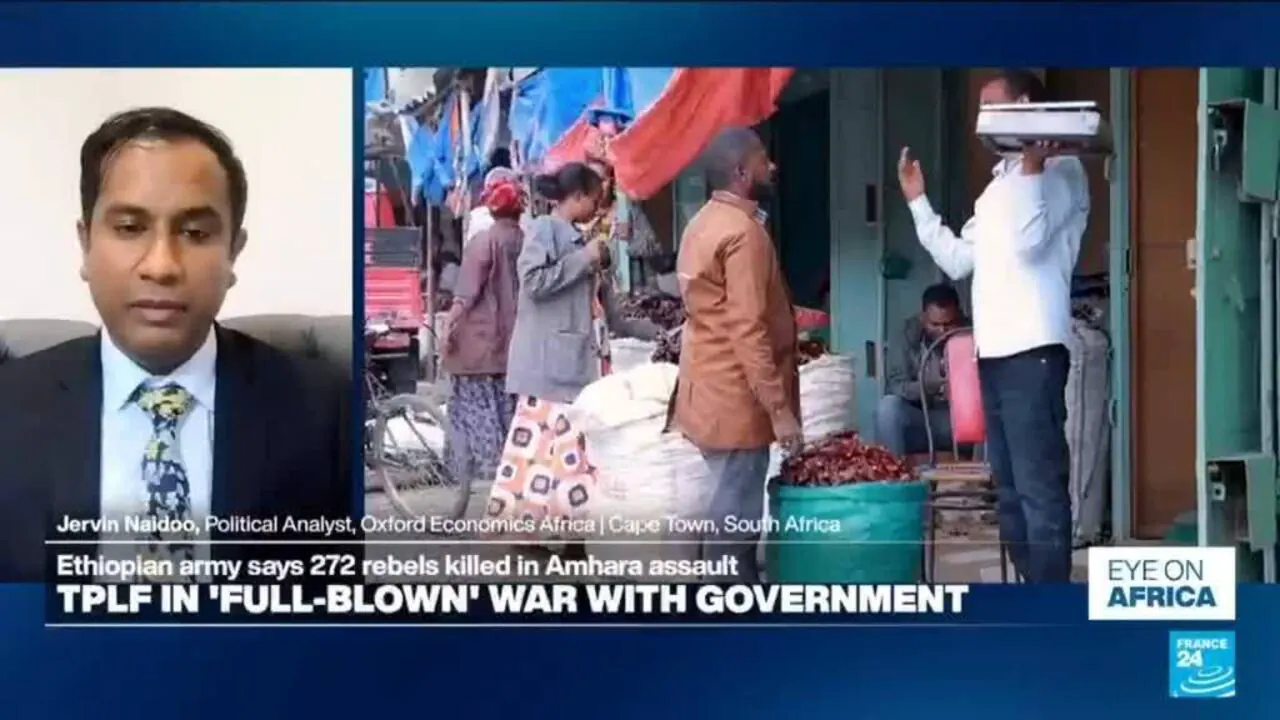
The conflict in Ethiopia's Tigray region has escalated, with the rebel authorities claiming to be in a "full-blown war" with the federal government. The fighting has now spread into the neighbouring Amhara and Afar regions, raising concerns of a return to civil war. According to the Ethiopian federal army, 272 rebels were killed and 260 wounded in the north. The situation on the ground remains volatile, with both sides suffering heavy losses.
The renewed violence in Tigray has sparked fears of a protracted conflict, which could have devastating humanitarian consequences. The region has been plagued by fighting since 2020, when the Tigray People's Liberation Front (TPLF) clashed with the federal government. The conflict has resulted in thousands of deaths, displacement of millions, and widespread destruction of infrastructure. The international community has expressed concern over the escalation, calling for an immediate ceasefire and dialogue.
To assess the seriousness of the escalation and explain what is driving the renewed violence, FRANCE 24 spoke to Jervin Naidoo, Political Analyst at Oxford Economics Africa. According to Naidoo, the conflict in Tigray is driven by a complex set of factors, including historical grievances, territorial disputes, and competition for resources. The analyst noted that the TPLF has long felt marginalised by the federal government, which has led to tensions and periodic outbreaks of violence.
The Ethiopian government has accused the TPLF of launching attacks on government forces, which has led to the current escalation. The federal army has been deployed to the region to restore order and maintain stability. However, the TPLF has denied these allegations, claiming that it is fighting to defend the region against government aggression. The conflicting accounts have made it difficult to determine the exact cause of the renewed violence.
The humanitarian situation in Tigray is dire, with millions of people in need of assistance. The conflict has disrupted food supplies, and many people are facing severe hunger. The international community has called for unhindered access to the region to allow humanitarian agencies to provide aid. However, the security situation remains a major challenge, with many aid workers unable to access the affected areas.
The conflict in Tigray has also had regional implications, with neighbouring countries expressing concern over the escalation. The African Union has called for an immediate ceasefire and dialogue, while the United Nations has expressed concern over the humanitarian situation. The international community is watching the situation closely, with many fearing that the conflict could spread to other parts of the region.
As the situation in Tigray continues to deteriorate, there are growing concerns about the impact on the region's stability and security. The conflict has already resulted in significant human suffering, and there is a risk that it could escalate further if not addressed quickly. The Ethiopian government and the international community must work together to find a peaceful solution to the conflict and prevent further humanitarian suffering.
Key points
- The conflict in Tigray has resulted in 272 rebels killed and 260 wounded, according to the Ethiopian federal army.
- The fighting has spread into the neighbouring Amhara and Afar regions, raising concerns of a return to civil war.
- The humanitarian situation in Tigray is dire, with millions of people in need of assistance.