The Ethiopian government has indefinitely suspended Tigray TV, a media outlet closely linked to the rebel Tigrayan authorities. The Ethiopian Media Authority (EMA) announced the suspension, citing the outlet's alleged transmission of messages that endanger national and public security, incite conflict, and encourage extremism. This move has added to concerns over press freedom in the country, which ranks 148th out of 180 in press freedoms according to Reporters Without Borders (RSF).
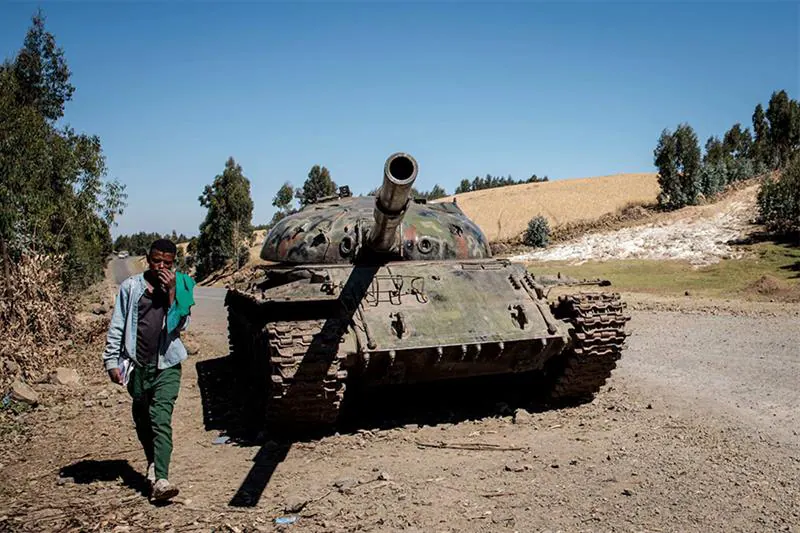
The suspension of Tigray TV is not the first time the outlet has faced restrictions. During the 2020-22 war between the federal government and Tigrayan rebels, the station was suspended. An uneasy peace was made three years ago, but relations between Prime Minister Abiy Ahmed's central government and Tigrayan rebels have deteriorated in recent months. The authorities have been accused of carrying out frequent drone strikes, while the Tigrayan rebels and six other groups announced an alliance to "overthrow" the government on Sunday.
The EMA statement warned that any media outlet using Tigray TV as a source or sharing its footage would face action. The suspension has been welcomed by some, but others have expressed concerns over the impact on press freedom. Five journalists are currently detained in Ethiopia, according to RSF. In June, the authorities suspended accreditations for three Reuters correspondents for several months.
TPLF vice president Amanuel Assefa confirmed that not only Tigray TV but also federal and humanitarian aid, and the region's banking system, have been suspended. The move has significant implications for the region, which has been affected by conflict and humanitarian crises. The African Union estimates that the 2020-22 war killed around 600,000 people.
The Ethiopian government faces at least three ongoing insurgencies within the country, which has a population of around 130 million. The government's actions have been criticized by human rights groups and journalists, who argue that the suspension of Tigray TV is a blow to press freedom. The country has a history of restricting media outlets, and the suspension of Tigray TV has raised concerns over the government's commitment to free speech.
The alliance announced by the Tigrayan rebels and six other groups on Sunday poses a significant challenge to the government. The groups have vowed to "overthrow" the government, which has been accused of human rights abuses and restrictions on press freedom. The situation in Ethiopia remains volatile, with concerns over conflict, humanitarian crises, and press freedom.
The international community has expressed concerns over the situation in Ethiopia. The US Treasury chief recently stated that Iran airlines would be "shut down" due to concerns over terrorism. Meanwhile, Egypt, Sudan, and US officials have discussed ending the Sudanese war on the sidelines of the UN General Assembly. The situation in Ethiopia remains a major concern for regional and international leaders.
Key points
- Ethiopia suspends Tigray TV, citing national security concerns
- The suspension has added to concerns over press freedom in the country
- The move has significant implications for the region, which has been affected by conflict and humanitarian crises