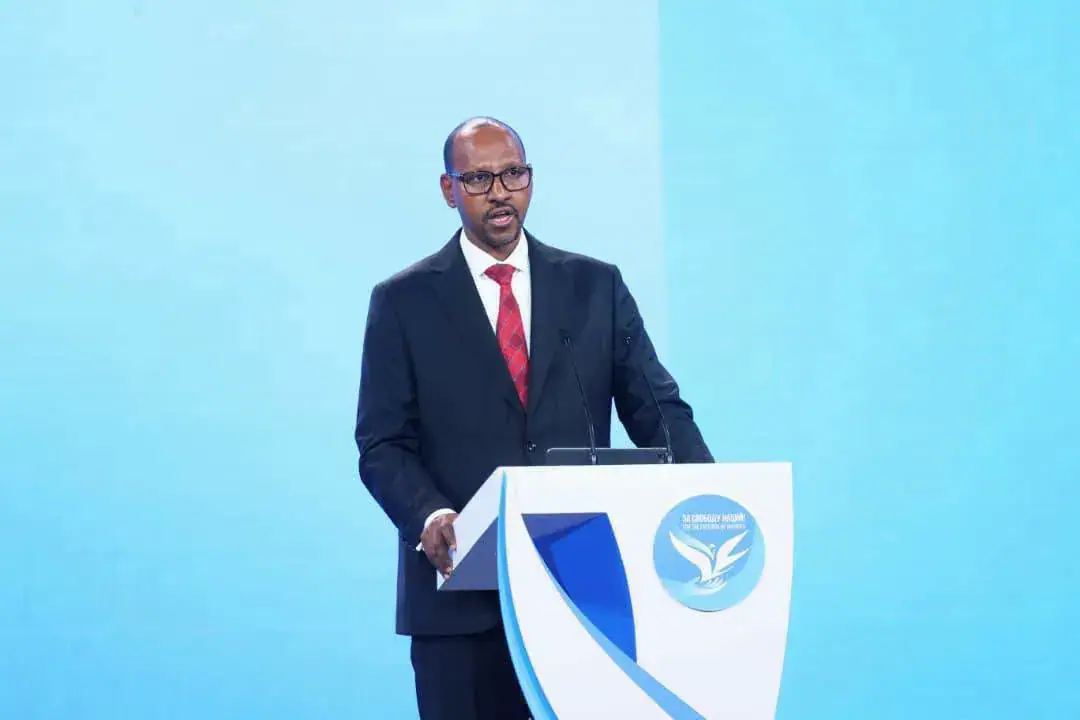
Deputy President of the Prosperity Party, Adamu Farah, has stated that Ethiopia's modern sovereignty will be secured through food self-sufficiency and digital capacity. He made these remarks at the International Movement for Peoples' Freedom, a global movement established to combat modern forms of colonialism, held in Moscow, Russia. As the leader of a high-level delegation from Ethiopia, Farah reaffirmed the country's commitment to national sovereignty, equality among nations, and a fair international order based on the United Nations Charter and international law.
Ethiopia's historical legacy in upholding sovereignty was highlighted by Farah, who referenced the country's victory at the Battle of Adwa, which marked a significant milestone in the fight against colonialism. He emphasized that in the modern era, sovereignty requires addressing new challenges, including ensuring food security, effective data management, cybersecurity, economic diversification, and institutional reforms. These efforts aim to strengthen Ethiopia's strategic independence and promote sustainable development.
To achieve this goal, Ethiopia is implementing various initiatives, such as the Green Legacy program, wheat production, urban corridor development, and the Grand Ethiopian Renaissance Dam. These projects demonstrate the country's commitment to coordinated development and self-sufficiency. Farah stressed that Ethiopia's participation in international organizations and partnerships is crucial for promoting African representation and cooperation that benefits all parties involved.
The Prosperity Party's participation in the international movement serves as a platform to promote Ethiopia's interests and perspectives on sovereignty, neo-colonialism, and development. The party aims to translate diplomatic efforts into tangible international cooperation and to share Ethiopia's experiences and historical legacy with the global community. This engagement also seeks to safeguard Ethiopia's strategic interests in an evolving international landscape.
Ethiopia's focus on food self-sufficiency is critical, given the country's reliance on imports to meet its food needs. The government's initiatives, such as the Green Legacy program, aim to increase agricultural productivity and reduce reliance on external aid. Additionally, the country's investments in digital infrastructure and cybersecurity are essential for protecting its digital sovereignty and promoting economic growth.
The International Movement for Peoples' Freedom provides a platform for countries to share experiences and strategies for promoting sovereignty and self-determination. Ethiopia's participation in this movement reflects its commitment to South-South cooperation and its desire to learn from the experiences of other countries. By engaging with other nations and international organizations, Ethiopia aims to promote a more equitable and just international order.
In conclusion, Deputy President Adamu Farah's statement highlights the importance of food self-sufficiency and digital capacity in securing Ethiopia's modern sovereignty. The country's efforts to promote sustainable development, strengthen its strategic independence, and engage with the global community reflect its commitment to a brighter future for its citizens.
Key points
- Deputy President Adamu Farah emphasizes the importance of food self-sufficiency and digital capacity in securing Ethiopia's modern sovereignty.
- Ethiopia is implementing various initiatives, such as the Green Legacy program and the Grand Ethiopian Renaissance Dam, to promote sustainable development and self-sufficiency.
- The country's participation in international organizations and partnerships aims to promote African representation and cooperation that benefits all parties involved.
Reporting sources
- የኢትዮጵያ የዘመኑ ሉዓላዊነት በምግብ ራስን በመቻልና በዲጂታል አቅም ይረጋገጣል – አቶ አደም ፋራህ · Addis Media Network