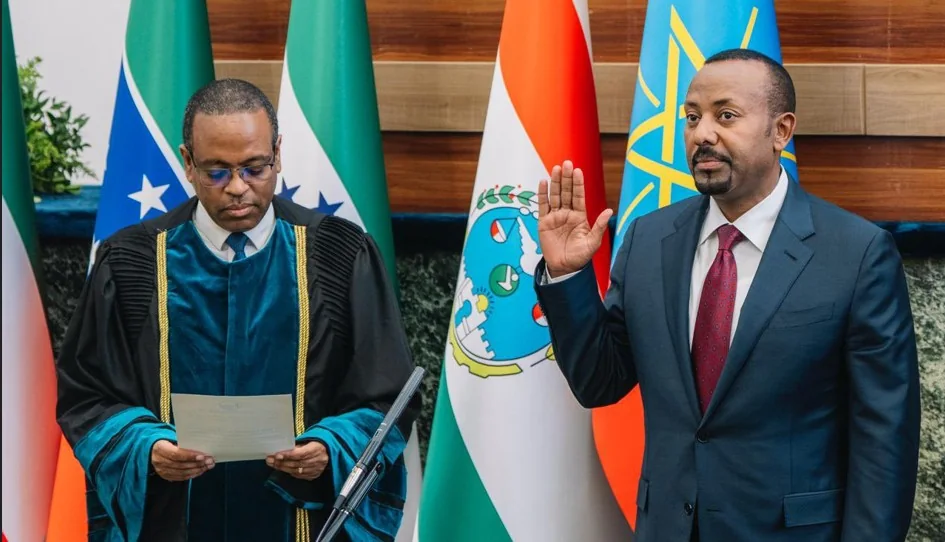
Ethiopian Prime Minister Abiy Ahmed was sworn in on Monday to begin his second five-year term in office. The ceremony took place during the opening session of the country's seventh parliamentary term in Addis Ababa. This marks the start of a new political and institutional cycle for the East African nation. Abiy's Prosperity Party secured a clear majority in the June 1 general election. The party won 438 seats in the House of Peoples' Representatives.
The June 1 general election saw over 54 million voters register to participate. A total of 42 political parties fielded 10,438 candidates for seats in the House of Peoples' Representatives. The election process was a significant event in Ethiopia's democratic journey. The Prosperity Party's majority win meets the constitutional requirement under Article 56 to form and lead the federal government. This paves the way for Abiy's administration to outline its priorities.
President Taye Atske-Selassie opened the inaugural session of the House of Peoples' Representatives. Newly elected members took their oaths before assuming parliamentary duties. Ahmed Shide, former Transport and Logistics Minister, was elected and sworn in as Speaker of the House of Peoples' Representatives. The House of Federation also began constituting its leadership. Muferihat Kamil was elected as Speaker, while Desta Ledamo took the position of Deputy Speaker.
Abiy's second term coincides with the hand-over of the Ethiopian National Dialogue Commission's consolidated recommendations. These recommendations will be presented to the federal and regional governments. This is a step toward implementing the dialogue's eight thematic areas. The administration now faces the task of converting its electoral mandate into action. This includes addressing Ethiopia's political, economic, and security challenges.
The new parliamentary term marks a significant milestone in Ethiopia's democratic journey. The government is expected to prioritize its policies and programs. Abiy's administration will focus on implementing the recommendations of the Ethiopian National Dialogue Commission. This will involve collaboration with various stakeholders, including regional governments and civil society organizations.
Ethiopia has made significant progress in its democratic journey since Abiy took office in 2018. The country has held two general elections, and the parliament has played a crucial role in shaping the nation's policies. The second term of Abiy's administration is expected to build on these gains. The government will need to address the country's challenges, including economic growth, security, and social inequality.
The international community has welcomed Abiy's second term in office. The African Union and other regional organizations have expressed their support for Ethiopia's democratic process. Abiy's administration will need to maintain this momentum and ensure that the country's democratic gains are consolidated. The government will also need to engage with the international community to secure support for its development programs and policies.
Key points
- Abiy Ahmed begins his second five-year term as Ethiopia's Prime Minister
- The Prosperity Party secured a parliamentary majority with 438 seats
- The government faces challenges in converting its electoral mandate into action