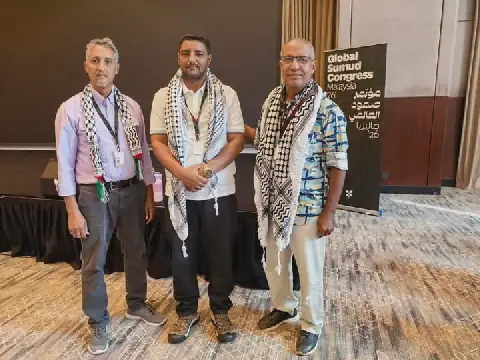
On September 20, 2026, seven Ethiopian armed and political movements announced the formation of the Ethiopian Peoples' Forces Coalition for Survival. The coalition aims to remove the Prosperity Party-led government and establish an inclusive transitional government. The announcement was followed by a major TPLF offensive on September 23 across Tigray, Amhara, and Afar. Federal and allied forces have since regained ground, including Mekelle's airport, which government-aligned forces said they had retaken on October 3.
The coalition's announced membership includes the Amhara Fano National Movement, Oromo Liberation Army, Tigray People's Liberation Front, Ogaden National Liberation Front, an Afar armed group, Benishangul Peoples' Liberation Movement, and Gumuz Peoples' Democratic Movement. However, within days, GPDM and ONLF publicly denied joining the coalition. This development raises questions about the coalition's composition and its ability to present a united front against the government.
The three most consequential armed actors in the coalition are the TPLF, Fano, and OLA. Their histories and political objectives are sharply different, which could create challenges for the coalition. The TPLF and OLF were once partners in the 1991 transition, but the TPLF pushed the OLF out in 1993. The OLF was later outlawed, and thousands of suspected supporters were detained or killed during successive security campaigns.
The relationship between the TPLF, Fano, and Eritrea is a striking feature of the new alignment. During the 2020-2022 Tigray war, Eritrean forces and Fano fought alongside the federal government against the TPLF. However, the Pretoria Peace Agreement ended that war in November 2022, but Eritrea and Fano were not parties to the agreement. This history makes the current alignment remarkable, with former battlefield enemies now cooperating against the government they once fought alongside.
The coalition may offer the TPLF practical advantages, including greater political and operational access in Amhara and Afar areas. Working with local armed groups could reduce the perception that Tigrayan forces alone are entering territory outside Tigray. The coalition could also reduce the TPLF's sense of strategic encirclement, giving it additional political space. However, this raises questions about the smaller groups' role in the coalition and whether they will be partners with equal influence.
Ethiopia's recent history offers reasons for caution when it comes to coalitions and alliances. The EPRDF, formed by the TPLF during the struggle against the Derg, became the dominant political structure that ruled Ethiopia for nearly three decades. However, other opposition alliances have not developed comparable governing structures. The EPRDF's experience building coalitions and subordinate organizations may provide a model for the new coalition.
The formation of the Ethiopian Peoples' Forces Coalition for Survival has significant implications for Ethiopia's politics and stability. The coalition's success will depend on its ability to present a united front and achieve its objectives. However, the challenges ahead should not be underestimated, given the complex history and politics of the region. The government's response to the coalition's formation and the ongoing fighting will also be crucial in determining the outcome.
Key points
- The Ethiopian Peoples' Forces Coalition for Survival was formed on September 20, 2026, by seven armed and political movements.
- The coalition aims to remove the Prosperity Party-led government and establish an inclusive transitional government.
- The coalition's composition and objectives are contested, with some groups denying membership and others having sharply different histories and political objectives.