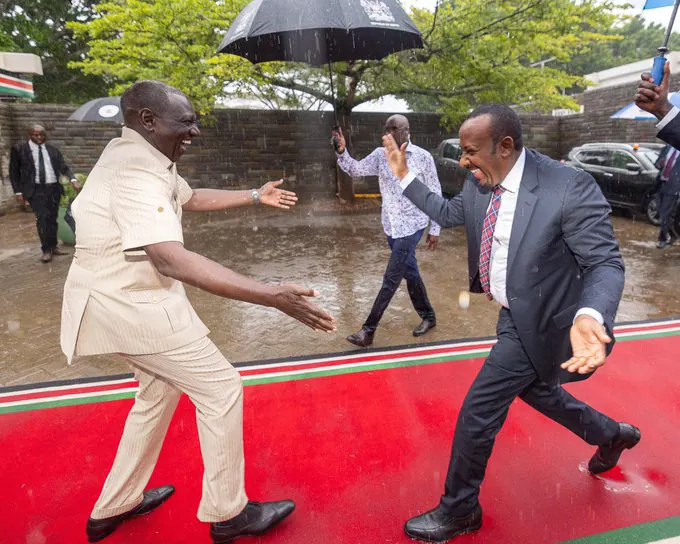
The Ethiopian Parliament has re-elected Abiy Ahmed as the prime minister of Ethiopia for a 5-year term. On October 5, the ruling Prosperity Party won 438 out of 547 seats in the general election held in June 2026. The newly elected speaker of parliament, Ahmed Shide, announced Abiy's appointment in a televised session. This marks Abiy's third term as prime minister, having first come to power in 2018.
Abiy Ahmed has pledged to boost Ethiopia's regional standing and work towards securing direct access to the sea. His domestic agenda focuses on national security, economic growth, and the continuation of broad reform initiatives. With his re-election, Abiy's new administration will face challenges, including new fighting between the country's armed forces and the recently-formed Ethiopian Peoples' Forces Alliance for Survival armed group.
The new parliamentary term officially opened on October 5, 2026, paving the way for the formation of Abiy's new government. Kenya President William Ruto reacted to Abiy's re-election, saying, "Your new mandate by Ethiopia House of People's Representatives is a vote of confidence in your leadership and vision you have for your country." Ruto wished Abiy continued success in leading Ethiopia to achieve its transformation agenda.
Abiy Ahmed's re-election as prime minister comes at a critical time for Ethiopia. The country has been working to strengthen its economy and improve regional relations. Abiy's administration will need to address the challenges posed by the new armed group and work towards achieving the country's transformation agenda.
The Ethiopian Peoples' Forces Alliance for Survival armed group has been formed with the goal of toppling the government. Abiy's new administration will need to navigate this security challenge while working to achieve its domestic and regional goals. The international community will be watching closely as Abiy's new term unfolds.
Abiy Ahmed's first term as prime minister was marked by significant reforms and efforts to improve Ethiopia's economy and regional relations. His re-election suggests that the Ethiopian people have confidence in his leadership and vision for the country. As Abiy begins his new term, he will need to build on the progress made in his previous terms.
The African Union and other international organizations have been following the developments in Ethiopia closely. As Abiy's new administration takes shape, the international community will be watching to see how he addresses the country's challenges and works towards achieving its goals.
Key points
- Abiy Ahmed has been re-elected as prime minister of Ethiopia for a 5-year term.
- Abiy's domestic agenda targets national security, economic growth, and the continuation of broad reform initiatives.
- Abiy's new administration will face challenges, including new fighting between the country's armed forces and the recently-formed Ethiopian Peoples' Forces Alliance for Survival armed group.