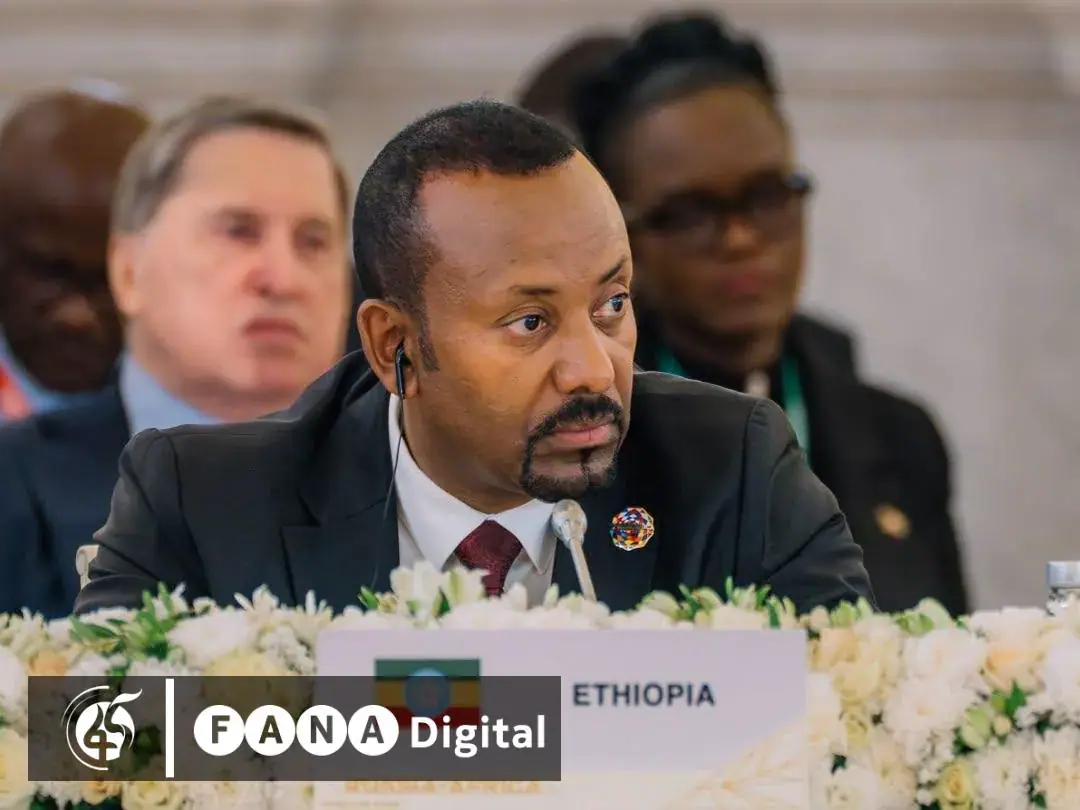
Ethiopian Prime Minister Dr. Abiy Ahmed recently attended the 3rd Russia-Africa Summit in Moscow, where he emphasized the long-standing friendship between Ethiopia and Russia, which spans over a century. The two nations have collaborated in various fields, including healthcare, education, and trade. In 1896, during the Battle of Adwa, a Russian Red Cross team arrived in Ethiopia to treat wounded soldiers, marking the beginning of a strong bilateral relationship.
The historical ties between Ethiopia and Russia were further highlighted by the translation of a medical guidebook into Amharic by the Russian Red Cross team. This initiative, though seemingly small, had a significant impact as it converted knowledge into healing. The guidebook not only showcased Russia's early engagement with Ethiopia but also laid the groundwork for future collaborations in the healthcare sector.
In his speech at the summit, Prime Minister Abiy emphasized the need for the assembled nations to transform discussions into tangible results. He stressed that collective efforts in production and scientific research would lead to greater strength for all participating countries. For Ethiopia, this begins with ensuring sovereignty and the right to self-determination, which would, in turn, provide the necessary capacity to translate decisions into action.
Ethiopia is focusing on three key areas: food, energy, and knowledge. In the food sector, the country's primary goal is to feed its population and build a sustainable agricultural economy. Collaboration with Russia, particularly in agricultural machinery and processing industries, is expected to help achieve this objective. The two nations are also working together to develop Ethiopia's energy sector, with a focus on constructing a nuclear power plant that adheres to international safety standards.
The nuclear power plant is expected to complement Ethiopia's existing hydropower-based energy mix. Beyond energy production, nuclear science has broader applications, including reducing food waste and cancer treatment. To effectively manage and regulate this technology, Ethiopia aims to develop local expertise through training programs. This cooperation will enable the country to harness the benefits of nuclear science while ensuring safety and sustainability.
In the field of knowledge, Prime Minister Abiy highlighted the significance of artificial intelligence (AI) and the need for African researchers to develop tools in local languages. Ethiopia is establishing the "University of Integrative Artificial Intelligence" in Addis Ababa to promote research and development in this area. The government has extended an invitation to Russian universities and institutions to collaborate in education and research, with a focus on translating innovation into practical applications.
The Russia-Africa Summit provided a platform for Ethiopia and Russia to explore new avenues for cooperation, including trade and investment. The two nations can leverage each other's strengths to promote economic growth, with Russian companies potentially investing in Ethiopia's special economic zones, particularly in the pharmaceutical and manufacturing sectors. The summit also underscored the importance of simplifying payment systems to facilitate trade between the two nations.
Key points
- Ethiopia and Russia are strengthening ties in key sectors, including food, energy, and knowledge.
- The two nations are collaborating on a nuclear power plant project that adheres to international safety standards.
- Ethiopia is establishing a university focused on artificial intelligence to promote research and development in the field.