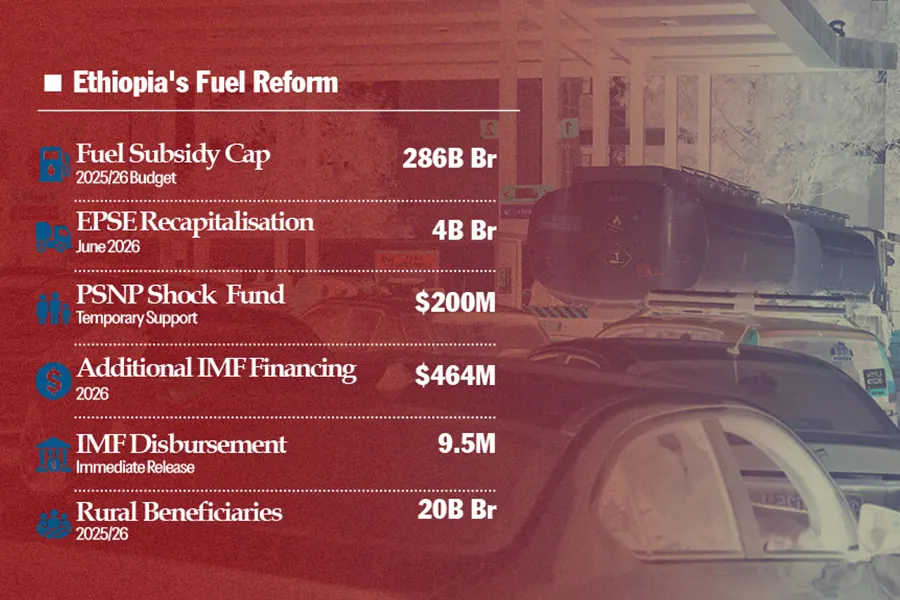
The Ethiopian government has decided to maintain its fuel subsidy program, despite recommendations from the International Monetary Fund (IMF) to phase out the support once international prices return to normal. The government has allocated 286 billion Br to rescue the state fuel importer and set a 20 billion Br subsidy cap. This move aims to provide temporary relief to citizens.
According to the IMF, temporary and untargeted fuel subsidies should be phased out when import prices normalize. The IMF spokesperson stated that this move would strengthen fiscal sustainability and free up resources for development. The spokesperson emphasized that the government's current approach may only provide temporary relief.
The government's decision to maintain fuel subsidies comes as international prices continue to fluctuate. The subsidy cap of 20 billion Br and the rescue package for the state fuel importer are expected to provide some relief to citizens. However, the IMF's advice suggests that a more sustainable approach would be to phase out the subsidies.
Ethiopia's fuel subsidy program has been a longstanding issue, with the government struggling to balance the need to support citizens with the need for fiscal sustainability. The current approach may provide temporary relief, but it may not address the underlying issues. The government's decision to maintain the subsidies has been met with mixed reactions from citizens and economists.
The IMF's advice to phase out fuel subsidies is part of a broader effort to promote economic reform in Ethiopia. The organization has been working with the government to implement policies that promote fiscal sustainability and economic growth. The government's decision to maintain fuel subsidies may be seen as a setback to these efforts.
The fuel subsidy program has significant implications for Ethiopia's economy. The program requires significant resources, which could be allocated to other sectors such as healthcare and education. The IMF's advice suggests that phasing out the subsidies could free up resources for more pressing development needs.
The government's decision to maintain fuel subsidies highlights the challenges of balancing social welfare with economic sustainability. While the subsidies provide relief to citizens, they also have significant economic implications. The IMF's advice and the government's response demonstrate the ongoing debate about the best approach to addressing these challenges.
Key points
- The Ethiopian government has allocated 286 billion Br to rescue the state fuel importer and set a 20 billion Br subsidy cap.
- The IMF has advised the government to phase out fuel subsidies once international prices return to normal.
- The government's decision to maintain fuel subsidies has significant implications for Ethiopia's economy and development.