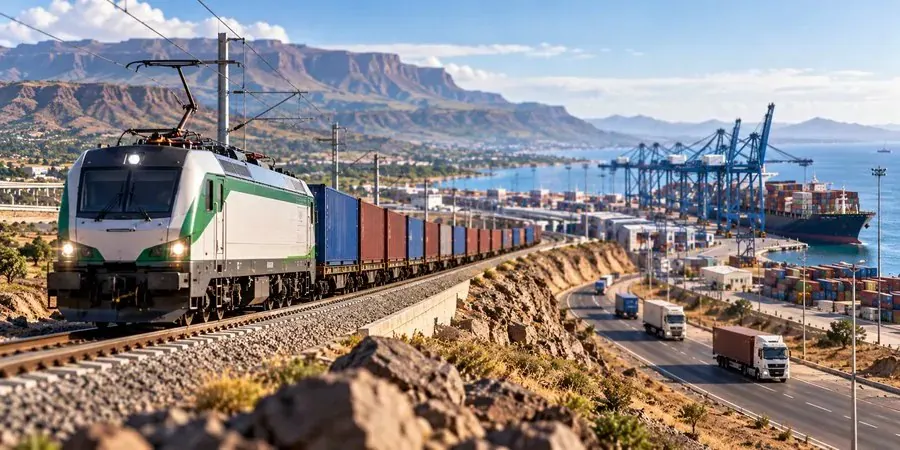
Ethiopia is repositioning its freight strategy to prioritize electric trucking on the Ethio-Djibouti corridor, leveraging its abundant domestic electricity to reduce logistics costs. The country's main trade artery, which carries the majority of its seaborne trade through Djibouti, is set to benefit from cheap renewable power. Policymakers aim to displace diesel and compress logistics costs by using low-cost hydropower. This shift positions electric trucking as a core economic agenda, not merely an environmental one.
According to Ewnetu Taye, TradeMark Africa's Country Director for Ethiopia, renewable electricity, especially hydropower, offers a cheaper power source for transport than imported diesel. Taye made these remarks on the sidelines of the Nordic Africa EV Summit in Addis Ababa. He emphasized that using low-cost domestic electricity for freight reduces the cost of moving goods along major trade corridors. The Ethio-Djibouti corridor is a key focus under Ethiopia's five-year electric mobility strategy.
The policy shift links Ethiopia's expanding hydropower base, including generation from the Grand Ethiopian Renaissance Dam, with transport and logistics operations. By substituting domestic electricity for imported diesel, policymakers aim to ease pressure on foreign exchange. Lower freight costs could lead to more competitive export pricing and reduced landed costs for imports, particularly bulk commodities and containerized goods.
However, the transition to electric trucking requires more than replacing diesel trucks with electric models. Corridor-wide charging facilities, suitable road systems, and local technical skills are all needed. These priorities were central to discussions at the Nordic Africa EV Summit, held from 14 to 16 September 2026. The event brought together African and Nordic policymakers, industry leaders, and technology providers.
Ethiopia has introduced strong policy incentives for electric vehicles, including a national ban on combustion engine vehicle imports, in force from January 2024, which was extended to key combustion parts in May 2025. These measures are pushing operators towards electric fleets. As a result, battery-electric vehicles now carry lower relative costs compared with fuel-powered alternatives.
For investors, several opportunity sets follow. Corridor charging infrastructure on the Ethio-Djibouti route will need capital, from depot-based fast charging near logistics hubs to highway charging points. Fleet financing models must adapt to higher upfront vehicle costs but lower operating expenses. Electric trucks can reach total cost parity with diesel under suitable conditions, per emerging global evidence.
Logistics providers can use domestic electricity to lock in more predictable energy costs, valuable in a volatile market. With electric trucking, they can also reduce their carbon footprint and contribute to Ethiopia's environmental goals. As the country continues to develop its electric mobility strategy, the Ethio-Djibouti corridor is set to become a model for sustainable and efficient freight transportation in Africa.
Key points
- Ethiopia's electric freight strategy aims to reduce logistics costs and ease pressure on foreign exchange.
- The transition to electric trucking requires investments in corridor-wide charging facilities and local technical skills.
- Electric trucks can reach total cost parity with diesel under suitable conditions, offering opportunities for investors and logistics providers.