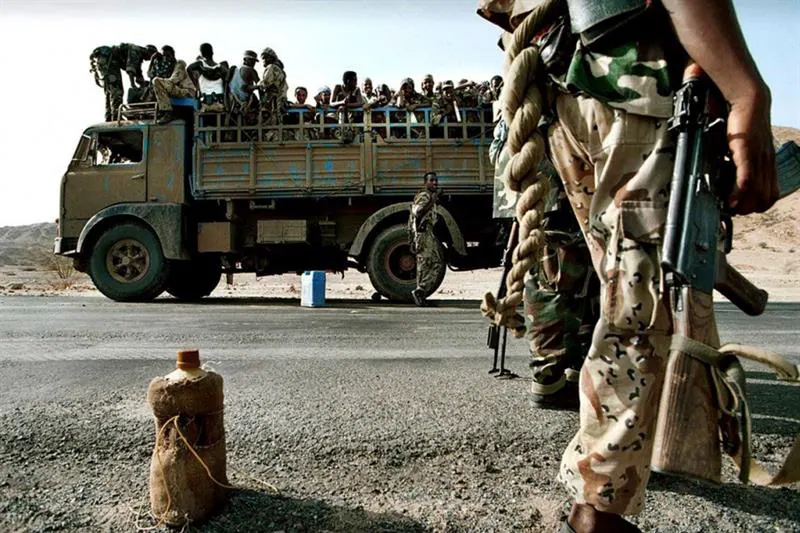
Ethiopia has accused Eritrea of "flagrant aggression" after Eritrean troops deployed in northern Ethiopia. Eritrea responded, saying Ethiopia has been waging a long "war of aggression" against it. This escalation in rhetoric between the two neighboring countries raises concerns of a potential war. The tensions between Ethiopia and Eritrea have been high for decades, with a notable conflict between 1998 and 2000 resulting in tens of thousands of deaths.
The current tensions began to rise on October 1, after Ethiopia accused Eritrea of "acts of hostility and belligerence," leading to the breakdown of diplomatic relations that had been reestablished in 2018. The relations had improved after Ethiopian Prime Minister Abiy Ahmed came to power in 2018 and received the Nobel Peace Prize in 2019 for his efforts to make peace with Eritrea. However, relations have deteriorated again since the end of the Tigray war in 2022.
Eritrean troops have been deployed 30 to 60 kilometers inside the Tigray region of northern Ethiopia, prompting Ethiopia to accuse Eritrea of aggression. Ethiopian Foreign Minister Gedion Timothewos stated that this presence justifies Ethiopia's right to self-defense. He emphasized that Eritrea is the aggressor and Ethiopia is the victim. A diplomatic source confirmed that Gedion sent a letter to the French representation at the UN, which was also sent to all members of the UN Security Council.
Eritrea's Information Minister, Yemane Gebremeskel, responded by saying that the Ethiopian regime has been waging an unprovoked war of aggression against Eritrea for over three years. The two countries have a history of conflict, including a war from 1998 to 2000 over territorial disputes. Since then, their relations have been strained, with periods of relative calm punctuated by increased tensions.
The situation escalated with reports of drone strikes against Eritrean forces deployed in northern Tigray. Witnesses and non-governmental organizations confirmed these strikes. Local leaders and residents also reported the deployment of Eritrean troops in the region. These developments have contributed to the heightened tensions between the two countries.
Ethiopia accuses Eritrea of supporting the Tigray People's Liberation Front (TPLF), which controls the Tigray region and is considered illegal by the Ethiopian government. The Ethiopian federal government has been fighting the TPLF for weeks. Eritrea's alleged support for the TPLF has been a major point of contention between the two countries.
The international community is watching the situation closely, with concerns about the potential for a new conflict in the region. The UN Security Council has been informed about the situation, and diplomatic efforts are underway to reduce tensions. However, the rhetoric from both sides suggests that a resolution may be difficult to achieve in the short term.
Key points
- - Ethiopia and Eritrea have accused each other of aggression amid rising tensions. - The tensions have led to a breakdown in diplomatic relations and raised concerns about a potential war. - The situation is being closely watched by the international community, with diplomatic efforts underway to reduce tensions.